Search This Blog

Monday, June 24, 2024

Implementing AM: huge progress + 2 more

Baba

Implementing AM: huge progress

Namaskar,

These days some margiis may be wondering, “When are Ananda Marga teachings going to be established?” They say things like, “Baba has come as Mahasambhuti, and He has given all the plans and programs for the entire society to progress, but I do not see it happening.” When people think in this manner they become frustrated. However, the reality is something vastly different because, behind the scenes, something great is going on: Ananda Marga is getting established - everywhere. There has been tremendous positive change throughout society, and the table has been set for this to proceed with much greater speed.
http://anandamargauniversal.blogspot.com/


Baba has created conducive environment


So no one should feel depressed, forlorn, or frustrated in this regard. We should see the true reality of how things are going in a positive direction - and how that pace shall hasten. What Baba thinks is actually taking shape and being expressed in all realms of life: physically, psychically, and spiritually. He has already set the wheels in motion. His AM teachings are being implemented. 

When Taraka Brahma comes in human form, He not only gives His divine philosophy but also creates a parallel vibration which suits the philosophy. It is just like how a farmer does not plant good seed in the sandy, burning desert; instead, that farmer plants the seed in a place where the soil is fertile with ample rainfall. So a proper environment is always needed. And that is exactly what Baba has graciously done. In His role as Mahasmbuti, He created the ideal environment for establishing AM teachings. 
http://anandamargauniversal.blogspot.com/


AM ideology getting established - Part I


When Baba founded AMPS and gave His dharmika guidelines, He simultaneously changed the vibration of the entire universe to be receptive towards AM ideology. When AMPS started, we were struggling to remove various dogmas from the society and countless violent clashes happened; the public was not ready to listen to or accept any of our views. Rather, the public created huge problems for our organisation. Yet, by looking around now, one can see what a drastic change has occurred in the whole collective psyche. 

Those days Indian casteism was so strong and deeply entrenched in the society, but now many more are daring to speak out against the dogma of casteism - and some disregard it altogether. When Sadguru Baba gave the slogan, “Ek manav samaj” (One human society), it created such a unique wave all around wherein the collective psyche changed. And from that moment onwards, people began to question the ills of casteism.

Here is another example. When Baba initially gave Prout in 1959, non-margiis were questioning Baba's teachings. They were in utter disbelief of Prout’s position that  democracy is a foolocracy. But now many people are criticizing the weaknesses of democracy. Although they recognize that authoritarianism is far worse, at least the general public has understood that democracy is not the ideal system. 
http://anandamargauniversal.blogspot.com/

Here, the key notion is that these are not isolated examples of Baba's secret working system whereby He creates the vibration and positive change results. Rather, wherever we look, we can easily see His ideas taking shape. Verily there are innumerable movements - vegetarianism, ecological balance, fasting, women’s rights, fair trade, social equality, animal rights, spirituality etc - that have sprouted and grown because Baba has created the conducive environment. 


AM ideology getting established - Part II


So, by surveying the scene, it is apparent that Baba's teachings are naturally being implemented. In those days, people felt shy and embarrassed to talk openly about yoga and / or sit for meditation.

Ananda Marga ideology guides us, “Those who are reared in the cradle of materialistic ideologies feel shy or ashamed at first to sit in meditation in the presence of others. Overwhelmed by the influence of avidyá, they think, “People may perhaps think that I, an ultramodern boy or girl, am emulating the pre-historic mode of worship!”" (1)

But now take a look around: Meditation has been greatly accepted by society on the point of wellness, mental clarity, and even spirituality etc. Today, people openly sit in padma'sana (full lotus) and other yoga postures to show that, “I am doing meditation / yoga etc.” Previously, doing meditation was very difficult as the general populace thought that meditation was some sort of old, outdated or quacky activity, or even witchcraft or voodoo. But the landscape has been wholly transformed. Now, all over the globe, it is a source of great pride and prestige to say you practice meditation. 
http://anandamargauniversal.blogspot.com/

Thus there are many examples of how AM philosophy has been commonly accepted or is in the process of getting established. So no one should think that AM ideology will not get implemented, or that it will only come to the fore in the distant future. AM ideology has already begun to spread its wings. The establishment of ideology is going on, just a proper vision is needed to see it unfolding. Below is one story to make this point clear.


Bridge story: progress invisible to villagers


In one so-called developing nation, there was a very large river that was around 10 km wide and 50 meters deep. So hundreds of engineers, technicians, and labourers etc. were hired to construct a large bridge. The work went on for years and huge work had been done. But most of the local villagers could not understand what those engineers and builders had been doing, until one day the villagers could no longer contain their curiosity and the leader of the village approached the chief engineer.

The village leader asked, “What are you doing? Why are you wasting your time and resources and dropping valuable resources into the water? We have been watching for the past few years and do not see anything happening. These are all costly materials (metal, concrete, steel etc) worth millions, and you are throwing those valuable commodities into the water. If you do not stop this nonsense of destroying local and national wealth, we will start a protest movement.”

The spokesman for the engineers softly replied, “Much progress has been made beneath the surface. Our work is soon going to rise above the water. Most of the work has been done. Within a relatively short time, the bridge will be ready. We needed to make numerous pillars and platforms in the riverbed because the bottom is very soft like quicksand. Each pillar is very deep. So please understand all the resources are being well utilized. The work is quickly advancing, but it is not visible to the common person. Rest assured that it is visible to the engineers.” 
http://anandamargauniversal.blogspot.com/


AM ideology getting established - Part III


Just as in the above bridge story, for the last many decades, the common people have been unable to detect the spiritual waves of Parama Purusa. Many ideas which the majority of the public was not ready to accept, and was even opposing, have now been wholeheartedly embraced. Many are knowingly or unknowingly propagating key aspects of Ananda Marga teachings: revolutionary marriages, world government, economic justice, gender equality, race relations, and many more etc. All these points, to varying degrees, have been accepted by the general society.

If one looks back 50 years, it is clear from the newspapers of those days that the psyche of the general public was quite different from the present-day outlook. A drastic change has happened, and this metamorphosis did not come out of the blue. Baba's spiritual waves influenced the collective psychology in accordance with AM ideology. 

Remember, communism did not just collapse suddenly like some spontaneous plane crash. Rather, for many years something was going on beneath the surface. The cosmic waves of Parama Purusa were working, and when the proper time came, communism fell. In the same way, many unseen developments are going on at present, and our duty is to move on the path of dharma and promote those grand ideals - and the public will come to accept them. 
http://anandamargauniversal.blogspot.com/


Conclusion

The vibration of our Ananda Marga has been infused into the core of each cell of this entire universe, and, gradually, AM philosophy is being established. Taraka Brahma Baba has created the vibration whereby AM ideology will be implemented everywhere - across the entire cosmos.

Ananda Marga Caryacarya states, “Utilizing the vibrations created for eternal time by Shrii Shrii Anandamurtiji through januspharsha and varábhaya mudras, take yourself and the entire universe ahead along the path of welfare. Omn Shanti!” (2)

At His feet,
Harihar

One human society


Baba has graciously laid down the foundation of one human society by giving the philosophy of Neo-Humanism which is for the welfare of all beings without differentiation of gender, class, race, nationality, colour etc. Baba has given AM ideology to make one universal human society throughout the globe. That is the great need of the present humanity. 
http://anandamargauniversal.blogspot.com/

Prout philosophy states, "This is not the age of big animals and small countries." (3)

So Baba clearly tells us that at present on this globe the survival of small nations and big animals is very difficult, or even not possible. Rather, a unified human society is the need of the day.

Nowadays, with the development of technology, communication has multiplied exponentially, and people are sitting at their computers and have the whole globe at their fingertips. So now conscious people feel the necessity and urgency of creating one human society free from factionalism and exploitation. Maintaining the existence of different religions and nations or groups is not possible these days. So AM ideology is sure to be a beacon light to all and guide humanity into the bright future.

References
1. Subhasita Samgraha - 3, Shreya & Preya
2. Caryacarya – 1, Concluding Words
3. Prout in a Nutshell Part 17, The Coming Ice Age


== Section 2: Prabhat Samgiita ==

On the path of anandam

“Tumi na’ bole esechile, a’j na’ bole cale gele…” (Prabhata Samgiita #1327)

Purport:

Baba, without saying anything You came and appeared before me, and now today without telling anything You just left – disappeared. I was lying in the dust on the path, and with the showering Your karun’a’ You lifted me up and put me on Your lap with deep affection. You have done everything.

Baba, my dwelling was old and tattered – broken down. Not only that, I was also bereft of intellect and conscience. My condition was so pitiful that I did not have even one morsel to put into my mouth. With Your love and kindness, You bestowed everything - fulfilled my needs physical, psychic, spiritual  and also taught me everything from A to Z.

My nearest One, I was not understanding the dharma of human life – how human beings should act, and what are the dos and don’ts, my duties and responsibilities. I was living like an animal, just eating and sleeping. To get You, I did not do any sadhana. Even then You graced me, taught me sadhana, and blessed me with perfection to move forward on the path of anandam.

My Supreme Father, Baba, previously in my existence I was not even up to the standard of a human being. All the teachings I had been given were full of dogma. My mental plate was polluted, it was like land drenched in salty waters. You have poured the sweetness, given me a voice, and lifted me onto Your Divine lap. You have done everything.

My most Intimate, You have arranged everything for me. Baba, Your mercy is unforgettable…


== Section 3: Links ==

Sunday, June 23, 2024

Dogma of animal sacrifice + 3 more

Baba
Dogma of animal sacrifice

Note: Kindly be aware that a graphic and gory scene is shown below. Please prepare yourself ahead of time so it is not too shocking for you. - Eds.

Namaskar,

This is an important topic for all Ananda Margiis. Here below Sadguru Baba points out how hypocrites’ dogma is the operative factor for countless irrational religious rituals like animal sacrifices etc. 

Ananda Marga philosophy states, “Hypocrites’ dogma, rather than indirect dogma, is behind all such religious practices. Many people follow dogma because a specific injunction is written in the scriptures, or because a particular practice was followed by their ancestors, etc. In these cases, people follow dogma unknowingly. However, there are also many instances when people follow dogma knowingly. When people know that a teaching or practice is a dogma and yet they still follow it, this is called hypocrites dogma. For example, when people sacrifice a goat or buffalo in a religious festival while chanting “Divine goddess, divine goddess!” before a deity, they know that the animal is an irreplaceable part of creation, but still they slaughter it. This is hypocrites’ dogma. If a man kills his brother before his mother, will it please his mother? No, it cannot. The difference between these two examples is that the deity is unable to do anything to stop the slaughter, while the mother is quite capable of taking the necessary action. Otherwise, the deity would certainly interfere and stop the cruel, useless sacrifice.” (1)

Although some know in their heart and mind that it is cruel and inhumane to slaughter animals, yet they do it anyway. 
http://anandamargauniversal.blogspot.com/


Imagine: demons systematically slaughtering you

Ananda Marga philosophy states, “The life of a goat is as important to it as my life is to me. During religious festivals many innocent goats are killed and offered as sacrifices to various deities. The remaining goats are made to chew on leaves as they watch in wide-eyed fear, knowing that they will shortly meet the same fate. Now, put yourself in the same situation. Imagine that you, along with some others, have been captured by a few demons. Then, as you are fed rice and pulse, the demons begin systematically slaughter you all, one after another. The horrified reaction that will arise in your mind as you wait to be butchered is the same reaction as that experienced by the captive goats. If people still want to kill innocent goats in their religious sacrifices after realizing the cruelty of this practice, tragically, there is nothing that anyone can say to them.” (2)


Gross misuse & abuse of human intellect & power


The theme throughout is that animal sacrifices are all about the gross misuse and abuse of human intellect and power: The spell of dogma does not allow people to use their brain or cultivate any compassion. Just those persons work mindlessly and heartlessly like robots slaughtering one animal after another.

Such a bloody, gory scene used to be very common in India before the time of Lord Buddha and Lord Mahaviira Jain. Later such sacrifices were almost eliminated. And despite a relatively recent Indian court ruling against such religious sacrifices, still today the horrific practice of animal sacrifice is carried out throughout much of India. 

Nonetheless, it is unacceptable for any civilised society to tolerate even a single animal sacrifice in the name of religion. The time has come to ban this completely - the world over, in all nations.
http://anandamargauniversal.blogspot.com/

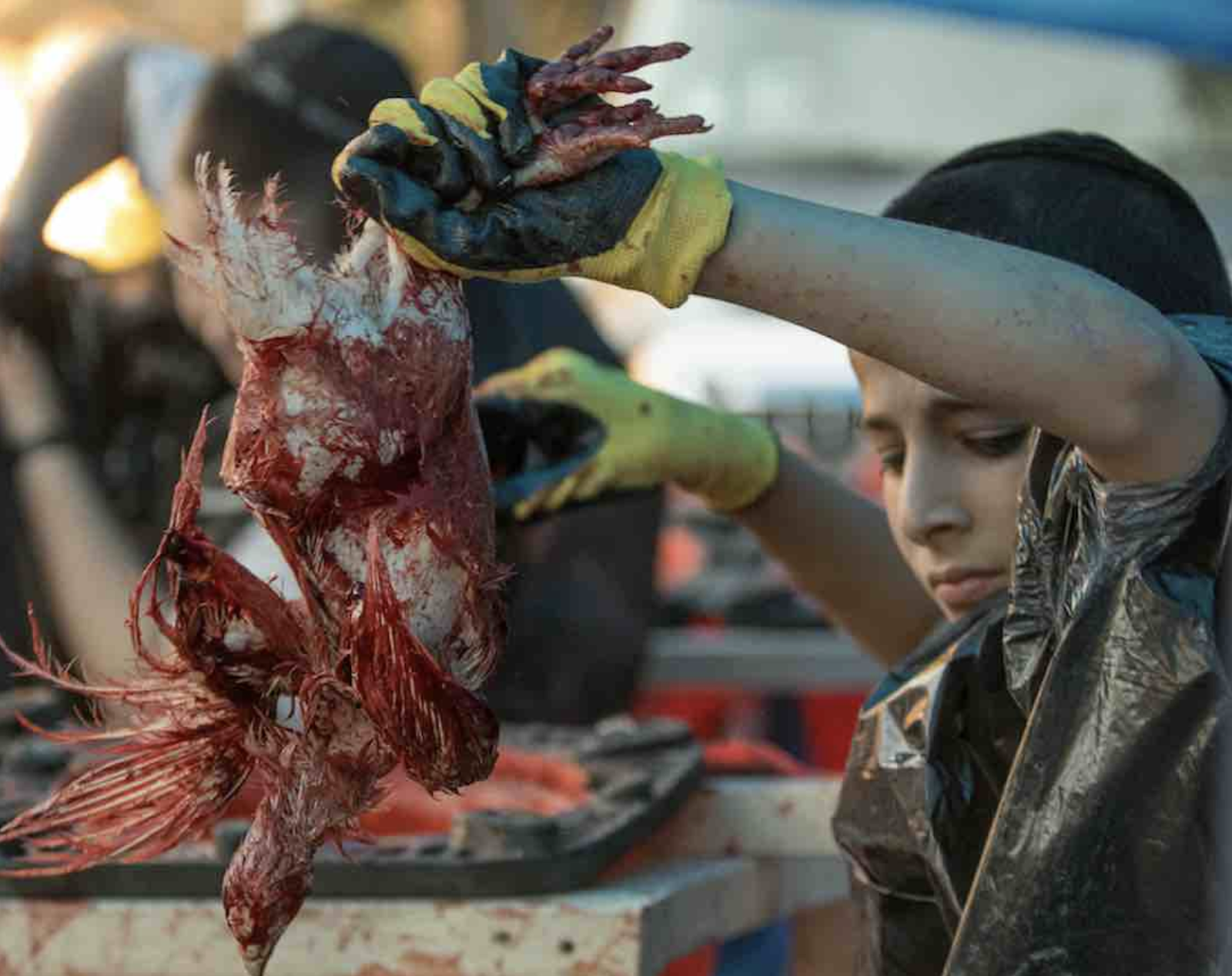
It is very evident how this hypocrites’ dogma is at work in the following scene. See here below how Jews engage in religious sacrifice.


They will have to face the consequences


In and around temples, scammers and religious traders sell animals to those who wish to gain some virtue. Worshipers think that by going to the temple during this festival they can accrue virtue by purchasing and sacrificing animals. Such is the extent of their religious dogma. Rather than gaining virtue they are committing sin, and they will have to face the consequences.

In Nepal, there are no laws against animal abuse and animal torture. Just butchers travel from village to village collecting scrawny animals and then that butcher does not feed the animals he collects. Just he gives them water to stay alive. Reason being he does not want to invest even a single rupee in an animal he is going to sell for sacrifice. That butcher wants to keep his profit as high as possible. So really it is a pathetic situation. Those animals are subject to abuse and cruel treatment and finally murdered in cold blood. All done in the name of religion.
http://anandamargauniversal.blogspot.com/


Liberation from human life by slitting your own throat?


Ananda Marga philosophy guides us, “They fail to understand that just as their lives are very dear to them, similarly, the lives of animals also are equally dear to them. Then why should I not show mercy to others? Why should I act like a mean, selfish person? And if they say or argue that if the animals are sacrificed in this way they will attain liberation from animal life, then I will counter-argue, “O human beings, you are also a creature, why don’t you attain liberation from human life by slitting your own throat? Why don’t you help your children or your relations to attain liberation from human life by sacrificing them. Why are you so eager to apply this liberation movement, this hatchet or axe, against innocent goats?”” (3)


Goal is to educate the society

As Ananda Margiis, we have a big responsibility to spread the gospel of neo-humanism and open the eyes of the people. All must realise this tenet:

Ananda Marga philosophy states, "Just as your life is extremely dear to you, similarly the lives of others are equally dear to them. A person who thinks thus and shows mercy on other creatures is really a sádhu, or virtuous person.” In order to become a virtuous person one need not give up one’s worldly life. When this idea dawns on one’s mind one realizes, “Why should I kill an innocent creature." (4)

Those who senselessly indulge in the slaughter of animals for blind religious rituals must one day face the consequences of their heartless acts. Even killing one innocent animal will create one very bad samskara. There is no escape.
http://anandamargauniversal.blogspot.com/


Conclusion

To save the animals from being butchered and to save humans from facing the harsh consequences, we must aim to raise the consciousness of the people so they will join in and help educate society. Legal codes must be put in place to stop such scenes of gross murder in the name of religion.

This is a situation that brooks no delay. Baba wants us to strongly oppose such dogmas by educating the masses. First, however, one must understand the severity of the problem otherwise people will not be inclined to jump into action.
http://anandamargauniversal.blogspot.com/

The Hindu religion is not an isolated case. Such animal sacrifices are very common in various religions. On certain special festival dates, Jews kill thousands upon thousands of chickens. And with regards to animal sacrifices, Muslims are the most egregious. The mass killings that go on at the time of Eid are notorious. All in all, we have a long way to go but we should be optimistic and know that armed with the weapon of neo-humanism, victory is sure.

Namaskar,
in Him,
Randhiir

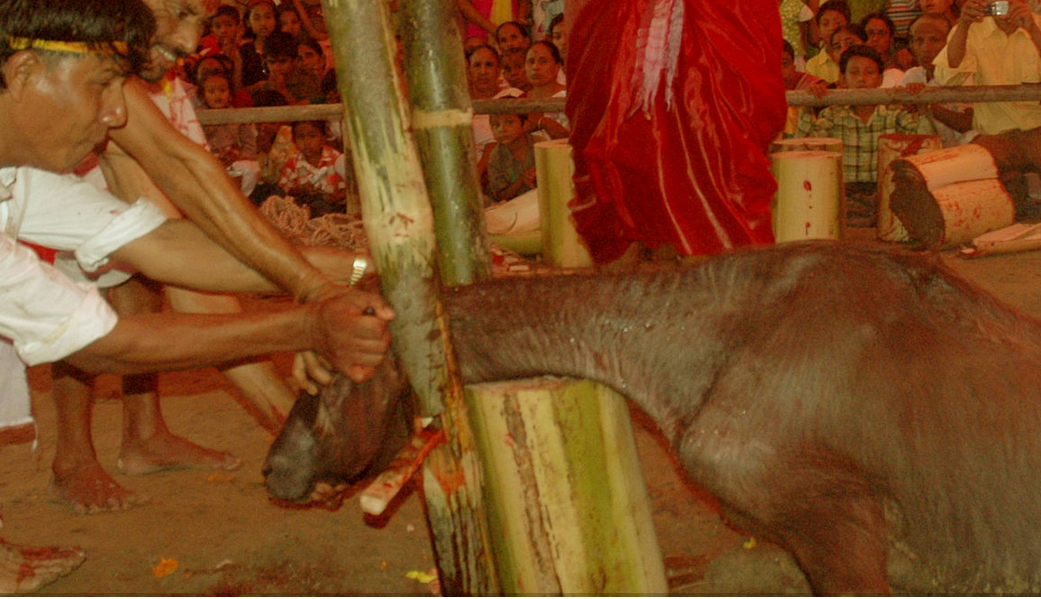
In various parts of India, courts are ruling against animal sacrifices done in the name of religion as they are steeped in cruelty. In this way, animal sacrifices are step by step being outlawed. Even then, scenes like this are still prevalent across the Indian subcontinent. See how the people on the left are holding and forcing the animal’s neck on the chopping block. Very soon a blade will come flying down and chop the animal’s head off. This is such a spectacle that all the townspeople come out for this religious event. 


Gory, beastly Hindu ritual


Tragically, this is a very common sight. Here above one goat is being sacrificed. That animal has struggled hard as it has no desire to be mutilated and slaughtered. Alas, to no avail. Verily the act is so gory, and so ghastly, and so inhumane that one person cannot stomach it at all. See how some in the audience are quite concerned with what is about to take place. Yet there are dozens upon dozens of people watching. Even some are watching with keen interest as if they are bearing witness to greatness. Such is the effect dogma has on the human intellect: People blindly support heinous acts.
http://anandamargauniversal.blogspot.com/


About Islam & cruelty 


Ananda Marga ideology states, “Humanity, in its all-out quest for this aesthetic science, attained spirituality. One must acknowledge this. Herein lies the excellence of aesthetic science. For this reason, I have given my whole-hearted and explicit support for nandana vijiṋána. You know that there are certain religions which do not encourage aesthetic pursuits. You will notice that in those religions inertia, inferiority complexes and a sense of violence are predominant.” (5)


GORY, BEASTLY HINDU RITUAL

This first image is from a scene in Nepal, a Hindu nation, not a secular one - where animal sacrifices are the norm. Tragically, this is a very common sight. Here below one buffalo is being sacrificed. That animal has struggled hard as it has no desire to be mutilated and slaughtered. Alas, to no avail.

See how they tied the animal’s head to one strong post - it is tied in two places. And then with one great, big machete they have viciously chopped the animal’s neck. At this point in the scene, the animal’s head is 95% chopped off. It is a ruthless and cowardly act - all in the name of religious worship and pleasing some mythological deity. The lead person, i.e. priest, conducting this act is shirtless and wearing a white garment, with that huge machete in his hand. Then another priest wearing a red garment with the sacred thread around his torso is holding the back of the animal to keep it in place. The Hindu priest has encouraged spectators to come and watch this so-called holy deed. Sadly, all those commoners have been indoctrinated into this senseless and brutal dogma.

Verily the act is so gory, and so ghastly, and so inhumane that one person cannot stomach it at all. See the person dressed in all white directly on the right side of the photo - he has covered his face and turned his head away, utterly unable to watch this horrific act. Yet behind him there are hundreds and thousands of people watching. Even directly behind the person who is repulsed by this gory act, there is one person in a dark shirt raising his arms in victory. Such is the effect dogma has on the human intellect: People blindly support heinous acts.


MASS ANIMAL SLAUGHTER OUTSIDE GODHA MANI TEMPLE

Next we see the scene outside the Godha Mani temple in Nepal where they are indulged in goddess worship. In order to please that mythological deity, Hindu priests organise a massive animal sacrifice that harkens back to the days of old when the rivers flowed with the blood from such sacrifices.

Here at this annual sacrifice, 150,000 goats and chickens and 25,000 buffaloes were slaughtered. It looks like a veritable battlefield, with corpses and blood strewn everywhere. The scene is so ghastly. Thousands upon tens of thousands of animals are being killed and butchered for naught. Just one religious dogma is to blame.

Now we come to the photo itself. As stated the temple is in the background. And in the foreground there is a person to the left in a white T-shirt hold a machete. Already he has killed dozens or hundreds of animals. And directly front center in dark blue there is person with his arms raised holding a machete. And he is about to his that buffalo calf directly on the neck. The red scarf denotes where he is aiming to strike the defenseless animal. Actually that animal is so emaciated it has no strength to run away. It smells the blood of so many slaughtered animals - it senses that danger is near - but has not energy or strength to move to even save itself.

All in all this is a photo about the gross misuse and abuse of human intellect and power: The spell of dogma does not allow people to use their brain or cultivate any compassion. Just they work mindlessly and heartlessly like robots slaughtering one animal after another.


Such a bloody, gory scene used to be very common in India before the time of Lord Buddha & Lord Mahaviira Jain. Later such sacrifices were almost eliminated. And now today the Indian courts have ruled against such religious sacrifices. No doubt, on a relatively small scale, i.e. in rare cases, animal sacrifices are carried out all around India. But big ones like the scene shown above are banned in India. See note 1 appended below.

Nonetheless, it is unacceptable that any civilised society would tolerate even a single animal sacrifice in the name of religion. The time has come to ban this completely.

Now it is very evident how this hypocrites’ dogma is at work in these two above scenes.

References
1. Prout in a Nutshell - 16, Religious Dogma – Excerpt B
2. Prout in a Nutshell - 16, Religious Dogma – Excerpt B
3. Yoga Psychology, Instinct and Devotion
4. Yoga Psychology, Instinct and Devotion
5. Ananda Vacanamrtam - 10, Yatamána – the Stage of Perseverance


*        *        *

The below sections are entirely different topics, unrelated to the above material.
They stand on their own as points of interest.

*        *        *

== Section 2: Prabhat Samgiita ==

Your grace is showering eternally


"Pratham jiivane, tumi a'so niko, ta'r la'gi, mane kono klesh na'i..." (Prabhat Samgiita #0379)

Purport:

Parama Purusa, Baba You did not come close to me in the dawn of my life; but, I do not agonize over why You did not bring me under Your shelter and am not pained by why You did not draw me near and become very intimate. I do not have any mental anguish about this. But I do have repentance in my heart for why I did not search for You. My life passed in vain. That is why my heart is burning and crying all the time. The fault is mine: In my early years I did not try to find You. That is the cause of my deep remorse.

Parama Purusa, My Supreme One, that time You were so close to me - living side by side, always. Even then I did not call You or try to attain You by learning sadhana. I did not care about that. Just my days and nights passed in useless pursuits in the early moments of my life. Now in my twilight years, the more those early remembrances sprout in mind, the more pain I feel.

Parama Purusa, Baba, everyone comes onto this earth for a short span of time, for a calculated period. And there are so many works to do. Yet fruitlessly people waste their time blaming God for their misfortunes - but there is no benefit in this. Because everyone is facing their own samskara. When they remove the umbrella of vanity, they will realise that Your grace is showering eternally.

Parama Purusa Baba, You are ever gracious; what You do is best for me. My only desire is to always remain under Your shelter...


== Section: Important Teaching ==

To utilize enemies

Here following is and English summary of Baba’s original teaching in Bengali from Shabda Cayanika: 
It is said that there is a particular species of the cuckoo bird that is incapable of nesting and raising its own offspring. So to protect and save her babies, the mother cuckoo gently lays her own eggs in the crow's nest, even though the crow is her dreaded enemy. But since the eggs of both the birds looks the same, the crow carefully cares for those cuckoo eggs which were placed in her nest-- thinking them to be her own. At the time of birth, the newborn birds of both species are black; so seeing the baby cuckoos, the mother crow does not initially realise that the baby cuckoos are not her own offspring. It is only when the baby birds become a little bigger and start to call out and cry, that the crow realises those are not her babies. Then and there the mother crow becomes very angry, suddenly understanding that it has gotten duped. But because of having given long-term care and developed sincere love for the baby cuckoo, the mother crow gives up the idea of attacking and killing the cuckoo. And instead the mother crow raises the baby cuckoo as one of her own. (English summary of Shabda Cayanika -10)
1. Just like the cuckoo utilises even its worst enemy, then we too should use our enemies in an intelligent way. Baba utilised communist enemies to propagate Ananda Marga ideals. If such communists had not created such a negative agenda and if such communists had not spread so much bad news about Ananda Marga Pracaraka Samgha, then the general populace would not have become so attracted to read about AMPS. People are not enticed by good news, but certainly they want to know about the dark aspects and controversial topics. By this way AMPS grew a lot. If the communists had not created so much opposition, Ananda Marga ideals would not have spread widely in such a short period.

2. The crow adopted the cuckoo as its own because it had spent so much time nurturing that baby cuckoo. Here the point is that through interaction all kinds of beings can become close to one another. Baba has given collective social functions for this very purpose. By spending time with one another, people of diverse backgrounds forget their differences and embrace each other as their own.


== Section ==

~ हे मेरे प्रभु! राह भूल कर ही, यदि मेरे पास  आ जाओ तो अच्छा होगा ~

प्रभात संगीत 2246  तुमि पथ भूले जदि एले, जेनेशुने नाइ वा एले.....नाइ वा एले

भावार्थ
हे परम पुरुष बाबा! तुम मेरे सब कुछ हो, मेरा संपूर्ण जीवन तुम्हारे चारों ओर घूम रहा है। पर मेरी अपनी योग्यता के आधार पर मैं तुम्हें अपने पास बुला सकने का सामर्थ्य  नहीं जुटा पा रहा हॅूं। इसलिये राह भूल कर ही, यदि मेरे पास  आ जाओ तो अच्छा होगा। इसे मैं तुम्हारी अमाप्य करुणा ही समझूंगा। ए दिव्य सत्ता! मेरी प्रबल सोच है कि तुम भूल से ही मेरे पास आओगे, क्योंकि अभी तक तुम जानबूझकर तो कभी भी नहीं आये। मेरे पास आने की कृपा करें।

मेरे प्रभु! मैं बहुत भव्य समारोह आयोजित कर तुम्हारा स्वागत करना चाहता हॅूं, पर मेरे पास स्वर्णजटित वह आसन नहीं है, जिस पर तुम्हें राजाधिराज की भाॅंति बैठा सकूॅं, और न ही मेरे पास सुन्दर  रेशमी सज्जा से सजाया गया मंच ही है। मैंने तुम्हारे आगमन का रास्ता, अल्पना से भी नहीं सजाया है। पर मेरा हृदय अवष्य ही तुम्हारी चाहत रखता है, और स्वागत करना चाहता है। मुझे बस एक ही आशा  है कि तुम भूलवश  ही मेरे पास आओगे, जिसे मैं तुम्हारी अहेतुकी कृपा ही समझूंगा।

 हे परम पुरुष! तुम तो जानते ही हो कि मेरी इस फूस की कुटिया  में प्रचुर धन नहीं है, तुम्हारे शुभागमन के समय प्रदर्षित  करने के लिये मेरे पास बहुमूल्य रत्न भी नहीं हैं, और न ही प्रथम श्रेणी का भक्ति-भाव ही है। परंतु बाबा! मेरे हृदय में यह आशा  भरी भावना अवश्य  है कि, भले ही तुम्हारी यहाॅं आने की योजना न हो, तुम भूल से ही सही, मेरे घर अवश्य  ही आने की कृपा करोगे। बाबा, तुम सदा ही कृपालु हो, मैं तुम्हारे चरण कमलों की धूलि चाहता हॅूं , कृपा कर आ जाइये।

टिप्पणी-


1. अल्पना- जिन्होंने डीएमसी के समय स्टेज से डायस तक जाने वाले रास्ते का अवलोकन किया है वे जानते हैं कि उसमें रंगगीन कलात्मकता , फूलों की सुगंध , फूलों की पंखुडि़यों और गुलदस्तों की  सजावट कितनी आकर्षक होती थी। इस सजावट को अल्पना कहते हैं। इसका अर्थ है अपने आदरणीय और पूज्य के आगमन के समय प्रेमपूर्ण स्वागत करने का एक तरीका। विभिन्न अवसरों पर सामान्य जन भी घरों व मंदिरों के सामने इस प्रकार अल्पना या रंगोली की सजावट करते हैं।

2. इस प्रभात संगीत में उस भक्त की भावना को व्यक्त किया है जिसके पास भौतिक और आध्यात्मिक जगत की कोई उपलब्धियाॅं नहीं हैं, जैसे स्वागत के लिये स्वर्ण का आसन, रेशमी सज्जा, रत्न आभूषण ( वास्तव में  आध्यात्मिक उपलब्धियाॅं ) अथवा कोई विशेष योग्यता, शिक्षा उत्तम आचरण या समाज सेवा, या पराभक्ति आदि। चूंकि यह सब उसके पास नहीं है इसलिये संकोचवश  वह सोचता है कि मै परमपुरुष को इनके बिना कैसे आमंत्रित करूं, पर फिर भी उसे आशा  और विश्वास है कि, बाबा भूले से ही सही उसकी कुटिया में आयेंगे अवश्य ।


== Section 4: Links ==


Cómo consolar a una familia en duelo

Baba

Cómo consolar a una familia en duelo

Namaskar,

Este artículo está dirigido exclusivamente a aquellos que atraviesan cualquier terrible calamidad de la vida, especialmente para ayudar a los que sufren la pérdida de un ser querido. La ética principal de Baba es que, de forma psicológica, se debe alejar la mente de las personas de su dolor. Los que están de luto no deben ser forzados a sufrir innecesariamente.

En Su discurso, Baba nos da muchas directrices prácticas sobre cómo ayudar a una familia en duelo. Reconocer su dolor y desviar la mente hacia arriba son dos de los elementos clave de Sus directrices. Veámoslo con más detalle.
 

Empatizar con la familia en duelo

Una vez que la muerte ha llegado, hay que esforzarse por llevar a la familia y a los amigos en duelo hacia pensamientos más pacíficos. No deben pensar una y otra vez en la pérdida de su ser querido. He aquí la directriz única y distintiva de Baba:

1A) Al llegar, si ves que la familia en duelo está llorando, primero simplemente siéntate y, si es socialmente apropiado, pon una mano reconfortante en su hombro, de lo contrario tu sola presencia es suficiente, y déjalos llorar. No les diga que no lloren; permítales llorar. Esto proporciona un enorme apoyo emocional. La(s) persona(s) afligida(s) pensará(n): "Esta persona que está sentada aquí conmigo es una persona cercana". Se sentirán reconfortados por tu presencia. No pienses que sienten que les estás molestando.

1B) Recuerde que el mero hecho de venir y sentarse en silencio junto a la familia en duelo les ayuda a distraer su mente de su sufrimiento y su pena. Naturalmente, mirarán hacia ti y esa mirada en sí misma es una distracción. Así que tu presencia les alivia. Y cuando llegan más visitantes y simpatizantes, el beneficio y el alivio para la familia de luto aumenta. Porque cada vez que los que están de luto miran para ver quién ha venido, su mente se aleja del dolor y la agonía de su pérdida. Por eso es tan importante que acuda el máximo número de personas y se sienten con la familia.


Da el pésame, pero no elogies al fallecido.

2) Después de llorar durante algún tiempo, puede que empiecen a mirar hacia ti. En ese momento, expresa tu más sentido pésame a la familia que esta de luto. Si antes estabas llorando, puedes decir: "Yo también estaba llorando cuando me enteré de la noticia"; si no, puedes decir: "Siento mucho su pérdida", o cualquier otra palabra que sea socialmente apropiada y exprese tu sentimiento interior por este triste acontecimiento. Sobre todo, no empieces a alabar la grandeza del fallecido. Eso es lo peor que se puede hacer, ya que acentúa la pérdida de la familia que está de luto. Lo mejor es simplemente expresar tu dolor por esta pérdida. Este es el enfoque racional.

3) Puedes añadir: "Por qué no llorar; llorar es normal después de una pérdida así. La única razón por la que dejé de llorar es porque pensé que si seguía llorando tú llorarías más".

4) Hasta este momento, la persona afligida estaba llorando; entonces te sentaste cerca de ella y miró hacia ti y lloró más. Cuando sus lágrimas se calmaron, empezaste a hablar con esa persona. Este acto de entablar conversación con esa persona desvió su mente de su pérdida. Su mente se dedicó a pensar en otra cosa. De este modo, has conseguido llevar su mente en otra dirección y aliviar su sufrimiento, hasta cierto punto.

5) En este momento, si la persona sigue llorando profundamente, mírala en silencio con empatía. Esto ayudará a tranquilizarla.


Ofrécele agua para aliviar su sufrimiento - desvía la mente de su dolor.

6) Pide a otro amigo que no esté llorando que traiga un vaso de agua. Mantén el agua cerca de ti. Después de algún tiempo, cuando la persona afligida mire hacia ti, extiende suavemente tu mano sosteniendo el vaso de agua y di: "Por favor, bebe un poco de agua - es importante beber algo".

7) Puede que digan: "No voy a beber - no tengo sed". Y no pasa nada, porque al responder a tu ofrecimiento su mente se desvía de su pena. Así que si miran hacia el agua o reconocen tu ofrecimiento de alguna manera, su atención se desvía de su pena. Rompe el ciclo de llanto y desesperación. Este enfoque es muy importante.

Y aquí tienes otras formas de hacer que se tomen algo, ya que el objetivo general es distraer su mente y ayudarles a experimentar cierta liberación y alivio de su tristeza.

8) Si deciden no beber, en ese caso, espera un poco. Al cabo de un rato, ofrécele amablemente: "Se te debe estar secando la garganta de tanto llorar. No es necesario que bebas mucho, pero al menos ponte un poco de agua en la boca".

9) Si aún así rechazan tu oferta de agua, diles amablemente: "Toma, te pondré el vaso en la mano, sólo bebe un sorbito". Entonces sí que tomarán un sorbo. (Nota: también puede ofrecer zumo de frutas, agua con limón, té o cualquier otra bebida sutil).

10) Si, de hecho, el familiar bebe un sorbo, significa que su mente se ha desviado, al menos temporalmente, de su duelo. Eso rompe el ciclo de pensar en su pérdida.

11) Recuerda, Baba nos guía para que el objetivo sea que la mente de la persona se desvíe de pensar en el fallecido. Ese es el objetivo.

12) También debemos tener presente que el enfoque y la psicología de base son una constante. El objetivo es desviar la mente de los familiares afligidos para aliviarles de su sufrimiento. Este enfoque dado por Baba se basa en la psicología humana universal. Es aplicable a todos.
 
Al mismo tiempo, debemos utilizar nuestro viveka y considerar cada caso de forma independiente. Aunque el objetivo es el mismo, los detalles pueden variar según el tiempo, el espacio y la persona. Por ejemplo, en un país muy frío puede que no ofrezcamos agua fría, sino una bebida caliente sutil, y viceversa en climas cálidos. Y si una familia no es acomodada económicamente, debemos asegurarnos de no sobrecargarla económicamente. Así que debemos suministrar bebidas en esos casos, etc.

Así pues, debemos tener siempre en cuenta la geografía y las condiciones climáticas, la situación económica de la familia, las tradiciones de esa región, etc. Entonces podremos emplear las opciones más psicológicas y adecuadas para distraer su mente. Así podremos ayudar mejor a la familia en duelo.


Cómo tratar a los visitantes que lloran

13A) Un punto importante a recordar: Asegúrese de colocar a alguien fuera de la entrada de la casa para que vigile a los visitantes. Deben estar a una distancia adecuada para que los visitantes que lloran no sean audibles para la familia en duelo. Ningún visitante debe llorar delante de la familia en duelo. Si un visitante empieza a llorar, los familiares llorarán más.

Por tanto, diga a todos los visitantes, fuera del lugar, que el médico ha prohibido que nadie llore delante de la familia. Aunque un visitante quiera llorar, no debe hacerlo mientras consuela a la familia. Es mejor llevar a ese visitante a otro lugar y consolarlo en otro sitio. Las personas que visiten y consuelen a la familia no deben romper a llorar sin control. Eso sólo empeorará el dolor de los allegados en duelo.

Las personas que rodean a la familia deben estar en un estado de ánimo equilibrado y estable. Si alguien necesita llorar, debe irse de ese entorno. No debe ponerse a sollozar delante de los familiares en duelo. Éste también es un punto clave.

13B) En algunos lugares, los visitantes vienen y se entregan al llanto fingido. Piensan que forzándose y dando un espectáculo de llanto demuestran a la familia doliente cuánto les importa. Piensan que con el llanto fingido demuestran a todo el mundo lo compasivos que son y aumentan su propio prestigio. Pero todo esto es muy malo. No es más que dogma. Nunca se debe fomentar ni apoyar el llanto falso. Estas personas no lloran cuando están fuera del lugar. No están realmente disgustadas. Sólo lloran delante de los demás como una especie de exhibición pública. Este tipo de estratagema superficial nunca debería tener cabida, ya que sólo empeora la situación en todos los frentes.
 

Por qué hay que alejar a los visitantes o simpatizantes que lloran

14A) Al mismo tiempo, si un miembro de la familia en duelo rompe a llorar, se le debe consolar y apoyar. Lo peor es empezar a decirle que llorar no es bueno para la salud. Si les dices que no lloren, se sentirán irritados contigo, pensando que no comprendes su pérdida. Así que lo mejor es dejarles llorar, porque decirles que no lloren sólo hará que se sientan más incómodos y angustiados.

14B) El objetivo es alejar suavemente la mente de la familia doliente de su sufrimiento. Para ello, seguimos una pauta natural de desviar su mente para que no se sientan tan agobiados por su pérdida. En este sentido, es muy útil que los visitantes se comporten con serenidad ante los familiares. Por supuesto, algunos visitantes también pueden sentirse abrumados por la pérdida y desear llorar. Se les debe permitir llorar, pero no deben hacerlo de forma descontrolada delante de los familiares. A los visitantes que se sientan desbordados por la emoción se les debe llevar con cuidado a una habitación separada o al exterior, donde puedan llorar libremente. De este modo, la familia en duelo no se verá perjudicada.


Evitar las conversaciones filosóficas

15) He aquí otro escollo clave que hay que evitar. No hay que empezar a dar grandes conferencias filosóficas.

No digas: "Este mundo está cambiando y quienquiera que nazca, un día va a morir -todo el mundo muere en algún momento- así que no hay necesidad de llorar".

Nunca hay que dar este tipo de sermones. Es irritante para el doliente y sólo conseguirá llorar más. Además, se sentirá ofendido por tus palabras. Así que no hables filosóficamente sobre la naturaleza de este mundo efímero. Eso no es bueno. Hay que saber que ese tipo de predicamentos es muy poco psicológico.

Es por eso que uno debe seguir la directriz antes mencionada de Baba - que es psicológicamente apta y sutil.


Advertencia: no cantes las glorias de los difuntos


16) Recuerda esta advertencia: No le recuerdes a la familia en duelo las cualidades estelares, atribuciones, dedicación y grandeza de la persona fallecida. No les recuerdes cómo esa persona siempre se sacrificó por el bienestar de los demás. Eso sólo redirigirá a la familia doliente hacia su pérdida. Este tipo de elogios y alabanzas deben evitarse. Es un error hacerlo en esta ocasión, por mucho que uno se sienta tentado a elogiar al difunto. Sólo intensificará la agonía y el dolor de la familia en duelo, y llorarán más.

17) Nadie debe pensar erróneamente que con este enfoque no nos preocupamos por la persona fallecida. Aquí el objetivo no es eliminar el recuerdo del fallecido; ese no es nuestro camino en Ananda Marga. Sabemos bien que la familia en duelo no va a olvidar nunca a su ser querido. El enfoque que estamos adoptando aquí - desviar la mente de su pérdida - es sólo una medida temporal durante este período tan delicado y sensible inmediatamente después del momento de la muerte. Cuando esta pérdida es una herida tan cruda y dolorosa para los familiares supervivientes, lo mejor es que su mente se desvíe de este doloroso recuerdo. No es bueno para ellos pensar constantemente en la pérdida de su ser querido, ya que eso empeora su dolor.


Solo se debe hacer PS y sadhana, no Guru puja

18) Cuando todos los enfoques anteriores se han tomado y todo el mundo se ha calmado, pide a alguien que empiece a cantar Prabhat samgiita etc. Asegúrate de que todo el mundo se siente de cara al pratiik y no al difunto. Con el canto del Prabhat Samgiita, naturalmente los miembros de la familia también se sentarán y escucharán. De esta manera su mente se desviará hacia el dulce canto del Prabhat Samgiita, kiirtan y se sentirán más tranquilos. Aquí el objetivo es canalizar el flujo de una manera devocional. Aunque esta es una circunstancia desafiante para organizar un dharmacakra con Prabhat Samgiita y una historia de Baba, este es el único enfoque racional que se puede hacer para aliviar el dolor de la pérdida y la agonía mental. No hay otra manera.

Deben asegurarse de sentarse de frente al pratiika - y no sentarse rodeando al difunto. Y solo se debe hacer Prabhat Samgiita y sadhana, no Guru puja.

En un resumen en español de Caryacarya -1, "Disposal of the Dead Body",1956, Jamalpur. Baba nos dice: Antes de la cremación o el entierro del cadáver, debe realizarse Iishvara Prańidhána colectivo. (resumen en español)

Una vez más, sólo Prabhat Samgiita y sadhana se debe hacer, no Guru puja.

19) Después de que el dharmacakra esté completo y terminado, asegúrese de que alguien cuente una historia espiritual (no una historia sobre el difunto, sino más bien sobre Parama Purusa), haga una lectura o dirija svadhyaya.


Conclusión

 
He aquí algunos puntos clave a tener en cuenta:

1. No diga a la familia en duelo que no llore; permítales llorar

2. Míralos con empatía.

3. Lleve un vaso de agua.

4. Rediríjalos compasivamente para que dejen de pensar en el fallecido.

5. Ningún visitante debe llorar delante de la familia en duelo.

6. No se debe empezar a dar grandes conferencias filosóficas.

7. No recordar a la familia en luto las cualidades estelares de la persona fallecida.

8. Pide a alguien que empiece a cantar bhajans.

Namaskar,
En Él,
Murlidhar Deva

Este artículo aborda -de manera universal- puntos clave para ayudar a quienes están de duelo o sufren una pérdida drástica de cualquier tipo. Aquí arriba repasamos las enseñanzas de Baba sobre este importante asunto y entendemos nuestra forma de Ananda Marga de hacer el duelo.
 

¿Adorar a los muertos?

Es contra Caryacarya hacer Guru puja en la ceremonia de shraddha.

En un resumen en español de Caryacarya -1, "Disposal of the Dead Body",1956, Jamalpur. Baba nos dice: Antes de la cremación o el entierro del cadáver, debe realizarse Iishvara Prańidhána colectivo. (resumen en español)

En tales ceremonias de defunción, sólo debe realizarse iishvara pranidhána, no Guru puja. Además, el iishvara pranidhána no se realiza rodeando el cuerpo, sino alejándose un poco y mirando en otra dirección. De lo contrario va en contra de la santidad de Marga Guru y contrario a Caryacarya parte 1. Lo mejor es realizar la Guru puja de frente al pratik o foto, no de frente al cuerpo muerto.

Para un estudio en profundidad leer Ananda Vacanamrtam - "parte 20, capítulo 3" en su totalidad.


El título en inglés está mal en Caryacarya

Desafortunadamente alguien tradujo mal el capítulo 31 de la edición inglesa de Caryacarya parte 1. Lo titularon como "Disposal of the dead body". Lo titularon como "Eliminación del cadáver". Pero esto es erróneo e inapropiado. En las ediciones hindi y bengalí, ese capítulo se titula Shava Satka'r, que significa "reverencia al cuerpo sin vida". Esto proyecta un aire de respeto y santidad. Pero esos editores no le dieron un título comparativamente respetuoso en inglés. En su lugar, lo llamaron "Eliminación del cadáver", como si uno estuviera deshaciéndose de basura, desperdicios, etc. Deberían tomarse medidas para titular adecuadamente el capítulo 31 de la edición inglesa del Caryacarya parte 1.


SUBJECTS TOPICS