Search This Blog

Thursday, May 20, 2021

Mahaprayan of Bhaktavatsalam ji (Selam)

Baba


Mahaprayan of Bhaktavatsalam ji (Selam)

Namaskar,

It is with much sadness that we share the news of the mahaprayan of Shrii Bhaktavatsalam of Selam, Tamil Nadu (India). Bhaktavatsalam ji's mahaprayan occurred yesterday at 11pm. 

Shrii Bhaktavatsalam was a strong bhakta who was keen to follow the teachings of Marga Guru Lord Shrii Shrii Anandamurti ji. Moreover, Bhaktavatsalam ji held various leadership positions over the years in our AMPS, both in local and regional levels. And he also received microvita sadhana. In day to day life, Bhaktavatsalam ji was well liked by sadhakas near and far. Indeed, his mahaprayan is a big loss for our Marga society, and especially so for those in his home area. 

May we all take solace in the fact that respected Bhaktavatsalam ji was a bhakta of Sadguru Baba. Certainly he will attain mukti or moksa, accordingly. Baba will lovingly bestow His infinite grace.

in Him,
Caetanya Deva 

Note: Here is an alert for those cremating a dead body in India or Indian managed cremation homes around the world. Their custom is to put the fire in the mouth of the deceased to initiate the burning of the body. This is prohibited in AM as it is uncivilised. So watch out; do not allow this. If you are not careful, they will end up cremating the body in this manner. Make them aware ahead of time. 

Ananda Marga Caryacarya states, "The practice of putting fire into the mouth of the dead body is repulsive, it should not be encouraged." (Caryacarya - 1, Disposal of the Dead Body)


~ In-depth study ~

We have seen that when somebody dies then in offering their condolences people say now Mr So-and-so is sitting on Baba's lap. On other occasions when telling a Baba story people also say, "Such and such person sat on Baba's lap." But these days the trend is that "sitting on Baba's lap" is used more in connection with death. And that causes some confusion in reader's mind. To unknot the situation please read below. 

Dogma: if "on Baba's lap" only used for death

Here are quoted lines from recently posted emails on various forums, wherein the writer uses the phrase - "in Baba's lap" - with the occasion of death:

- "May Parama Purusa Baba accept her in HIS divine lap"

- "We pray to Baba - please give him shelter in his lap... "

- "May his soul rest in the lap of our beloved BABA"

- "Now she is taking rest in Baba's Lap."

- "May Baba accept him in HIS divine lap....."

- "May he rest in HIS loving lap of eternity."

- "We are sure that Baba has taken him in His loving lap."

- "May his soul rest in Baba's lap forever."

- "Let her rest peacefully in Baba's Lap - which she always desired."

- "now he is in beloved Baba's lap"

- "May his soul get peaceful place in His lap"

- "He is now in Bábá's loving lap"

- "May Baba bless him with a seat in His lap."

- "May BABA accept him in HIS divine lap!"

- "May Baba take him in his eternal loving lap."

- "May his soul rest in peace taking shelter in Baba's lap."

- "Please keep him on Your lap forever."

- "We all collectively pray to Baba to take him on Baba's divine lap forever.”

All of the above lines are commonly written in eulogizing the deceased. These days mostly it is used in a eulogy and rarely used to recount one's intimate spiritual experiences - unfortunately. By this way, the phrase "in Baba's lap" is being misused and step by step the real meaning is being forgotten as now people more commonly use the phrase to eulogize those who have died, and much less so to express their inner feelings of bhakti. Unfortunately, the meaning and inner spirit of the phrase is getting lost.


Baba story: "sitting on Baba's lap"

Some time ago after dharmacakra, a senior margii was recounting his experiences of having dharma samiiksa with Baba. He said, "After being lovingly scolded by Baba for my wrongdoings, then He called me close and placed me on His lap - I remained there for some time soaking up His love - and He blessed me."

We all enjoyed hearing about his personal account with Baba during dharma samiiksa. When he finished telling his factual and historical event, there was a call for questions. Various people posed their queries. Towards the end, one new margii raised his hand and asked, "How did Baba bring you back to life?"

Everyone stared at the new margii in amazement. There was a look of astonishment all around - people were really shocked to hear him say this. The new sadhaka sensed that something was wrong He said very matter-of-factly, "I thought that sitting on Baba's Lap means that he (the margii) died - that is why I asked that question."

This was quite eye-opening for those of us in the room: Through our language and expression we had unknowingly taught someone to think that being on Baba's lap is the equivalent of death. Because it seems that nowadays people only use the phrase "Baba's lap" when a person has died, such as "Let him rest peacefully in Baba's lap", as if in order to sit on Baba’s lap one has to die. But that is false. Sincere sadhakas regularly sit on Baba’s lap in their meditation. It is His grace. It is just like a child need not die in order to sit on his father’s lap.

The idea is that this phrase - Baba's lap - has been linked with death due to extreme overuse. So for some time if sadhakas use this phrase exclusively for spiritual purposes, that will be best. The phrase, "sitting on Baba's lap", should not meet a similar fate. It should not lose its pure spiritual quality and just refer to one's death. That will be very negative.

Baba would bless bhaktas and place them on His lap


There are tens of thousands of recorded stories by sadhakas where they use the phrase, "on Baba's lap", when describing their experiences of being with Baba: He used to bless them and bring them on His lap. People should understand the deeply mystical value of this expression, and not just think that Baba's lap means death, i.e. that you can only sit on His lap at the time of death. Still today there are thousands of margiis walking this earth who sat in Baba's lap. And not only that, there are countless more sadhakas who were blessed by Baba in dreams and sadhana wherein they sat in His lap. And still today this deeply intimate experience is attainable by sadhakas, by His grace.

There are so many ways an aspirant can reach unto Baba's lap including in sadhana. That is the main idea that should be preserved. Sadhana is a spiritual practice and one can sit on Baba's lap in sadhana. We should make it cent-per-cent clear to one and all that the phrase, "sitting on Baba's lap", does not mean death.

"Mahaprayan" means death of mortals - confirm for yourself
from the Samsad Bengali-English Dictionary


Mahaprayan (Death): Many are aware that mahaprayan (death) is the common term used in India and especially in our Bengal to describe the death of any human being, even ordinary people. In that way, the obituary columns of the newspapers of Bengal regularly cite the mahaprayan (death) of various persons of society who died or passed away.

Some may get confused and wrongly think that the word 'mahaprayan' (death) is one extraordinarily term of bhakti to be used in association with Parama Purusa. But that is not at all the case. Rather to do so is only to undermine the eternal presence of Parama Purusa. That is why no bhaktas ever use the word 'mahaprayan' in reference to Lord Shiva or Lord Krsna. Because Lord Shiva and Lord Krsna exist eternally. Then there is no question of Their mahaprayan (death).

Baba is Parama Purusa so He is eternal and there is no question of His mahaprayan.

Here it should be known that the convention of an annual death day ceremony (i.e. shraddhainjali or mahaprayan) is a foundation of the Islamic tradition. Muslims are well known for this, and their approach of an annual death day ceremony was adopted by the leader of a particular group in AMPS. So no one should think that mahaprayan is some type of sacred event. It is done on the death day anniversary of Muslims.

And for those who need still more technical proof then all this can be clarified quite readily by referencing the dictionary. Specifically in the Samsad Bengali-English dictionary 3rd edition on page 848. Checking there it will be confirmed that the word 'mahaprayan' means death. Which is why it is used to refer to the passing away of even common citizens. And that is the case in this letter also. The term mahaprayan means death and this is the ideal term for this purpose.

Mahaprayan is only for humans not for Sadguru


Here it should be qualified that there is both real mahaprayan and fake mahaprayan. Real mahaprayan marks the death of any ordinary human being, just like the aforesaid news. This is the proper use of the term: To note a person's departure from this earth. That is the meaning of the mahaprayan term and that is the standard way the term is used in Indian languages.

Then there is the fake, or so-called, or dogmatic mahaprayan. That is when certain vested interests try to apply the mahaprayan term to Parama Purusa. This is grossly inappropriate because when Parama Purusa Sadguru Baba is that Divine Entity who is beginningless and endless and resides always in our heart, then it is entirely wrong to proclaim that He is gone.

That is why rational margiis are protesting; because the Oct 21st program is so-called mahaprayan. So-called means that something is fake. Parama Purusa is eternal, thus for some vested interests to declare "mahaprayan of Parama Purusa" is nothing but so-called mahaprayan.

Mahaprayan only really happens in the case of human beings, not Parama Purusa. Those doing mahaprayan for Sadguru are hypocrites. On the one side in meditation they ask His grace thinking that He is ever-present, and on the other side they think that Baba has passed away. That is their hypocrisy.


== Section 2: Links ==

Monday, May 17, 2021

Cómo Baba remarca a diferentes filósofos, pensadores y líderes

Baba

Cómo Baba remarca a diferentes filósofos, pensadores y líderes

Namaskar,

Cuando vas al mercado, es bastante común interactuar con numerosas personas. Una persona puede darte instrucciones exactas para llegar a una tienda en particular, un sastre puede arreglarte los pantalones de una manera muy adecuada y, en verdad, hay muchas personas cuyos talentos particulares aprecias. Sobre esa base, podrías recomendar ese empleado o sastre a otra persona.

Sin embargo, naturalmente, tu aprecio y recomendación no significa que apoyas completamente todos y cada uno de los aspectos de la vida de esa persona. Es posible que aprecies un talento específico, como la habilidad de ese sastre para coser, pero eso no significa que apruebas todo lo que hace ese sastre, como el vino que bebe por la noche.

Aquí el asunto es que en nuestra propia vida cotidiana, apreciamos y admiramos los talentos particulares que tiene una persona, pero eso no significa que abracemos incondicionalmente todos los aspectos de la existencia de esa persona.
https://anandamargauniversal.blogspot.com/


Cómo remarca Baba a varios filósofos

A lo largo de Sus enseñanzas, Baba menciona los nombres de varios filósofos y pensadores de manera positiva. Como Ananda Margiis y Sus discípulos, debemos entender Su mensaje general en estos casos.

En un punto particular, Baba apoya la perspectiva del pensador, pero eso no significa que Baba adopte plenamente todas las enseñanzas y acciones de esa persona. Así como no apreciamos todo el estilo de vida y el consumo de vino de ese sastre. La apreciación de Baba por un pensador determinado se limita a ese principio en particular, ya que ese punto está de acuerdo con la ideología de Ananda Marga.

Como todos sabemos, Baba ha venido a esta tierra para entregar Sus grandes enseñanzas de la ideología de Ananda Marga a la humanidad. Sus direcciones sociales y espirituales son totalmente únicas e incomparables en todos los sentidos. Para presentar este conjunto de pautas completamente nuevo, Baba a veces se refiere a varios pensadores, filósofos y líderes para ayudar a ilustrar Sus propios ideales. Su objetivo principal en este esfuerzo es aclarar y exponer la posición de Ananda Marga.

Por ejemplo, si una enseñanza dada de un sabio, rishi o pensador social en particular es paralela a la filosofía de Baba, entonces Baba a menudo la destaca en Su discurso. Esto le da a los bhaktas un punto de referencia para comprender mejor lo que Baba desea transmitir.
https://anandamargauniversal.blogspot.com/


Conclusión

En una línea podemos decir que Baba destaca a esos pensadores cuando sus enseñanza particulares sobre un punto dado es racional; y Baba critica a esos pensadores cuando sus enseñanzas particulares son irracionales. Esa es la única razón detrás de las alabanzas y condenas de Baba hacia cualquier filósofo o líder social. Por esto podemos entender que Baba no acepta incondicionalmente toda su doctrina ni abarca todos los aspectos de la existencia de esa persona.

Namaskar,
a Sus pies de loto,
Supakash

~ Estudio en profundidad ~


“Bhakti es lo mejor”

Por ejemplo: la proclamación de Bhagavan Shankaracaryaji de que "Bhakti es lo mejor". Esa enseñanza particular de Shankaracayaji es totalmente consistente con la ideología de Ananda Marga. Por lo tanto, Baba destaca este punto en Su discurso, ya que respalda la idea que Él está propagando.

Pero eso no significa que Baba adopte plenamente todas las enseñanzas y directrices de Shankaracaryaji. De hecho, en muchos lugares Baba refuta la filosofía de Shankaracaryaji. Por lo tanto, la apreciación de Baba de la filosofía de Shankaracaryaji se aplica solo a cualquier punto específico que Él (Baba) esté abordando. Baba no está prestando un apoyo general a todas las enseñanzas de Shankaracaryaji. En este proceso, el único objetivo de Baba es trazar claramente la ideología de Ananda Marga y, para hacerlo, utilizará ejemplos de enseñanzas bien conocidas para que Su punto sea lúcido para Sus discípulos y lectores.

Por lo tanto, el objetivo de Baba no es apoyar ni aprobar ninguna otra filosofía. Más bien, Baba aprecia aquellos aspectos de cualquier filosofía que sean paralelos a Sus ideales, y condena rotundamente aquellas enseñanzas que van en contra de la ideología de Ananda Marga.

Es por eso que Baba podría apreciar algunos aspectos de las enseñanzas de Bhagavan Buddha mientras señala las fallas de otros aspectos de las enseñanzas de Buddha. Porque el objetivo no es resaltar las pautas de Buda en si, sino exponer las enseñanzas de Ananda Marga.
https://anandamargauniversal.blogspot.com/

Baba condena mayavada


Desafortunadamente, algunos piensan erróneamente que la mera mención de Baba de una persona en particular significa que esa persona es grandiosa y, por lo tanto, debemos seguir todas sus enseñanzas. Pero este no es el caso. No es que Baba esté apoyando de todo corazón todo lo que ese individuo ha hecho o enseñado en su vida.

Un ejemplo perfecto de esto es cómo Baba condena la filosofía de mayavada (teoría de la ilusión) de Shankaracaryaji, ya que va totalmente en contra de las enseñanzas de la ideología de Ananda Marga.

En un resumen en español de Namami Krsnasundaram, "Prapatti, Viprapatti, and Aprapatti", Baba nos dice: Máyáváda está llena de contradicciones de principio a fin. Este tipo de error se llama pramáda en sánscrito: error al principio, error en el medio y error al final. Todo el advaetaváda es pramádagrasta [lleno de errores ]. (resumen en español)

Sin embargo, por otro lado, Baba apoya plenamente la enseñanza de Shankaracaryaji de que el camino del bhakti es el mejor.

En un resumen en español de Ananda Marga Ideology and Way of Life - 7, "In Adoration of the Supreme", Baba nos dice: Bhagaván Shankarácárya dijo, Mokśa kárańa samagráḿ bhatireva gariiyasii. De todas las formas de alcanzar la salvación, la devoción es la mejor. (resumen en español)

El punto clave a recordar aquí es que la ideología de Ananda Marga es lo que se está transmitiendo. Por lo tanto, debemos entender completamente cómo y por qué Baba elige referirse a varios pensadores mientras presenta Sus enseñanzas nuevas y únicas.
https://anandamargauniversal.blogspot.com/


- Here is a link to the original English letter: Baba's appreciation

Read all Spanish Letters Here

Saturday, May 15, 2021

Fanatismo bueno vs fanatismo malo

Baba

Fanatismo bueno vs fanatismo malo

Namaskar,

Desafortunadamente, algunos tienen una idea equivocada y piensan que no debemos ser estrictos en la práctica de las enseñanzas de Baba. En lugar de eso, piensan que debemos ser "moderados" al seguir las enseñanzas de Baba, y simplemente seguirlas vagamente.

Aquí hay uno de esos relatos del pasado reciente que no debemos olvidar:

Sé de un monje que fue invitado a cenar con celebridades y políticos para recibir dinero para un hogar de niños. Aparentemente, la sopa contenía cebolla, sin embargo, ese trabajador cortésmente consumió la sopa sabiendo que sus acciones [las de los monjes] no son para su propio beneficio sino para los niños y el proyecto y por respeto a los donantes que habían brindado un tremendo regalo al proyecto.

Entonces, el relato anterior glorifica el hecho de que un monje dejó su ideal y comió algo tamásico para complacer a ciertos políticos y por el bien de obtener algo de dinero. Esta es de hecho una tragedia y es una forma incorrecta de vivir la vida de uno, especialmente para un trabajador de tiempo completo de Ananda Marga. Nunca deberíamos adoptar tal perspectiva.
http://anandamargauniversal.blogspot.com/

¿Qué sigue: beber alcohol, comer carne?


La enseñanza clara de Baba es que nunca debemos comprometer nuestros ideales por dinero, nombre o fama. De lo contrario, ¿qué sigue? Hoy, por dinero y por complacer a los políticos, este monje ha comido cebollas, ¿qué hará mañana? Beberá alcohol, comerá carne, fumará cigarrillos o tal vez incluso haga algo peor. De hecho, una vez que uno compromete sus ideales, la profundidad de la caída no tiene fin.

Por dinero, uno no debe abandonar su dharma. Esta es una forma inadecuada de vivir y no producirá frutos. Eso significa que los capitalistas lo pueden comprar a uno en cualquier momento. Y esos capitalistas reconocerán este hecho, y pensarán que somos débiles y que con dinero pueden hacer que hagamos cualquier cosa. De esa manera, nos tentarán y comprarán todas y cada una de las veces. Porque pensarán que solo pensamos en dinero y no que no somos dignos de respeto. Así como algunos Dadas importantes se han desviado de ese camino del dharma y los margiis les han perdido el respeto. Mientras que si esos Dadas hubieran sido fanáticos al adherirse a la ideología de Ananda Marga, su respeto no se habría desvanecido.
http://anandamargauniversal.blogspot.com/

Así que nunca deberíamos hacer esto. Para hacer algo grande en este mundo y ganarse el respeto de los demás, uno debe estar atento en seguir su ideal de vida. Eso significa que como Ananda Margiis, ya sea que uno sea monje o margii, siempre debemos seguir Sus enseñanzas. Ese es nuestro principal deber y ese es el camino para llevar bienestar, tanto a nosotros mismos como a los demás. Esa es la forma de ganarse el respeto de los demás y propagar los ideales de Ananda Marga.

Piénsalo de esta manera. Si su cirujano no es fanático en seguir el protocolo médico, ¿confiarás en él para realizar una cirugía a corazón abierto?. No nunca. Porque quieres un médico que sea fanático, es decir, muy preciso y estricto, en su trabajo médico, no uno que sea holgazán y descuidado. De manera similar, el fanatismo en Ananda Marga es muy valorado porque Ananda Marga es dharma. Cuando cualquier seguidor de Ananda Marga es muy estricto, es decir, fanático, al adherirse a las enseñanzas racionales de la ideología de Ananda Marga, tanto ellos mismos como la sociedad en general se benefician enormemente.


Médico fánatico

Supongamos que un cirujano no es estricto en el seguimiento de los códigos de conducta y protocolo de los procedimientos médicos. Ese cirujano no es fanático, es decir, no es estricto sino descuidado en sus procedimientos médicos. Entonces, ¿le gustaría ir a él para una cirugía a corazón abierto? No nunca. Porque deseas un médico que sea fanático en su trabajo médico, muy preciso y estricto. Esa es también la razón del fanatismo en Ananda Marga Pracaraka Samgha: porque las enseñanzas de Ananda Marga son racionales. Los seguidores de Ananda Marga son muy estrictos en las ideas racionales por las cuales ellos, así como la sociedad en general, se beneficiarán enormemente.

Ser fánatico puede ser una bendición o una maldición

Ser fanático de una idea o camino en particular puede ser una bendición o una maldición; todo depende de lo qué uno sea fanático. Por ejemplo, ser fanático o extremista en seguir la ideología de Ananda Marga es grandioso porque de esta manera uno se vuelve divino; mientras que ser fanático o radical en seguir una de las religiones dogmáticas es dañino y uno se convertirá en una bestia.
http://anandamargauniversal.blogspot.com/

Como Ananda Margiis y discípulos de Baba, debemos tener esto perfectamente claro y no dejarnos influir por las perspectivas comunes que predican la "moderación" al seguir cualquier camino. Desafortunadamente, algunos malinterpretan este tema y en el proceso incluso glorifican a aquellos que contravienen las enseñanzas de Baba sobre el dharma al comer alimentos tamásicos, etc. Así que todos debemos tener cuidado, no sea que caigamos del camino divino de Ananda Marga.

Los fanáticos religiosos son demoníacos - los fanáticos dhármicos son divinos

Durante siglos la gente común ha visto cómo fundamentalistas y radicales en las religiones dogmáticas han creado un infierno en la sociedad. Los cristianos han apedreado a la gente hasta la muerte; Los musulmanes han eliminado los derechos de las mujeres y cortado las manos de personas inocentes; y, hay tantos otros ejemplos. Es por eso que los ciudadanos en general siempre dicen: "No seas radical o extremista. Ese fanatismo no es bueno. Sé moderado y tolerante en tu enfoque". Esencialmente, lo que están diciendo es cierto: seguir estrictamente los códigos y edictos religiosos dogmáticos causará muchos problemas.

Pero lo que la gente común no se da cuenta es que la ideología de Ananda Marga es diferente. Ha sido dada por Taraka Brahma y se basa en la racionalidad, la lógica y la benevolencia. Es perfecta, libre de defectos y basada en la ciencia. Nuestro camino de Ananda Marga no es un ismo, sino un enfoque científico. A continuación, en un discurso especial, Baba revela los secretos internos del fanatismo.
http://anandamargauniversal.blogspot.com/

Aquí está el resumen en español de la enseñanza originalmente dada en hindi de Baba en el General Darshan, 30 de diciembre de 1970 Patna:

Toda obra necesita determinación, no sólo las buenas, sino también las malas. Aquellos que están decididos a hacer un trabajo malo se vuelven peligrosos y crean terror para el mundo. En cambio, los que están decididos a hacer el bien se convierten en tesoros para el mundo; nadie puede impedir su progreso. Por lo tanto, también debe haber una determinación en alcanzar Parama Purusa: "Lo conseguiré, ciertamente lo conseguiré", así obtendrás el éxito. Entonces, uno debe tener este tipo de determinación, este es un tipo de fanatismo espiritual, no fanatismo religioso. El fanatismo religioso es malo porque conduce a la formación de grupos. El fanatismo espiritual (nos guía en), "Haré todo por el bien de la ideología. Si vivo o muero por mi ideología, es lo mismo para mí. Lo más preciado para mí es mi ideología". Entonces, recuerde, solo este tipo de determinación es necesaria.


Conclusión


El punto de Baba es muy claro. Se necesita fanatismo para hacer cualquier trabajo duradero en este mundo. Pero ser un fanático en seguir las religiones dogmáticas es muy malo y uno cometerá un daño incalculable, mientras que ser un fanático en seguir el dharma de la ideología de Ananda Marga es una algo muy superior, y uno traerá mucho bienestar al mundo y alcanzará a Parama Purusa.

En Él,
Indrajit


~ Estudio en profundidad ~

Por qué es muy bueno el fanatismo por las ideas racionales

Aquí está el resumen en español de la enseñanza originalmente dada en hindi de Baba en el General Darshan, 30 de diciembre de 1970 Patna

Alguien que dice ser un pandit (erudito) en veinte shastras (escrituras) y es Mahamahopaddhyay (es decir, el más alto grado de erudición como alguien que tiene un doctorado en literatura) nunca puede realizar a Parama Purusa (Dios), pero un hombre analfabeto que no sabe ni siquiera el alfabeto ka, kh, (en hindi) o alif, pe, be, te (en urdu) puede alcanzarlo.

Entonces, para esto, ya sabes, toda obra necesita empeño, no sólo las buenas sino también las malas. Aquellos que están decididos a hacer un trabajo malo se vuelven peligrosos y crean terror para el mundo. En cambio, los que están decididos a hacer el bien se convierten en tesoros para el mundo; nadie puede impedir su progreso. Por lo tanto, también debe haber una determinación de alcanzar a Parama Purusa: "Lo conseguiré, ciertamente lo conseguiré", así obtendrás el éxito. Entonces, uno debe tener este tipo de determinación, este es un tipo de fanatismo espiritual, no fanatismo religioso. El fanatismo religioso es malo porque conduce a la formación de grupos. El fanatismo espiritual (enseña), "Haré todo por el bien de la ideología. Si vivo o muero por mi ideología, es lo mismo para mí. Lo más preciado para mí es mi ideología". Entonces, recuerde, solo este tipo de determinación es necesaria.

De esta manera está bien y de esa manera también está bien, puedo avanzar o retroceder. Los que piensan: "Debería comer esto o no, debería hacer este trabajo o no", siempre dudan. No pueden hacer un gran trabajo. No debe haber ninguna duda en la vida, ninguna duda en ningún campo. Si en algún momento hay vacilación en la mente, mantén solo una idea y elimina la otra quitándola del camino.

[Margiis: "Baba... Baba... Baba..."]

Cuando hay dos ideas en la mente, aférrate a una sola y prepárate para morir por ella. En cuanto a la segunda, tercera o cuarta idea, eliminalas y retiralas del camino de tu vida. ¿Entienden lo que quiero decir?

[Margiis: "Sí".]

Conviértanse en personas decididas y fuertes como esto. Se dice, Sólo hay un voto en la vida humana, y ese es obtener a Parama Purusa. No hay otro voto. El voto es uno solo, el gran voto: obtener a Parama Purusa. Este es el voto de vida: no sé nada más. Por lo tanto, para esto he expresado la necesidad de una especie de fanatismo espiritual. Mi objetivo es Paramatma, mi objetivo es Parama Purusa, nada más. Me dirigiré a Parama Purusa con una sola palabra, no con dos.

(Resumen en español del original Adhyamatic Unmada Kii A'vashyakata' (Hindi) en AV-28, General Darshan, 30 de diciembre de 1970 Patna)
Monjes deben ser estrictos en la ideología

En un resumen en español de Subhasita Samgraha - 12, "Man and His Ideological Desideratum", Baba nos dice: El karma sádhaná adecuado significa la estricta observancia de yama y niyama. El significado de tapah es brindar consuelo a los demás, incluso mientras soportamos dificultades. (resumen en español)

  En un resumen en español de Ananda Vacanamrtam - 31, "The Conduct of an Ácárya", Baba nos dice: Para tomar el liderazgo en la sociedad, debes estar establecido en Yama y Niyama de una manera muy estricta. (resumen en español)

En un resumen en español de Subhasita Samgraha - 12, "Man and His Ideological Desideratum", Baba nos dice: Para progresar en el flujo de entidades, uno debe llevar una vida pura, una vida moralista, una vida basada en principios morales. No hagas nada malo. ¿Qué es malo? Malo es lo que deprava la existencia humana. Sigue un estricto código de moralidad. Vive una vida pura, una vida ordenada y limpia. Sé estricto en 16 puntos. ¿Qué sucederá? Tu flujo entitativo se purificará y estará en paralelismo con tu onda psíquica. (resumen en español)

    En un resumen en español de Ananda Vacanamrtam - 5, "Don't Be Misguided", Baba nos dice: El camino del Tantra es uno de estricta disciplina; el discípulo tendrá que pasar por anushásana estricto. (resumen en español)

  En un resumen en español de Ananda Vacanamrtam - 31, "The Conduct of an Ácárya", Baba nos dice: Aquellos que tienen la responsabilidad de mostrar el camino a los demás deben tener un carácter superlativo con la conducta más refinada. Ellos y sus seguidores deben moverse constantemente hacia el desarrollo integral y shreya [logro espiritual supremo]. Las personas que enseñan este comportamiento tan bien regulado hacia los demás por su propia conducta se llama ácáryas. Tenga en cuenta que las personas pueden resultar perjudicadas o engañadas incluso por una pequeña debilidad o defecto en la conducta de un ácárya. Así como es el deber de un padre educar correctamente a sus hijos mediante su buena conducta, un ácárya o ácáryá siempre debe instruir mediante sus acciones y palabras ejemplares. (resumen en español)

En un resumen en español de Human Society - 2, "Shúdra Revolution and Sadvipra Society", Baba nos dice: Los sadvipras ideológicos estrictos serán los mensajeros de la revolución. Llevarán el mensaje de la revolución a todos los hogares del mundo, a cada vena y capilar de la existencia humana. La bandera de la revolución victoriosa será llevada por ellos solos. (resumen en español)


Relaciones hombre - mujer

Esta es la regla para la gente de familia y las reglas para monjes son aún más estrictas.
http://anandamargauniversal.blogspot.com/

En un resumen en español de Caryacarya - 1, "Social Relationship between Men and Women", Baba nos dice: Los hombres y las mujeres que no son parientes no deben tocarse en la medida de lo posible... Cuanto más distante sea la relación entre hombres y mujeres, mayor debe ser la cortesía mantenida en la conversación y el comportamiento mutuo entre ellos... (resumen en español)


- Here is a link to the original English letter: Fanatic margii


Friday, May 14, 2021

Kiirtana & opposite sex + 3 more

Baba

Kiirtana & opposite sex

Note 1: This letter is only for those who have reverence for Sadguru Baba Shrii Shrii Anandamurti ji and try to follow His Ananda Marga ideology.

Note 2: Unfortunately, this letter can only be understood by sentient people.

Namaskar,

Bumping kiirtan quivers lower vrttis

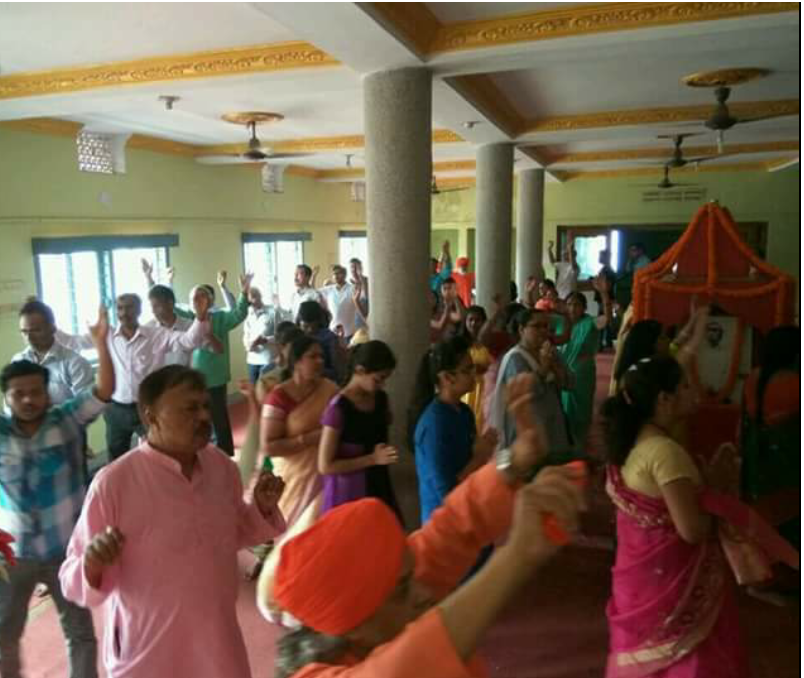
The females are moving in an inner circle around Guru’s photo and there is an outer ring of males moving around. Unfortunately, what is going on nowadays in akhanda kiirtana sessions at some retreats contravenes Guru’s teachings. Because at these akhanda kiirtana programs males and females are often unknowingly bumping into each other. Males and females get completely intertwined - even squished next to each other - where males and females are touching, bumping, and pressing up against one another. This severely disturbs and undermines the whole experience of singing akhanda kiirtana.

For those who haven't seen it, here is a descriptive account of what happens in a typical male female mixed circular dance akhanda kiirtana program. The females form one circle around the puja table which is placed in the middle of the room. And then directly surrounding the female circle is a circle of males. In this way, dozens and dozens of females and males are dancing extremely close by, bumping into each other in an enclosed environment. Females do not even have a pathway to go for natural call without bumping into a male. So some, due to shyness, are forced to keep control for hours unfortunately.
http://anandamarganewsbulletin.blogspot.com


Key organisers of AK are degraded

At this male-female, mixed, circular, dance, akhanda kiirtana (AK) program, invariably bumping, rubbing, and brushing occurs between members of the opposite sex. Because there is an inner circle of females and an outer circle of males, and everyone is moving round and round, so both circles tend to lose their shape and some females rub up against the male’s circle, and likewise some males brush up and bump into the female circle. In that way various types of physical contact happens. Because initially people try to close their eyes, dance, sing, and walk around the akhanda kiirtana circle - all at the same time. In that approach, members of the opposite sex end up knocking into and rubbing up against one another. This happens commonly in the daytime and even more during the nighttime akhanda kiirtana when the room is darker. In that case, varieties of touching is going on between male and females, especially when it is crowded.

The chief cause is that the key organisers are degraded. They have a strong desire to touch the opposite sex so they impose this upon others. And verily that is what has been achieved. See here what happens at such akhanda kiirtana gatherings.
http://anandamarganewsbulletin.blogspot.com

Negative effect of male-female mixed circular dance akhanda kiirtana - 1


The basic idea is that if 2 males bump into each other during an akhanda kiirtana session it is pardonable and not quite so detrimental to one's mental flow. The same is the case if two females touch. But when males and females touch and inadvertently rub or bump into one another during akhanda kiirtana that is completely disruptive to the flow. That is why a growing number of margiis are feeling suffocated by this type of akhanda kiirtana program. Because the margiis are involved in trying to elevate the mind and prepare the mind for sadhana, yet in our akhanda kiirtana program various types of touching and bumping is going on - as well as other distractions - which degrade the mind.

On the one hand, there is the touching problem between members of the opposite sex and then there are other issues. Because in these akhanda kiirtana sessions if any brother tries to look at Baba's photo they end up seeing so many females. Because in between the puja table and the brother's circle is the unbroken chain of dancers in the female circle. In that case, Baba's photo is virtually blocked by the female line. And if a male tries to see that photo there is a swirling movement of females; and, instead of seeing Baba that male will lay their eyes on the faces of so many females.
http://anandamarganewsbulletin.blogspot.com

Negative effect of male-female mixed circular dance akhanda kiirtana - 2


Baba has given the golden rule that after kiirtan then sadhana should be done in order to derive the benefit of kiirtan. But often during mixed, male-female kiirtan, singers sneak out of the circle individually; they do not even do sadhana, and hence could not get the full benefit of kiirtana.

Whenever mixed akhanda kiirtan is held:
(a) Those who are crude close their eyes and dance out of their pathway in order to bump into the opposite sex and create a show of their fake devotion.
(b) Those who are sentient do not close their eyes  out of fear they will bump into the opposite sex. By that way, i.e. keeping the eyes open, their akhanda kiirtan is very dry.
So in both of the above cases kiirtan is disturbed / ruined.

When both males and females are dancing in a mixed way then often they are very self-conscious and that itself is antithetical to spiritual progress. Also my friend Nirmala told me how when she was doing mixed akhanda kiirtan in the hot season then she was scared to raise her arms because she was sweating and she thought males dancing side by would be able to detect a foul smell from her underarms etc. This type of worry and self-conscious feeling also ruins one’s spiritual flow and defeats the whole purpose of doing kiirtan. But when only the same gender is doing akhanda kiirtan then people are not so self-conscious.

In some cases of akhanda kiirtana, when some longer mixed male female mix circle akhanda kiirtan is going on for a long time - hours on end, there is no opportunity to take rest, eat, or attend to natural call. Due to shyness some are forced to keep control while others purposely do not drink water and still others completely fast. A few were even using diapers to save themselves from unfortunate dealings interactions etc. Because those females who get tired will try to sneak out. By sneaking out of the circle they invariably bump into or disturb the opposite sex. That is why so many prefer not to put themselves in that situation so they fast etc. The bottom line is that there should not be parallel male-female circles during akhanda kiirtana.
http://anandamarganewsbulletin.blogspot.com

Tamasik kiirtana degrades the mind: opposite sex collide


A similar type of distraction occurs for those females who wish to exit the akhanda kiirtana circle in order to do sadhana or attend to natural needs etc. Here also a problem occurs because they are surrounded by males. And when the akhanda kiirtana is very energetic, females will try to find an opening whereby they can sneak through the male circle. The male circle is moving around and the female is trying to move through. Often one accident or near accident occurs where the members of the opposite sex collide.

And again, the operative cause is that certain leaders / organisers desperately wish to go close to the opposite sex. That is why they have created this type of kiirtan where both sexes are bumping up against each other.

Due to the flawed approach of mixed male-female circle akhanda kiirtana, one's ideation and concentration get affected and in that way the mind is not able to get purified - rather it is degraded by persistent bumping and touching with the opposite sex etc.
http://anandamarganewsbulletin.blogspot.com

"Do not bump the opposite sex; do not bump the opposite sex”


When both genders are dancing side by side in akhanda kiirtana and they are taking great care not to bump one another, then they are not ideating on Parama Purusa. Rather they are thinking, "Do not bump the opposite sex; do not bump the opposite sex." After all, mind is one so the person doing akhanda kiirtana cannot simultaneously think of  "not bumping the opposite sex" and ideate on Parama Purusa. It is not possible. Only when the akhanda kiirtan is gender separated can sadhakas focus exclusively on Parama Purusa because then they need not think about "not bumping the opposite sex."

For this reason, the male female mixed circular dance akhanda kiirtan degrades the mind, and one cannot concentrate fully on Parama Purusa. That is why it is tamasik. Because most of the time, in one way or another, one is forced to think about the opposite sex, not Parama Purusa.

Sadly, this is all the brain-child of certain key organisers who have a deep inner penchant for the opposite sex. That is why they invented this dirty approach - it is shameful.


Solution of this nasty problem

At our akhanda kiirtan programs, a proper solution is needed. And the best example to follow is Baba's. Here we have the opportunity to advance ahead by following the exact same approach which Baba has approved. Namely, when males are dancing and singing akhanda kiirtana, then females can sit at a moderate distance and do sadhana. Thereafter, we can switch. Females will sing and dance akhanda kiirtana, and the males will be doing sadhana.

On multiple accounts - i.e. for many reasons - alternating sadhana and akhanda kiirtana between males and females is in concert with Baba's system. The main reason being that Baba has guided us that we should do like this. And, in His presence, it was done in this very fashion, separately between males and females. And by that way the whole sanctity of the DMC was maintained - sentient and pure.

During our akhanda kiirtana program at sectorial retreats etc, then males and females can sing akhanda kiirtana separately or alternately, as described above. Then the problem of bumping into or touching members of the opposite sex will be eradicated. Overall males and females can still participate in the same program in the same hall, but akhanda kiirtana would be sung and performed separately. In that way it would be consistent with the spirit of what was done in the kiirtan mandap (kiirtan building) during DMC and our other Ananda Marga programs.
http://anandamarganewsbulletin.blogspot.com

Ananda Marga Caryacarya states, "Unrelated men and women should not touch one another." (1)

Conclusion


We have to remember that Sadguru Baba has arranged life for sadhakas on the path of Ananda Marga where we have to maintain our sanctity by adhering to certain codes of conduct. In the realm of male-female relations, our proper standard is separation, not free and sensuous mixing of the sexes.

Baba has mandated that everything in Ananda Marga Pracaraka Samgha should be separate: For example WWD, our relief activities (AMURTL), reportings, social service projects, LFT trainings, etc. They are all separated along gender lines. In Caryacarya Baba guides us that the more separation there is between males and females, the better it is.

It is so unfortunate that such kiirtan organisers are degraded and desperately wish to go close to the opposite sex. That is why they have created this type of kiirtan where both sexes are bumping up against each other. So they create terrible circumstances for innocent male and female participants. To solve this problem, those in-charges should be kicked out from the committee by a voice-vote. And some true sadvipras should be put on that post and they will organise the program according to the dictates of Shrii Shrii Anandamurti ji. By this way, females will not be jeopardised and put in a compromising position.

In Him,
Liila'

This entire letter is related with akhanda kiirtana and its sentient practice. Under Baba's guidance at DMC akhanda kiirtana was always done.

~ In-depth study ~

During all the DMC akhanda kiirtan programs in the kiirtan mandap, males and females did not sing and dance akhanda kiirtana together at the same time, making 2 circles, one tightly wound inside the other. Rather akhanda kiirtana was always done separately. When males would sing akhanda kiirtan and dance in a circle in the kiirtan mandal (i.e. kiirtan building), the females would practice meditation. And when the females would sing akhanda kiirtana making a circle in the kiirtan mandap (place of kiirtan), males would engage in spiritual practice in the kiirtana mandap.

Note: See above how certain kiirtan organisers became overpowered by avidya maya and introduced tamasika style kiirtan.
http://anandamarganewsbulletin.blogspot.com

No mixed gender in Ananda Marga


Baba has mandated that everything in Ananda Marga Pracaraka Samgha should be separate: For example WWD, our relief activities (AMURTL), reportings, social service projects, LFT trainings, etc. There are all separate along gender lines.

Here is a more complete list for your review:
1. Jagrtis are not shared between males and females for staying over or for office work.
2. Co-education is not practiced with students above 8 or 10 years of age, i.e. or above the age of puberty.
3. During dharmacakra, seminar, and classes, sadhana is done in distinctly different rows.
4. The organisation itself has an entire separate wing for females, WWD or Women’s Welfare Department.
5. Prout, AMURT, VSS etc also have separate sections for males and females.
6. Reporting is done separately.
7. LFT, Tattvika, and Acarya training is separate for males and females.
8. In-Charges are not mixed. Males are in-charges of males and females of females.
Note: Only in Central Office will the head of WWD be controlled by the General Secretary.
9. During DMS, kaoshikii was also performed separately. And still this practice is maintained for DMS.
10. Females do guard duty for females, and males for males; it is not mixed.
11. Akhanda kiirtana is done in a separate manner.
12. Madhur Sadhana is done according to gender, not with the opposite sex.
13. In any gathering, females & males do not participate together for games and sports.
14. All public processions are organised keeping males and females separate.
15. And there are so many systems in place that ensure strict separation of the sexes.
http://anandamarganewsbulletin.blogspot.com

So the photo is a display of this style of bumping kiirtan which has been steadily spreading around, from one sector to the next. Men and women are dancing in an intermingled manner whereby they may rub up against and bump into each other.  Because the females are moving in an inner circle around Guru’s photo and there is an outer ring of males moving around. And while moving around they are ideating - that means walking with the eyes closed. And in this way male and females invariably bump and rub each other. It is unavoidable. Plus by seeing the opposite sex, dancers often become overwhelmed by lower propensities etc. So many problems crop up that make this into a tamasik kiirtan program. It is so sad to see this bogus type of akhanda kiirtan spreading around.

See below and look how this male-female bumping kiirtan has been introduced in more places. Men and women are dancing and bumping into one another.


Posting #320A Mixed Kiirtan in Patna (2017).png


See above and look how this male-female bumping kiirtan is spreading to new places. Men and women are dancing and bumping into one another.

Tamasika style kiirtan reached Tatanagar

In this posting there are two photos - here we are not talking about the aesthetic value of the picture or the photo resolution etc. Rather, please pay attention to how the first photo is single-gender and the second photo is mixed-gender kiirtan where members of the opposite sex are bumping into each other. In result, the mind rushes towards the lower cakras. That is why the second photo depicts tamasik style of kiirtan. Whereas in the first photo which is single gender kiirtan the mind will rise to the upper cakras. The first is sentient and the second is tamasik. For more about this read below.

Below is the sentient style of kiirtana. Why sentient? Please keep reading...


Above is the sentient style of kiirtana. 

Below is the tamasik style of kiirtana. Why tamasik? Please keep reading...


Above is the tamasik style of kiirtana. Why tamasik? Please keep reading...

See above and look how this style of kiirtan has been introduced in Tatanagar by Sunil Anand. Men and women are dancing in an intermingled manner. The sisters are moving in an inner circle around Guru’s photo and there is an outer ring of brothers moving around. It is evident that the outer circle is for brothers - one can confirm this by their dress (i.e. they are wearing shirts, not saris) and mostly they are taller than the sisters in the inner circle..e. they are wearing shirts, not saris) and mostly they are taller than the sisters in the inner circle.


Reference
1. Caryacarya - 1, Social Relationship between Men and Women


== Section: Important Teaching ==

Downward spiral of debased thoughts

Ananda Marga Yogic Treatments states, "Mental purity helps particularly in keeping a person healthy. Impure thoughts increase the acidity of the blood and invite disorders of the stomach, heart and brain. That is why every human being should make as strong a habit as possible of selfless service and iishvara pranidhana (meditation). The best way to attain mental purity is to follow the principles of yama and niyama." (1)

We can say that Baba’s above guideline is wholly ignored and neglected by the general populace in materialistic societies where people’ mind is grossly involved in negative entertainment and doing so many degrading things etc. Such depraving habits are very bad: They heighten the acidity of the blood and harm the major organs of the body. The body is then susceptible and prone to disease. So acidic blood is the cause of disease. By purifying one’s thoughts through a spiritual way of life, a person’s physical health is enhanced and the mind is refined and readied for deeper meditation.

Reference
1. Yogic Treatments, Appendix G: Mental Purity


SUBJECTS TOPICS