Search This Blog

Sunday, June 10, 2018

Wrong things in AMPS books: distortion + 4 more

Baba

Wrong things in AMPS books: distortion

Namaskar,

Our Ananda Marga books are for bringing Baba's great ideals to the general society. That is one of the chief aims of our printed publications. So our books are not just for senior Ananda Margiis; entirely new people will also read them.

Unfortunately, in the glossary section of some of our publications, like the English editions of Ananda Vacanamrtam part 12 (2008) and part 14 (2011), the definitions of many words are not up to the mark. More specifically, the definitions supplied by the publishers fail to explain to readers the contextual meaning of the term in view of Ananda Marga ideals. And that can create a lot of confusion and misunderstanding. Let's take a look at a few cases.
https://anandamargauniversal.blogspot.com/

The term 'bhakti' means: 'love for God' 


The term bhakti is one of the most important terms in Ananda Marga philosophy and one of the most prevalent as well. So understanding the contextual meaning of this word is quite integral for any reader. But in the glossary of Ananda Vacanamrtam 12, all it says in for the definition of “bhakti” is “devotion”. That is all that is listed - nothing else.

This definition of 'bhakti' is entirely lacking and even misleading because in the general society, the word “devotion” is commonly used in an entirely different manner from that in Ananda Marga teachings.

In Ananda Marga bhakti strictly means: 'love for God', 'longing for the Supreme', 'selfless service to God', etc, and is characterised by the shloka, Sa para'nuraktriishvare. Thus for us, bhakti is a highly spiritual term depicting one's intimate relation with God.

Ananda Marga ideology guides us, “Bhakti signifies longing for the Supreme – Sa paránuraktriishvare...God is an object for Paránurakti. When the aspirant considers the Supreme Brahma to be his or her own, it is termed Bhajaná or Bhakti.” (1)
https://anandamargauniversal.blogspot.com/


Baba: bhakti & devotion are not same

Ananda Marga ideology guides us, “भक्ति किसको कहते हैं ? अंग्रेज़ी में 'devotion' कहते हैं भक्ति को, लेकिन devotion और भक्ति एक चीज़ नहीं है |” (भक्ति किसको कहते हैं ?, Bhakti Kisko Kahate Haiṋ ?, NP, EGD 3 February 1987 Bhagalpur) (2)

Here is an English summary of Baba’s above Hindi teaching: Devotion and bhakti are not the same.

Ananda Marga ideology guides us, “One may have attachment towards physical objects as well as towards Parama Puruśa. The attachment to physicality is called ásakti or viśayánurakti, while the deep attachment to Parama Puruśa is called paránurakti or bhakti.” (3)

Bhakti term has no English synonym


Baba has guided us how the term devotion is unable to convey the meaning and spirit of the term bhakti. So in all possible circumstances we should use the word bhakti instead. Here is more about this topic.
  • The term bhakt is derived from the root word “bhaj” which means yearning for the Supreme Entity
Ananda Marga states, “What is bhakti? The root word “bhaj” and the suffix “ktin” make the word “bhakti.” “Bhaj” means moving towards that Supreme Entity without any second thought. When all your sentiments, all your aspirations, move towards that Singular Entity without any second thought, then that psychic movement of yours if called “bhakti.”” (4)
  • The term devotion is related with devote. And in materialistic societies the term devote is used in all kinds of worldly situations. So the term devotion is not the proper equivalent of bhakti.
  • There are many instances where Baba has directed us that there are occasions where a single English term fails to properly convey the full meaning of a Samskrta term. For example the word initiation does not carry the meaning of the word diiksa; and incantation does not properly reflect the term mantra.
Here is more about the case of the glossary of Ananda Vacanamrtam - 12. In defining 'bhakti' as 'devotion', the glossary falls far short of the mark. Those in the Tiljala Publications Department must come forward to correct such errors. The aim is that Baba's books must be printed in the proper way.
https://anandamargauniversal.blogspot.com/


Glossary AV-14: other mistakes as well

Now let's take a look at a few more terms. Because the term 'bhakti' is not the only poorly defined term in the glossary:

* RAMAYANA: In the Ananda Vacanamrtam - 14 glossary the Ramayana is defined as 'An epic poem of India. It is the story of King Rama, or Ramachandra'. But, this definition is also highly misleading, because one of the main teachings of Baba about the Ramayana is that it is a mythological story - i.e. it is not factual.

Baba says, "Now, many of you are aware of the fact that Ramchandra was not an historical figure, but a fictional one: he was an imaginary character." (5)

Yet the Ananda Vacanamrtam - 14 glossary does not define the Ramayana as being mythological etc. Rather it calls it 'an epic poem', just like that same glossary calls the Mahabharata 'an epic poem'. So both are epic poems, according to the glossary, as if both are the same. But there is a grand difference between the two: The Mahabharata is historical and the Ramayana is fictional. Yet the villagers and general public are not aware about this distinction. Baba has made this important distinction. But, our publications personnel failed to highlight Baba's unique distinction when defining the term 'Ramayana' in the Ananda Vacanamrtam - 14 glossary. Hence, the general public will remain highly confused on this point. They will think it is a true story about King Rama.

Furthermore, in Ananda Vacanamrtam - 10, the term SITA is only defined as 'Wife of Rama', and that further supports the false impression that Rama and Sita are real people from the history. Because details are being given from an authoritarian source as would be done in the case of a historical fact, yet the main ingredient is being left out: Namely that Rama and Sita are mythological characters. So this only exacerbates the problem.
https://anandamargauniversal.blogspot.com/


Conclusion

Other terms that are incorrectly defined or defined in a misleading manner in the Ananda Vacanamrtam series glossary are: asteya, bhajana, bhakta, Ganesha, kiirtana, kurma nadii, Sadguru, sadhu, sahasrara cakra, Sanskrit, Sita, tantra, etc. Baba has given the world a perfect library and we are to ensure that it is published properly.

Ananda Marga philosophy says, "The books in Ananda Marga philosophy are all absolute knowledge." (6)

Namaskar,
In Him,
Anirvacaniiy

Baba rejects the term devotion in favour of the word bhakti, and He wants His discourses updated accordingly. That is what He has described in a general darshan at Bhagalpur DMC in 1987.

~ In-depth study ~


Devotion means love for cat

In the general society, a person may have devotion for their work, devotion for their spouse, devotion for their country, devotion for their friend, devotion for their diet, or even devotion for their pet dog or cat. That is the way the term devotion is commonly used on a daily basis in the general society, especially in the west. Whereas in Ananda Marga philosophy, none of those meanings apply.

In the general society, the term 'devotion' is used in all kinds of mundane affairs, yet that is the very term - and the only term - which the publishers have used to define 'bhakti' in the glossary of our Ananda Marga books. So the whole affair is a misplay or flub. Because 'devotion' is a widely used word in the general society. Hence already most readers have a preconceived notion of what the word means - yet that understanding is vastly different from Baba's use of the term, 'bhakti'. That is why it is the critical need for our Ananda Marga glossary to highlight our AM ideal when defining bhakti or any other term, and not just give a commonly used word that will invariably be misunderstood.

Here is another way of looking at the difference between bhakti and devotion. For example, you may have devotion towards your spouse or pet, but it would be a gross mistake to say that one has bhakti for their spouse or pet. Unfortunately in India, due to lack of knowledge, people misuse the term bhakti, and they created the word desh-bhakti, meaning patriotism. But that is preposterous. Because the term bhakti means service to God. The root itself is spiritual. That is why it is wrong to use bhakti in the context of one’s motherland. Whereas the term devotion has a different origin. It means commitment and has no spiritual foundation. That is why Baba rejects the term devotion in favour of the word bhakti, and He wants His discourses updated accordingly. That is what He has described in a general darshan at Bhagalpur DMC in 1987.
https://anandamargauniversal.blogspot.com/


AV-10 Glossary pitfall: Sixteen Points term

* SIXTEEN POINTS: In the Ananda Vacanamrtam - 10 glossary, the term 'Sixteen Points' is defined as: 'The central pillar of Ananda Marga conduct rules: sixteen points of hygiene and conduct amid which are reiterated all other conduct rules.' Thus the glossary describes our Sixteen Points as being merely related with (a) hygiene and (b) conduct rules. Nothing else. When in fact, according to Baba, our Sixteen Points is so much more than that. It is related with all the spheres of life:

Sadguru Baba says, "...The complete seeds of welfare in all the spheres – physical, mental, moral, social and spiritual – are embedded in the sixteen points. Hence be firm on the sixteen points." (A'nanda Va'nii #45)

So the publisher's glossary definition in Ananda Vacanamrtam - 10 is misleading and incomplete. Such a deficient definition does a disservice to what Sixteen Points truly is. And any new person reading that glossary definition will think that our Sixteen Points only touches on a few things and is wholly absent of spiritual practice etc. Because the lackluster definition of the term written by those publishers in the glossary leads in that false direction.

We have to remember that 'Sixteen Points' is totally unique to Ananda Marga. No one outside the Marga will have any idea what it is. So naturally they will refer to the glossary to find out about this term. And sadly, the definition they will get there will be very poor and will not properly reflect the real dynamism of AM life.
https://anandamargauniversal.blogspot.com/


AV-14 Glossary blunder: Upanishad term

* UPANISHAD: In the Ananda Vacanamrtam - 14 glossary this term is defined as, “Literally, 'that which brings one near'; certain philosophical teachings of the Vedas.”

But here again that definition provided by the publishers is incomplete and ambiguous. Surely, one need not write the entire Upanishad scripture in the glossary, but at the very least the glossary definition should describe what the Upanishad takes one near to.

Ananda Marga philosophy says, "That which takes human beings to Parama Purus'a is called upanis'ad." (7)

So the meaning of Upanishad is that which takes one near God. That is what Baba clearly tells us. Yet the glossary in AV 9-10 fails to state that. The incomplete definition given by the publishers merely says, 'near' without defining what it is near to. Hence readers in this grossly materialistic era may think that the Upanishads take one near to a financial institution, or near to the Olympics, or near to one's friend, or near to the stock market, or near to McDonald's, etc. Thus this definition also needs to be corrected in order to reflect our Ananda Marga standard.

That is the literal meaning of the Upanishads and the practical meaning refers to those ancient scriptures that document the realisation of elevated sages. There are so many books of the main 108 Upanishads.
https://anandamargauniversal.blogspot.com/


The need of a glossary

To help the public and newly initiated people understand Baba's ideas, a glossary section has been added to many of our publications. This glossary - written by the publishers - is intended to bridge the gap of knowledge: Clarifying points which the public may not know about our Ananda Marga terminology. That way readers can garner a clearer understanding when going through our Ananda Marga literature.


English fails

Ananda Marga ideology states, “We have no proper word for diikśá in English or any other language, we have no alternative but to use the word “initiation” for diikśá. The actual Sanskrit word for the English term “initiation” is abhiśeka, not diikśá.” (8)

Ananda Marga ideology states, “What is incantation? “Incantation” is a Latin term. It means “repeating a particular word”...But the Sanskrit term for incantation is mantra. The rudimental meanings of “incantation” and [mantra are not the same]. Mananát tárayet yastu sah mantrah parikiirttitah – “The sanctified word that helps one in attaining salvation [is a mantra].” So they are not the same, but because of the fact that there is no proper Latin term for mantra, I find no alternative but to use the word “incantation” for mantra.” (9)

References
1. Subhasita Samgraha - 1, Bhaktitattva
2. भक्ति किसको कहते हैं ?, Bhakti Kisko Kahate Haiṋ ?, NP, EGD 3 February 1987 Bhagalpur
3. Ananda Vacanamrtam - 33, Bhaktitattva
4. Ananda Vacanamrtam - 1, Pleasing the Lord
5. Namah Shivaaya Shantaya, Disc: 6
6. Prout in a Nutshell - 18, Prápta Vákya and Ápta Vákya
7. Ananda Marga Philosophy in a Nutshell - 7, Disc: 11
8. Ananda Vacanamrtam - 6, Diikśá and Initiation
9. Subhasita Samgraha - 24, Incantation and Human Progress


*        *        *

The below sections are entirely different topics, unrelated to the above material.
They stands on their own as points of interest.

*        *        *
== Section 2: Prabhat Samgiita ==

It is impossible to forget You

"Práńer pradiip saunge niye, ke go ele ei dharáytomáy, bhulate náhi párá jáy..." (Prabhat Samgiita #2205)

Purport:

Who are You who has taken advent on this earth, with the effulgence of infinite love and affection, carrying the lamp of warmth and compassion and has completely captivated my mind; now I cannot think of anything else. O' Supreme One; it is impossible to forget You. Because of Your august arrival, with each and every expression, in every rhythm, You are exuding beauty and sweetness in all directions - everywhere. I can’t stop thinking of You.

By Your melodious voice and heartfelt attraction, with love You are drawing everyone near You by Your mamata', feeling all as Your own. You are vibrating in Your glory yet remaining hidden in the deep core of my mind – always. I ever remember You.

O' my Innermost, at some unknown time in the past You came and poured forth the pot of love, saturated and showered Your incomparable grace, and created a big stir - a revolution - in the world of ideas and thinking. And after that You hid Yourself from this world and were not visible to the crude eye. You came as Mahasambhuti and now You are ever-present with everyone as Taraka Brahma in their heart and mind.

Baba, You are love personified how can I forget You...


Note for Prabhat Samgiita #2205:

[1] Mamata': Mineness; In Sanskrit “mama” = mine, and the suffix ta’ = -ness; hence “mineness.” To have equal or more love for something / someone than one has for oneself.

Ananda Marga ideology says, "What is the meaning of “mamatá”? Mama + tá = mamatá. Mama means “mine” and thus mamatá is the inner idea of being mine, the feeling that something is my own." (1)

Ananda Marga ideology guides us, "“Mamatá” means “mine-ness” – “Mama” means “one's own”, and the abstract noun derived from it is “mamatá” – meaning, thereby “mine-ness.”" (2)

For example, suppose you are suffering from a fever then naturally you will be concerned about your own health. You will try to cure yourself by going to the doctor and taking medicine etc. If you have mamata for someone else, then if they are sick with a fever you will have the same degree of care for their condition as your own. When one does sadhana then this sense of mamata grows and one ultimately has the feeling of mamata towards the entire created universe. Without sadhana, one’s sense of mamata will be extremely limited whereby one might only care about their own individual existence. So when the mind is extremely narrow one only has mamata for oneself. Those with a slightly broader mind have mamata towards their parents and family members. And as the circumference of mind expands one has mamata for other relatives and community members etc. However, it is only with sadhana that the periphery of mind can grow further and further wherein one’s sense of mamata includes all beings and expressions of this cosmos. Parama Purusa has mamata’ for each and every entity - this entire creation, all living and non-living expressions.

References
1. Ananda Vacanamrtam - 7, The True Nature of Bhakti
2. Ananda Vacanamrtam - 1, Pleasing the Lord
== Section 3: Important Teaching ==

Way to omniscience for humans

  Ananda Marga philosophy states, “On the practical level, what happens is that the unconscious mind is all-pervading, integral and immeasurably vast. Through spiritual practices the riches of the unconscious mind are brought down into the subconscious mind. The spiritual aspirant then understands everything; he discovers the secret signs of knowledge. Then, according to his or her needs, he or she is able to bring this acquired wealth of the subconscious mind into the conscious mind and use it in the external world.”
   “How much can book knowledge help a person! It goes in one ear and out the other. If, by means of sádhaná [spiritual practices], a person can bring into the subconscious mind the boundless knowledge that resides in the unconscious mind, then that becomes transformed into lasting riches which then are, or can be, employed extensively for the welfare of humanity.” (1)

Reference
1. Shabda Cayanika - 2, Indukamala to Iyatta (Discourse 7)


== Section 4: Errata==

Worthless Wts addicted to phone
- Errata
~ Courtesy of WhatsApp Forum ~
ख़ैर आज का बड़ा ही सोचनीय प्रश्न है। जब एक आम इंसान के लिए ये व्हाट्स एप्प और फेसबुक इतना बड़ा बीमारी बन चुका है और क्रूड माइंड को इतना इफ़ेक्ट कर रहा है। तो ये तो और खतरनाक होगा एक सूक्ष्म मन को प्रभावित करने में।
एक व्यक्ति जिसे चारों टाइम साधना करना पड़ता है और वो भी एक एक सीटिंग डेढ़ डेढ़ घंटे का।क्योकि जो विशेष योगी हैं उनका साधना पद्धति और उनका रूटीन इतना व्यस्त  और आदर्शगत होता है कि उन्हें तो अपने लौकिक परिवार के लिए भी समय नही मिल पाता है। और बात जब WTs की आये तो एक साधारण WT की रूटीन भी बाबा इतना टाइट दिए हैं कि उनके पास भी आदर्शगत और संस्थागत कार्य को छोड़ किसी दूसरे कार्य के लिए समय नही होगा।
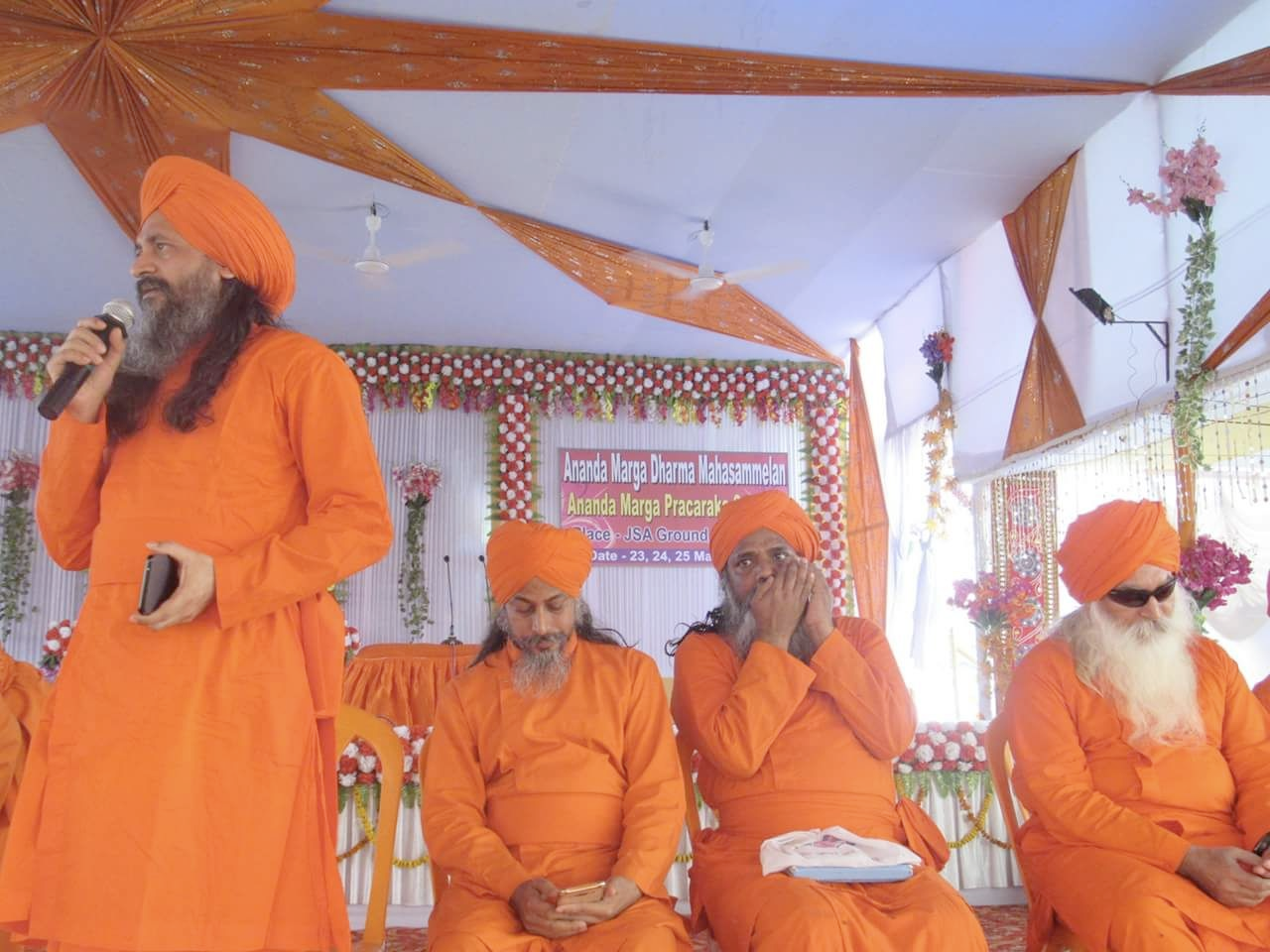
लेकिन दादा जी अभी जो मैं आपको बतलाने जा रहा हूं ववो  सुनकर आप हैरान हो जाएंगे कि आज की वर्तमान स्थिति में आपके जो पुरोधा जैसे आद्यतमिक पद पे बैठा दिए गए हैं, योग्यता नही होने पे भी। वो सारे के सारे एक सामान्य व्यक्ति से ज्यादा व्हाट्सएप्प का इस्तेमाल करते हैं। यहां तक कि जब कोई संस्थागत प्रोग्राम होता रहता है तब भी आपके चेयर पर्सन जो WTs है वो अपने मोबाइल को निहारते रहते हैं। यहां तक कि जब पंडाल में कार्यक्रम यानी स्पीच चल रहा होता है तो भी आपके उच्च पदाधिकारीगण अपने मोबाइल को निहारते नज़र आते हैं। आप खुद सोंच सकते हैं कि एक साधारण व्यक्ति के लिए ये नशा है और नुकसान करता है तो एक विशेष योगी के लिए ये वाकई में किसी परमाणु बम से कम नही है।
अब आते हैं फेस बुक.....में, आपके ज्यादातर पदाधिकारीगण हमेशा फेसबुक में ऑनलाइन मिल जाएंगे।आज एक विशेष योगी या WTs के लिये फेस बुक से ज्यादा गंदा कुछ हो ही नही सकता है। क्योकि उसमें एक से एक रंगीन विज्ञापन का भी बौछार रहता है।और आपके एक से एक पदाधिकारी और पुरोधा उस फेसबुक की दुनिया में इतने लिप्त हो चुके हैं कि वो कुछ भी कमेंट करते हैं और अपना किसी भी स्थिति के फोटो को अपलोड करते हैं। यहां तक कि संस्था के इंटरनल प्रोग्राम की तस्वीर भी डालते हैं। अपने अपने प्रोफाइल में न् लौकिक जानकारियां डालते हैं यहां तक कि स्टेटस में बहुत कुछ डालते हैं।अपना प्रोफाइल pic  बड़े style से डालते हैं। एक अवधूत के लिए उंसके गुरु के दिये नाम का बहुत महत्व होता है लेकिन style के चक्कर में अपना नया नामकरण कर डालते हैं।
दादा कभी इन लोगो को समझाने का प्रयास करें, आप बड़े हैं।आपको बेहतर पता है कि बाबा के समय किसी WT की जानकारी सार्वजनिक नही कि जाती थी, क्यों ❓❓❓आपसे बेहतर कोई नही जानता।  
ये भी एक कारण है आपके पदधिकारियों की नाराजगी का हम लोगो से। क्योकि बहुत बार हमलोगों ने आपके पदाधिकारियों को व्यक्तिगत रूप से समझाने का प्रयास किया, नही समझने पर आपके GS चित्स्वरूपानंद जी को बतलाया गया, लेकिन इसे पॉजिटिव न् लेकर इसे व्यक्तिगत दुश्मनी का रूप दे दिया गया।
इसलिए और भी बातें जो खुलकर नह लिखा सकता है।इसलिए कौन दोस्त है कौन चापलूस इसमें फ़र्क़ समझाइये अपने पदधिकारियों को।🙏
~ Courtesy of WhatsApp Forum ~

- Here is a link to the initial letter on this topic: Clowns are exposing their colour
== Section: Prabhat Samgiita ==

बाबा, मैं तुम्हें गलियों, पगडंडियों, मार्गों ,जंगलों पर्वतों और नदियों के


प्रभात संगीत 2569 आमि, पथे पथे खुंजी तोमारे, वने पर्वते नदी तीरे...

भावार्थ

हे परमपुरुष! बाबा, मैं तुम्हें गलियों, पगडंडियों, मार्गों ,जंगलों पर्वतों और नदियों के किनारों पर खोजता रहा हॅूं। इतना ही नहीं, मैं ने तुम्हें तीर्थों और ज्ञान तथा कर्म योग के आधार पर भी तलाशा । हे प्रभु! मैं तुम्हें अपने हृदय की परिपूर्णता में देखने की इच्छा रखता हॅूं।

परंतु ओह! तुम तो मुझे कहीं भी नहीं मिले। मेरे मन में संवित की लहर कभी भी नहीं आती। मशीन की तरह लगातार चलते हुए कर्मकाॅंडों में बेमन ही लगा रहता  हॅूं और तुम्हें सतत झरते आॅंसुओं के निर्झर के साथ पुकारता रहता हॅूं।

लगातार क्रन्दन से मेरी दशा  दयनीय हो गई है, अपनी आॅंखों को कपड़े से ढंके मैंने व्रत, उपवास और धार्मिक कर्मकाॅंड किये पर अपार दुख है कि जिस सत्ता के लिये मैंने यह सब किया ,इन कर्मकाॅंडों को सम्पन्न किया, उसे मैंने अपने मन के भीतर कभी नहीं तलाशा । (1)

Reference
1. Trans: Dr. T.R.S.

== Section 5: Links ==

Recent postings Other topics of interest

Legal Notice: ©2018 Ananda Marga Universal Forum. All rights reserved. Ananda Marga Universal Forum content is the intellectual property of Ananda Marga Universal Forum or its third party content providers. Ananda Marga Universal Forum shall not be liable for any errors or delays in content, or for any actions taken in reliance thereon. Any copying, republication or redistribution, part or full, of Ananda Marga Universal Forum content, including by framing or similar means, is against the court of law and expressly prohibited without the prior written consent of Ananda Marga Universal Forum.

This email contains five sections:
1. Posting: Wrong things in AMPS books: distortion
2. PS #2205: It is impossible to forget You
3. IT: Way to omniscience
4. Errata: Worthless Wts addicted to phone
5. Links


Tricky thing + 4 more

Baba

Tricky thing

Namaskar,

On the spiritual path there are various types of bhakti such as sattvik, rajasik, and tamasik; apara' bhakti and para'bhakti; jinan mishra, karma mishra, vaedhii bhakti and shuddha bhakti; and raganuga and ragatmika bhakti etc. There are numerous grades and standards of bhakti. We should be aware about these classifications and compare them with our own approach to see in which category we are. Here following is one interesting story related with this.

Margii G. goes on fieldwalk with Baba


One very senior margii Shrii G. from Dhanbad, Jharkhand reached to visit Baba. Those days, Baba was living in Ranchi. This particular incident took place around the year 1970. By the sweet grace of Revered Baba, brother G. was blessed with the opportunity to go along on Baba's field walk. Around four or five other sadhakas also had permission to go with Baba. They were all next to Baba's quarters, waiting for Him to come out just before going for field walk. G. was there with the others, waiting for Baba to come.

Those days, G. was extremely worried about his daughter's marriage. Because after many, many attempts, he could not get anything arranged; there was no suitor for his daughter. G. was concerned and feeling overwhelmed by it all. Drowned in this worldly problem, he decided he would ask Baba to solve this matter. With this idea in the forefront of his mind, he came to see Baba.

When Baba came out from His quarters to go for fieldwalk, everyone present did the appropriate salutation. Then Baba proceeded towards His car to go for field walk. By His grace, G. was blessed with the opportunity to sit in Baba's car, as did one other margii. Baba's driver and staff were also in the car. When Baba took His own seat inside the car, again G. paid his salutations. But in that moment, G. was very worried and mentally pleading with Baba to arrange his daughter's marriage. Outwardly he did not say, show, or do anything, just this was all taking place in G.'s mind.

Then all-knowing Parama Purusa Baba lovingly scolded Shrii G. in the local tongue, "Chii, Chii, Chii!!! [Shame, shame, shame!!!]"
https://anandamargauniversal.blogspot.com/


Do not ask Parama Purusa for worldly gains

Those present were surprised why Baba is saying, "Chii, Chii, Chii!!! [Shame, shame, shame!!!]" They were very intrigued why Baba was talking in this way to G.. What had G. done? Something must have happened, otherwise Baba would not have said anything. They could see that G. was feeling embarrassed. Now they were even more curious to know what had happened.

Baba then spoke, "Ganga, when in contact with Sadguru, such things should not be asked."

Baba's statement only heightened their curiosity. Those margiis and Wts present became even more surprised because G. had not asked anything. They wanted to know what Baba was referring to, and what G. had asked. Something surely happened.

Then Baba spoke, "This type of mundane thinking and worldly request should not be entertained. Don't you know that Parama Purusa is taking care of everything for you. Do you not have any faith in Him?"

Baba was in a serious mood. Those in the car understood the gravity of the situation. Shrii G. felt a deep sense of shame. After some time, Baba smiled and asked others about organisational activities in their area and then Baba spoke to G. as if nothing had transpired earlier. While on fieldwalk, Baba laughed, joked, and jovially told many stories. All had a grand time.

Through it all, G. got the lesson not to think let alone speak about such mundane affairs and that one should only ask spiritual things from Parama Purusa. Because this incident happened in front of others, became very well-known. It is Baba's liila. In due course all G.'s daughters were married in a nice way and blessed with suitable homes and lovely families. Sadguru's grace is everything.
https://anandamargauniversal.blogspot.com/


Baba affectionately watches over all

Although this story is very simple, it has a very deep meaning. Margiis should not ask a worldly boons from Sadguru - regardless of the situation. This story gives this teaching that whatever the  circumstances may be one should not ask Parama Purusa for mundane favours etc.

As bhaktas we should not ask for any worldly gain from Sadguru Baba, i.e. one should not ask anything mundane from the Lord. This simple statement holds far-reaching implications. It means one should not go to any so-called holy place and ask for any gift or boon. And, in one's normal mode of living, one should completely refrain from requesting for any worldly desire to be fulfilled. Each and every human being has a direct link with the Divine Entity Parama Purusa. He hears and knows every thought, so just thinking that, "I wish I had this or that etc" runs contrary to Baba's divine guideline.

So this is not limited up to when people were visiting with Baba personally or going on field walk. Nor is it limited with any particular scenario revolving around Baba's physical presence. Rather this edict of not asking anything worldly from Parama Purusa is an eternal condition for everyone to adhere to in their individual life.

Here the whole point is that Sadguru's contact does not mean only that which occurred on the physical sphere. Rather in all the spheres this teaching is applicable. Parama Purusa Baba is everywhere, and He sees all. Today and up to eternity, all the moments and all the 24hrs He is along with everyone - through His ota and prota yoga. He is sitting in the heart of every bhakta and even every non-bhakta. One should never think, mentally ask for, or desire or worldly gain. One can only ask for more love for the Supreme, i.e. parabhakti. More about this is written below.
https://anandamargauniversal.blogspot.com/

Mundane gains do not bring peace


When one comes in contact with the Sadguru - when doing dhyana, sadhana, or has any type of mental communication with Parama Purusa, or is just expressing the feeling inside the mind then there must not be any worldly desire or longing in the mind. In various discourses Baba has given clear-cut guideline that worldly boons do not bring peace.

Unfortunately, the various dogmatic religions are often based on this mundane notion of offering. That is why the common tendency is to ask for something worldly. But such an approach ruins the spiritual flow. Every sadhaka should understand that this teaching. If any sadhaka desires worldly gains in any moment, and especially at the time of sadhana, then that has a very negative effect. Because Baba is living with one and all. He graciously listens to the mental thoughts of each and every person. And in truth, no one knows their own real needs.

Suppose a bhakta was pestering God again and again to allow him to marry a chosen spouse and God was not giving permission. But then finally after repeated requests over a span of time God finally relents and grants permission and the marriage was fine at the outset, but then after sometime that very bhakta was murdered by the spouse. All the friends were shocked how the bhakta was openly begging for a spouse and telling others to, "Pray for me to get a spouse", and then that bhakta met his untimely demise at the hands of that spouse. By all this we can understand that asking anything from Parama Purusa is very risky because human beings do not know what will happen after one moment. Suppose someone is constantly chirping to God about letting him win the lottery but that same person does not know that he was going to have a lethal accident prior to the lottery drawing. Then his request to win the lottery is futile; better he would have asked to be saved from the accident. That is why with their limited intellect bhaktas should not ask for anything from Parama Purusa. Best is to simply say, “O’ Lord, You know what is best for me so please do accordingly.”

So in the first place, one should not ask any worldly things from Him. One should only say, "O Parama Purusa, as You wish, that You do. My everything is in Your hand." But if one is very much anxious to ask for something, then one should early ask only para'bhakti - highest bhakti. Worldly things are transitory; Today they are, tomorrow they will go. They will perish. Only God is permanent and remains will you.
https://anandamargauniversal.blogspot.com/


Parama Purusa has given me everything

Baba has recounted how His grandmother was crying and singing one bhajan every day to the Lord. The meaning of that song was, "O' God, You have given me everything, without my even asking. And in return, I have not given You anything. I have only expressed my desire to get more and more." With this feeling of gratitude towards God, grandmother was singing and crying.

Baba explained that based on this idea Prabhat Samgiita #0209 was given.
"Tomare asiim apa'r bhalobhasar vinimaye haye ki va diyechi..."
Meaning: O' God, in return for Your infinite, unending love and care e, what have I given to You. O' Lord, I have not given You anything. With both hands, I have readily accepted all Your gracious gifts. I have embraced all You have bestowed upon me, but sadly I did not learn to give You anything. Only I have taken from You, O' my Lord...

Conclusion


Ananda Marga ideology states, “He knows better than anyone what their own needs are. So what should you ask from that entity who knows your needs better than you? In my opinion, nothing because He thinks about you more than you think about yourself. He understands you more than you understand yourself.” (1)

As disciples, we should not ask Sadguru Baba for anything mundane. He knows our needs better than we do and as the most Benevolent Entity, surely He will do what is necessary. The only thing a bhakta may ask for is to go closer and closer to Him - asking Him to grace them with parabhakti.

Namaskar,
In Him,
Karunamaya

~ In-depth study ~


If you ask for mundane boons, you will not get salvation


Here following are a few of Baba's teachings on this very subject.

Ananda Marga ideology states, "Ra'jasikii Bhakti: In this category of devotion one does not think of harming anyone, but asks for a mundane favour for oneself. For example, one may pray to the Lord, "Oh Lord, please bless me so that I can score high marks in my exams and thereby procure a good job." To ask for worldly favours as a result of one's crude devotion to the Lord is not at all desirable. The Lord may or may not fulfill your desires, but one thing is certain: you will never attain liberation or salvation because you did not desire it." (2)

Ananda Marga ideology states, "Ra'jasikii bhakti [mutative devotion]: In this type of devotion, the mind moves towards Parama Purus'a, and there is devotion, no doubt, but the mind does not want to attain Parama Purus'a. Here the sa'dhaka prays to Parama Purus'a, "O Lord, grant me some kind of progress or financial achievement or a promotion in my job or more profit in business." In this type of devotion you do not pray to Parama Purus'a to help you by harming your opponents -- so far, so good -- but still you do not want to attain Parama Purus'a, you also want something for yourself. And for this reason, you will not attain Parama Purus'a. This is no doubt a type of devotion, but it is not the best type of devotion. (3)

Baba, I want You & You alone


Ananda Marga ideology states, "What should we ask from Parama Puruśa? He already knows what the individual and collective needs are. He is associated with each individual through His “ota yoga” (yoga of association), and with the entire universe through His “prota yoga” (yoga of pervasive association). Remaining in the midst of all, He gives instructions to all. He knows better than anyone what their own needs are. So what should you ask from that entity who knows your needs better than you? In my opinion, nothing because He thinks about you more than you think about yourself. He understands you more than you understand yourself. However, if you do wish to say something, you should say, “Sha no buddhyá shubhayá saḿyunaktu.” “Let Him unite our intellect with the Supreme Benevolence because the moment we forget Him we move even further away from Him and virtually become animals in human form. And the moment we think about Him we become supreme and superwomen in human form.”" (4)

Here again is what we should ask for.

Ananda Marga ideology states, "The devotees with kevalá bhakti in their hearts do not ask Parama Puruśa for anything. Even if Parama Puruśa proposes to give them this or that, the aspirant will say, “No, Lord, I don’t want anything but You. I want to remain with you. What You are offering to me is a trivial thing; I want You and You alone, nothing else.” (5)

About arranged marriages in India


In India, those days one's daughter's marriage was treated as the most critical event in life. There was a lot of pressure around it. Because although in Ananda Marga we did not adhere to the caste dogma and dowry, but still all parents arranged marriages for their daughters and one of the chief aims was upward economic mobility. One should marry into a family with more money. This was unspoken rule and the key to gaining greater status and prestige. So this was a big, big deal: To marry your daughter into a wealthier family.

Here in India, in the life of a family person, there were certain things which stood out as the most significant. These were: #1 daughter's marriage, #2 son's job, #3 having one's own house. If anyone in their entire life accomplished all three in a good way, they were very fortunate. These three things were not a joke. To achieve any one, it might take ten years or twenty years of constant effort. Usually, people invested their whole life savings in one daughter's marriage. Even then, they might not have gotten a husband they were satisfied with. So if they got a good suitor, they felt very fortunate. For all these reasons, G. shouted for Baba's help to solve the problem of his daughter's marriage. Although it was mental request. Thereafter, G. understood he should not make such requests, neither in spoken form nor through his thinking. That was the lesson G. got.
https://anandamargauniversal.blogspot.com/

The above letter is the story of Gangodakamji. That is the margii G. in the above account.

References
1. Ananda Vacanamrtam - 4, Remain United with the Supreme Benevolence
2. Ananda Marga Ideology & Way of Life - 10, Vaedhii Bhakti and Shuddhá Bhakti
3. Discourses on Tantra - 2, Yoga, Tantra, and Kevalá Bhakti
4. Ananda Vacanamrtam - 4, Remain United with the Supreme Benevolence
5. Discourses on Tantra - 2, Yoga, Tantra, and Kevalá Bhakti

Plagiary?

It is the accepted international standard and Baba's system not to copy another's work and publish it in your own way. Baba has given a very strict rule on plagiarism. Why is Baba against plagiarism or stealing someone's work? There are many reasons:
1) It is against the code of asteya (non-stealing).
2) Countless stories of bhaktas need to be published. But some do not want to do the hard work of compiling and writing these stories, so they just steal them from others. But new stories need to be told, otherwise so many unpublished stories of sadhakas will be lost and forgotten forever. So watch out for story thieves, and kindly help them not to steal by posting on social media in their own way. If you want to forward this story then attach the following yellow section with the story: 
“Courtesy of unknown bhakta via Ananda Marga Universal (https://anandamargauniversal.blogspot.com/)”
This will be treated as the standard protocol.

---


*        *        *

The below sections are entirely different topics, unrelated to the above material.
They stands on their own as points of interest.

*        *        *

== Section 2: Prabhat Samgiita ==

Even today Your sweet aroma

"Tumi je path diye giyechile priyo, se pathe ájao surabhi rayeche..." (Prabhat Samgiita #2781)

Purport:

O' Parama Purusa, even today Your sweet aroma remains lingering on that path which You have traveled. Baba, the songs which You sang so beautifully in tune and rhythm are ever-present in the deep core of my heart. Their resonance lingers and still vibrates my entire being.

Baba, I cannot ever forget Your blissful tales; it is impossible for me to not remember You. Your auspicious advent in my mind and having You as my own is far more significant than anything else. You are the essence of hundreds of my lifetimes of sadhana and penance as well as the most meaningful One in my life. You do not remain close to me in spite of that, my heart it always close to you, it does not leave. By Your grace, it always remain ensconced in Your blissful ideation.   

O' Parama Purusa, even if You forget me I shall never forget You. Keeping all my longings for You in my core, I will go on singing Your grand songs - day and night. In each and every sphere of life Your grace is everything - without that nothing happens. It is impossible for anyone with a dry heart to do anything extraordinary. With the strength of the bond of Your supreme love, I will climb over the insurmountable mountains and serve all. You always keep me under Your shelter.

O' Parama Purusa, Baba, Your unique and charming fragrance keeps me thinking about You always...


== Section 3: Comment==

 ~ Courtesy WhatsApp Forums ~

Worthless Wts addicted to phone


ख़ैर आज का बड़ा ही सोचनीय प्रश्न है। जब एक आम इंसान के लिए ये व्हाट्स एप्प और फेसबुक इतना बड़ा बीमारी बन चुका है और क्रूड माइंड को इतना इफ़ेक्ट कर रहा है। तो ये तो और खतरनाक होगा एक सूक्ष्म मन को प्रभावित करने में। 
एक व्यक्ति जिसे चारों टाइम साधना करना पड़ता है और वो भी एक एक सीटिंग डेढ़ डेढ़ घंटे का।क्योकि जो विशेष योगी हैं उनका साधना पद्धति और उनका रूटीन इतना व्यस्त  और आदर्शगत होता है कि उन्हें  तो अपने लौकिक परिवार के लिए भी समय नही मिल पाता है। और बात जब WTs की आये तो एक साधारण WT की रूटीन भी बाबा इतना टाइट दिए हैं कि उनके पास भी आदर्शगत और संस्थागत कार्य को छोड़ किसी दूसरे कार्य के लिए समय नही होगा। 
लेकिन दादा जी अभी जो मैं आपको बतलाने जा रहा हूं ववो  सुनकर आप हैरान हो जाएंगे कि आज की वर्तमान स्थिति में आपके जो पुरोधा जैसे आद्यतमिक पद पे बैठा दिए गए हैं, योग्यता नही होने पे भी। वो सारे के सारे एक सामान्य व्यक्ति से ज्यादा व्हाट्सएप्प का इस्तेमाल करते हैं। यहां तक कि जब कोई संस्थागत प्रोग्राम होता रहता है तब भी आपके चेयर पर्सन जो WTs है वो अपने मोबाइल को निहारते रहते हैं। यहां तक कि जब पंडाल में कार्यक्रम यानी स्पीच चल रहा होता है तो भी आपके उच्च पदाधिकारीगण अपने मोबाइल को निहारते नज़र आते हैं। आप खुद सोंच सकते हैं कि एक साधारण व्यक्ति के लिए ये नशा है और नुकसान करता है तो एक विशेष योगी के लिए ये वाकई में किसी परमाणु बम से कम नही है।
अब आते हैं फेस बुक.....में, आपके ज्यादातर पदाधिकारीगण हमेशा फेसबुक में ऑनलाइन मिल जाएंगे।आज एक विशेष योगी या WTs के लिये फेस बुक से ज्यादा गंदा कुछ हो ही नही सकता है। क्योकि उसमें एक से एक रंगीन विज्ञापन का भी बौछार रहता है।और आपके एक से एक पदाधिकारी और पुरोधा उस फेसबुक की दुनिया में इतने लिप्त हो चुके हैं कि वो कुछ भी कमेंट करते हैं और अपना किसी भी स्थिति के फोटो को अपलोड करते हैं। यहां तक कि संस्था के इंटरनल प्रोग्राम की तस्वीर भी डालते हैं। अपने अपने प्रोफाइल में न् लौकिक जानकारियां डालते हैं यहां तक कि स्टेटस में बहुत कुछ डालते हैं।अपना प्रोफाइल pic  बड़े style से डालते हैं। एक अवधूत के लिए उंसके गुरु के दिये नाम का बहुत महत्व होता है लेकिन style के चक्कर में अपना नया नामकरण कर डालते हैं।
दादा कभी इन लोगो को समझाने का प्रयास करें, आप बड़े हैं।आपको बेहतर पता है कि बाबा के समय किसी WT की जानकारी सार्वजनिक नही कि जाती थी, क्यों ❓❓❓आपसे बेहतर कोई नही जानता।  
ये भी एक कारण है आपके पदधिकारियों की नाराजगी का हम लोगो से। क्योकि बहुत बार हमलोगों ने आपके पदाधिकारियों को व्यक्तिगत रूप से समझाने का प्रयास किया, नही समझने पर आपके GS चित्स्वरूपानंद जी को बतलाया गया, लेकिन इसे पॉजिटिव न् लेकर इसे व्यक्तिगत दुश्मनी का रूप दे दिया गया।
इसलिए और भी बातें जो खुलकर नह लिखा सकता है।इसलिए कौन दोस्त है कौन चापलूस इसमें फ़र्क़ समझाइये अपने पदधिकारियों को।🙏

- Here is a link to the initial letter on this topic: Clowns are exposing their colour

~ Courtesy of WhatsApp Forums ~

== Section 4: Important Teaching ==

Getting answer from Causa Mind - how?

Ananda Marga philosophy states:
"Q. 58. Who receives the answer or remedy at the time of staging a dhárańá?"

"Ans.: – Once the conscious and sub-conscious minds are inactive the remedy is received from the all-knowing Casual Mind. The ectoplasmic mind will take the shape of anything which is ideated upon with a specific aim, with sincerity and with proper concentration. While staging a dharńá the kamamaya and manomaya kośas become partially suspended and a vision of knowledge occurs (like a particular type of dream state) originating from the Causal Mind. In that dream state the person receives the answer to any question he/she may have asked about medicine or other matters."

"Those staging a dharńá are convinced that a certain deity will give the cure for a disease or answer any question they may ask. Therefore, when the answer comes, they naturally conclude that it was given by that very same deity. In fact, this vision of the deity, like the vision of the ghost, is simply a play of the mind. After being told about the greatness of a particular god or goddess a person will go to make offerings and will often receive the expected cure or answer. There is no question of a god or deity being involved here; God had nothing to go with what happened. It is purely a psychic phenomenon. The effectiveness of the cure or answer depends upon the degree of concentration of the mind." (1)
Reference
1. Ananda Marga Philosophy - 3, Some Questions and Answers on Ananda Marga Philosophy – Excerpt B, Q & A #58


== Section 5: Links ==

Recent postings
Other topics of interest
More important letters

Legal Notice: ©2018 Ananda Marga Universal Forum. All rights reserved. Ananda Marga Universal Forum content is the intellectual property of Ananda Marga Universal Forum or its third party content providers. Ananda Marga Universal Forum shall not be liable for any errors or delays in content, or for any actions taken in reliance thereon. Any copying, republication or redistribution, part or full, of Ananda Marga Universal Forum content, including by framing or similar means, is against the court of law and expressly prohibited without the prior written consent of Ananda Marga Universal Forum.

This email contains five sections:
1. PS #2781: Even today Your sweet aroma
2. Posting: Tricky thing
3. Comment: Worthless Wts addicted to phone
4. IT: Getting answer from Causa Mind - how?

5. Links

Saturday, June 9, 2018

Story: those lost discourses + News II + 3 more


Baba


Story: those lost discourses

Namaskar,

It is commonly known that many of the discourses delivered in 1978, just after the jail period, did not get recorded. Those present thought there was no reason to record since Baba was speaking only to them. This was their defective outlook.

Then on 15 October 1978, addressing the situation, Baba feigned anger, scolded them, and pretended to express His fury. (Be sure to read the in-depth study section appended below about feigned anger). During the scolding, Baba charge-sheeted the concerning in-charges by strongly accusing them, "Why were those discourses not recorded?"

Baba speaks for all - present and future

Then Baba told, "I'm not only speaking for those few sitting before Me. I speak for all."

The sense was that His talks on dharma are not limited by time, space, and person. These discourses are beyond the three relative factors. They are for all, up to eternity. They are absolute guidelines for all of humanity. So it is not that Baba was speaking only to those who were present that time. They are for all.

Thereafter, everyone became extremely serious and vigilant to record each and every discourse. This above incident happened just after the jail period, in October of 1978. Next we examine more of the history regarding the recording of Guru’s discourses.
https://anandamargauniversal.blogspot.com/

Most discourses of that era were lost

The first DMC was held in Jamalpur in 1955. You may be aware that prior to 1970 many of the DMC discourses recorded, in one form or another. For instance, from 1955 - 1962, those DMC discourses were noted down via shorthand notes. This was done by sadhakas like Vijay Asthana ji, Shrii PK Chatterjee, Har Govind Mandal ji, Sushil Dhar ji, Shrii Sunil Kant Mukherjee, Anil Bhattacarya ji, Ram Kumar ji (for Ananda Doota magazine), Indradeva Gupta ji, Nagina ji, Ac Sujit ji, and Suresh ji engineer of Patna etc.

And then in 1962, audio recording was introduced using reels. But although the DMC discourses were recorded, not all could be preserved. Many Hindi discourses were lost or destroyed for various reasons: police raids during Emergency, humidity and environmental factors, improper storage, and just plain lack of care and overall disorganisation. Thus many of those DMC were recorded - via one media or another - but were lost. Only a fraction of the Hindi and English but most bangla recordings survived.

However, during that same time period of 1955 - 70, almost none of the general darshans were recorded, neither by notation nor by audio. This was due to the dogma that the darshans were only meant for those attendance that day. Where are the general darshan discourses from that time? Tragically, they are not available. They could not never recorded via any media. Alas, they are lost for humanity.
https://anandamargauniversal.blogspot.com/


What happened to those early discourse from 1955 - 70

Many may recall that 1969-70 was the year where Baba gave so many demonstrations in Ranchi. And every day He explained those demonstrations in lengthy discourses - daily. But nothing was recorded. Dada Vijayananda ji was noting down a few lines each day.

Those noted lines that Dada Vijayananda wrote were 1% of the discourse. And of those hundreds of discourses only a handful were printed in their miniature form in one of the Ananda Vacanamrtam books etc. The bulk of those hundreds of discourses were lost.

And those notes are only one or two paragraphs of one particular entire day's worth of darshans. So by seeing the size of the paragraph or discourse, one can see that this is just 1% of the real discourse of on day. And that's also not original, but just notes. Why did this happen? Because those days, people were not careful to record Baba's discourses. Many were thinking that Baba is just speaking for that very audience which is sitting before Him.


Conclusion: Coming on this earth will be useless

The advent of Mahasambhuti is not a regular affair. He takes advent in the transitional period when animal and human values become one. People forget their humanity and start living and thinking like beasts. That time Mahasambhuti comes in this quinquelemental world. And He graces and guides the society for as long as humanity exists on this earth and beyond. So His teachings are eternal - apta vakya. They are beyond the three relative factors. The main point is that whatever Baba has spoken should be documented “as is” and disseminated everywhere. That way, those present today will get the proper idea and those humans who take birth after thousands of years will also be benefited. If we forget this very fact and are not to protect and disseminate Guru’s teachings in their purest form then our coming on this earth will be useless.

Namaskar,
In Him,
Sarvajinana

~ In-depth study ~

All Baba's teachings on dharma are apta vakya

As we are aware, there are two types of knowledge. One is transitory in nature; that is called pra'pta va'kya. That is always changing according to time, space, and person. Today that type of knowledge is accurate, and tomorrow it may not be.

A few examples of this are: It is raining outside; Shyam is a small boy; my address is 102 Main Street etc. All of these statements are subject to change. And indeed all knowledge related with the mundane world is subject to change. Either that knowledge is going to change the very next day, or after 100,000 years, or one million years later. Everything is going to change and that is why this worldly knowledge is termed as prapta vakya or relative knowledge.

The other type of knowledge is absolute knowledge. That is a'pta va'kya; a'pta va'kya is eternal - unchangeable. Here below are some of the essential qualities and characteristics of apta vakya.

Ananda Marga philosophy states, "The proper mark of identity of absolute knowledge is that it must be universal, rational and psychological. Certain instances of absolute knowledge are as follows – the goal of human life is the attainment of Brahma; human beings are the progeny of Parama Puruśa; this universe is created by the macrocosmic conation; matter is the crudified form of the universal mind; by dint of sádhaná or spiritual practices human beings gradually become divine; whoever is born will have to die one day; liberation is the birth right of all living beings; human society is one and indivisible; diversity is the law of nature; no two entities in this universe are uniform." (1)

Absolute knowledge is universal, rational and psychological

Thus apta vakya must be rational, logical, and based on universal welfare. As we know there are many who claim that their prophet preaches apta vakya and that all should blindly follow those dictates. But upon examination, it is evident that those teachings are partial towards a particular community, or illogical, or against universal welfare etc. That is how we know those teachings are not apta vakya, despite what those followers proclaim.

Ananda Marga philosophy states, "The proper mark of identity of absolute knowledge is that it must be universal, rational and psychological." (1)

As Ananda Margiis, we should always ensure that any teachings purported to be apta vakya hold up to those aforementioned qualities.

Ananda Marga ideology guides us, "For a bhakta, only a'pta va'kya has value. What comes from Parama Purusa is a'pta va'kya....As devotees, you should follow only a'pta va'kya." (2)

The philosophical and spiritual treatises given by Sadguru Lord Shrii Shrii Anandamurtiji perfectly embody and represent the criteria of apta vakya. Any type of rational analysis proves this.

Ananda Marga philosophy guides us, "A'pta va'kya" or "absolute knowledge". Absolute knowledge is the direct message from God...The books in A'nanda Ma'rga philosophy are all absolute knowledge." (3)

Thus Baba's teachings of darshan shastra (our philosophical treatise) and dharma shastra (oue spiritual treatise) are a'pta va'kya. These guidelines from Baba are eternal and ever-true. With the change of time, space, and person, they do not vary. It is permanent. All the discourses on dharma which Baba has given are eternal teachings - for everyone, i.e. all of humanity.


Baba’s display of feigned anger

The Propounder of Ananda Marga, Baba - Lord Shrii Shrii Anandamurti ji is the embodiment of dharma. One of the characteristics of a dharmika is akrodha or non-anger. Baba perfectly embodies this quality. Those close to Baba understood that He never becomes angry. Only He would feign anger or show as if He is angry in order to teach and impress upon others the severity of a particular situation. By this way He would express feigned anger. Only confused people say that Baba was ever furious or mad etc. Just He would display anger externally in order to lovingly guide His devotees.


Feigned anger vs tamasik krodha

When overcome by anger, one does not have control over their nerve cells and nerve fibres. Their face gets red and their body starts trembling and ultimately they lose control over their motor and sensory organs. In that case, they may succumb to an uncontrollable rage, talk in an irrational manner, and lose all their physical and intellectual strength. When a person is overpowered in this way, it is known as tamasik krodha.

In contrast, when you feign anger then you are not affected internally. Internally one does not lose their rationality - just they may use their voice to get their point across.

So in feigned anger you are in control - you are the master of your anger vrtti - and in real anger you are a slave to your anger vrtti. Those who are overwhelmed by this vrtti later repent, because they do nonsense things and harm others. That anger is very harmful, whereas feigned anger is not.

When protesting against injustice and fighting the exploiters, a dharmika must always employ feigned anger - never real anger. With feigned anger one will maintain their psychic composure and be more effective in their approach. They will easily be able to inspire good people and outduel the exploiters. Feigned anger is a way to show the sinners that you will not tolerate their injustices, but at the same time you will have your full rational mind in tact.

Whereas when one is overcome be true anger they will lose one's faculties and often hurt themselves or someone else unnecessarily.

One can usually analyse if one's anger was real or feigned by assessing the entire situation.

You should not allow the instinct of anger to take control of you

Here are two of Baba's guidelines about feigned anger:

Ananda Marga ideology says, "You should not be misguided or swayed away or unduly influenced by krodha or anger. Anger means to remain under the influence of the nerve cells and fibres instead of under the influence of the subtler layers of mind. It is therefore very dangerous...you should not allow the instinct of anger to take control of you. If this happens it is called “static anger”." (4)

Ananda Marga ideology guides us, "“Akrodha”. Krodha means anger. Akrodha means “free from anger”. A dhármik person – and indeed an intelligent person – must be free from anger...Suppose you are free from anger, but your opponent is quite angry with you; so angry that his or her hands and feet are trembling and his or her faculty of judgment is paralysed. If you say something rational, he or she will be defeated because the mind has become restless and fails in any logical argument. He or she is sure to be defeated in argumentation. Even if it comes to a physical fight, he or she will surely be defeated because, with hands and feet trembling, he or she will fall down at the slightest push. So if you are clever you will avoid anger. Rather, you should make your opponent angry – that will surely make you victorious in the fight. Many experienced lawyers succeed in making the [[witnesses]] of the opposing party angry, and thus manage to extract much valuable information. So one of the criteria for a dhármika person is to be free from anger." (5)


Tamasik anger

Those who suffer from tamasik anger:
  • (a) they lose all their physical and intellectual strength
  • (b) they talk in an irrational manner
  • (c) they get flushed and red in the face
  • (d) their body starts trembling
  • (e) they do not have control over their nerve cells and nerve fibres
  • (f) their emotions are beyond their control
  • (g) their hands and feet are trembling
  • (h) they fall down at the slightest push
  • (i) their faculty of judgement is paralysed
  • (j) they become restless mentally
  • (k) they fail in any logical argument
  • (l) they are overpowered by anger

If you see anyone like this then it will be clear he is in the noose of tamasik anger.


Feigned anger

Those who display / feign anger:
  • (a) they do not lose all their physical and intellectual strength
  • (b) they do not talk in an irrational manner
  • (c) they do not get flushed and red in the face
  • (d) their body does not start trembling
  • (e) they have control over their nerve cells and nerve fibres
  • (f) they keep calm and keep their emotions in check
  • (g) their hands and feet are not trembling
  • (h) they do not fall down at the slightest push
  • (i) their faculty of judgement is not paralysed
  • (j) they do not become restless mentally
  • (k) they do not fail in any logical argument
  • (l) they are not overpowered by anger

If you see anyone like this then it will be clear he is not in the noose of tamasik anger; rather he is expressing feigned anger.


References
1. Ananda Marga Philosophy in a Nutshell - 4, Prápta Vákya and Ápta Vákya
2. Ananda Vacanamrtam - 2, The Excellence of a Bhakta
3. Ananda Marga Philosophy in a Nutshell - 4, Prápta Vákya and Ápta Vákya
4. Ananda Vacanamrtam - 8, The Ten Characteristics of Dharma
5. Ananda Vacanamrtam - 4, The Ten Characteristics of a Dhármik


== Section 2: News ==

Details about margiis' expulsion from H group​

~ Courtesy of WhatsApp Forum ~
🙏 एक अज्ञात नंबर से धमकी भरा फोन कॉल आना, की आप गैर संस्थागत हैं और आपका प्रवेश वर्जित है।
पहले उस पदाधिकारी को बतलाया जाय  कि आनंदमार्ग एक विश्व स्तरीय आध्यात्मिक संस्था है, कोई क्षेत्रीय संघ नही है। इसलिए अगर उस पद पे बैठे हैं तो पहले उस पद की गरिमा समझें और् संस्था के नियमों को समझें।

* विभिन्न सूत्रों से सस्पेंशन का प्राप्त समाचार :*

1. जैसा पता चला कि आनंदनगर में हमारे पदाधिकारी ने पुलिस को पांच मार्गियों का नाम दिया और बोला कि इन्हें संस्था से हटाया गया है इसलिए इनसे खतरा है।इन्हें घुसने नही दिया जाय।

2. वर्कर्स मीटिंग में दादा नभातितानंद, हरिशानंद और चित्स्वरूपानंद जी  एक एक करके अपने वर्कर्स के सामने बतलाये की इन पांच मार्गियों को संस्था से ससपेंड किया जाता है क्योकि इनके कारण संस्था में फाइनान्स नही आ पा रहा है। औरनए लोग अफवाह उड़ाते हैं।इसलिए कोई भी वर्कर अगर इनसे बात करते हुए पाया गया तो उसे शो कॉज किया जाएगा।तभी हमारी एक दीदी ने फोन किया और बोली भैया ऐसा पता चला है इसलिए मैं फोन कर रही हूं, मुझे लए लोग शो कॉज करें और मुक़्त करें इनके साथ रहने की अब इक्षा नही है।

3. फिर पता चला कि DMS के बाद PP दादा विश्वदेवानंद जी के सामने
जब हैप्पी न्यूज़ पढ़ा  गया तो उसमें सबसे पहला न्यूज़ था कि इन पांच लोगों को संस्था से ससपेंड कर दिया गया है।

अब आते हैं बाबा के नियम पे,
अगर एक गृही कोई गलती करता है तो पहले उसे उस गलती के बारे में बतलाया जाएगा। नही सुधार होने पे उसका कंप्लेन सबसे पहले उसके गार्डियन को किया जाएगा। उसके बाद नही समझने पर उसके भुक्तिप्रधान को किया जाएगा। समाधान नही होने पे ट्रिब्यूनल बैठाया जाएगा।
न् की सीधे उसे गलत मानते हुए सजा सुना दिया जाएगा।और बादः में उसकी जांच की जाएगी ❓😊
कोई बतलाये की क्या कभी भी हमलोगों से बात की गई और हमें हमारी गलती से अवगत करवाया गया❓जबकि हमेशा 2nd संडे को कीर्तन में हमलोग उपस्थित रहते हैं।बाबा जन्मदिन में उपस्थित होकर सारे कार्यक्रम को हमलोगों ने सफल बनाया। UTC में उपस्थित रहे। एक बार भी किसी ने कोई गलती के लिए नही बोला। उल्टा सारे वर्कर्स दादा परमानंद जी, विमलानंद जी, सत्यव्रतानंद जी, परितोषानंद जी ,सिद्धविद्या नंद जी सारे लोगो से मुलाकात हुई।
लेकिन अचानक 3 -4 दिन में ऐसी क्या डेवलपमेंट हुई कि हम गैर संस्थागत हो गए❓❓❓😞😨😂🙏

List of expelled margiis
1. जितेंद्र, Jitendra Ranchi
2. हेमंत जी, Hemant Ranchi
3. अमर दरोगा जी, Amar Daroga, Purnia
4. अमर दादा की पत्नी, Wife of Amar Daroga
5. धर्मेंद्र जी, Dharmendra, Tatanagar
~ Courtesy of WhatsApp Forum ~

----

in Him,
Sambhuti


Note: Those who do not know Hindi, can get some idea about this letter by using the Google translate. Or any type of such electronic devices. Or they can take help from others. Those who can't get help from Google Translate, please contact us and we will provide you with the version translated by Google Translate. --Eds.


*        *        *

The below sections are entirely different topics, unrelated to the above material.
They stands on their own as points of interest.

*        *        *

== Section 3: Prabhat Samgiita==


This PS is for non sadhakas only

Prabhat Samgiita Intro: This following Prabhat Samgiita composition is for non-margiis. So we Ananda Margiis should learn these types of songs so that we can present and teach them. The Ista of Ananda Margiis is not Krsna. So committed and dedicated Ananda Margiis know that using these Krsna Prabhat Samgiita compositions for their own personal, spiritual practices is very detrimental and harmful. For a full review of this important issue, kindly refer to link #1 appended below in the links section.

"Kánu binu, tháká náhi jáy, se je marmer májhe jhalakáy..." (Prabhat Samgiita #3355)

Purport:

Without Kánu, Lord Krsna, my life is very miserable. I can’t live without Him anymore. He is that shining Entity of my heart, so when He is not present with me I suffer from the pain of melancholic longing for Him. Without Him, my existence has no charm.

Day and night, every moment, all the 24 hrs, I hear the sweet, melodious notes of Krsna’s divine bánshi [2] in my core. With the sound of that flute, Krsna is letting me know that He cares for me by telling me, “I love you - that is why I am calling you.” I hear His d́ák (call) [3] always. He is so gracious.

The river of my life, the Yamuna [4], the spiritual flow of my journey, is ensconced in Krsna’s ideation and it is fiercely fighting against the deep mist. It is rushing with the high tide in countless ways towards Krsna, by Krsna’s grace. In my mind there is nothing but Krsna.

My life is very painful and empty in the absence of my Lord Krsna…


Notes for Prabhat Samgiita #3355:

[1] Kánu: This is one of the names of Lord Krsna.

[2] Bánshi: literally meaning flute: Bánshi / Flute: Ananda Marga Ideology states, “The rhythm in which the vibrational flow of the cosmic mind vibrates the annamáya kośa of individual microcosms – veins, nerves, arteries, blood, lymph, etc. – is the initial stage of the divine cosmic sound. When this sound is heard in the anamáya kośa it resembles that of a cricket. When this cosmic sound vibrates the kámamaya kośa it resembles the sound of ankle bells. In the manomaya kośa it resembles a flute; ... in atimánasa kośa, the resonance of a gong; in vijiṋánamaya kośa the buzzing of bees or the rolling of ocean waves; and in hirańmaya kośa, a prolonged oṋḿ sound. Thus the cosmic sound is expressed in various ways according to the degrees of crudity or subtlety in relation to the fundamental factors. There are various physical and psychic expressions centring around the various degrees of cosmic sound. When one’s mind is confined to a particular stratum one hears the sound peculiar to that stratum only. A person who lacks concentration of mind cannot hear any expression of the cosmic sound. In the field of spiritual practice the divine sound is expressed in a spontaneous way.” (1)

[3] d́ák: This refers to the call of the Supreme.

Ananda Marga ideology states, “O human beings, you are fortunate. The clarion call of the Universal has reached you. Not only has the call come, but you are hearing it and it is vibrating in every cell of your body. Will you now lie in the corner of your house as an inert being and waste your time by clinging to old skeletons and bemoaning them? The Supreme Being is calling you in the roar of the ocean, in the thunder of the clouds, in the speed of lightning, in the meteor’s flaming fires. Nothing good will come from idleness. Get up and awake the clouded chivalry of your dormant youth. It may be that the path is not strewn with flowers and that inferiority complex will be attempting to hold fast your each advancing step, but even then you have to proceed onwards tearing the shroud of darkness. You will tear the thick darkness of despair as you advance in the racing chariot radiant with the Sun’s brilliance towards the attainment of the Supreme state.” (2)

[4] Yamuna: Here Baba guides us how the Yamuna river does not just mean one physical river in India. But in Prabhat Samgiita the Yamuna river represents that flow of mind where one is blessed to come in contact with Parama Purus'a.

Ananda Marga ideology says, "Yamuná. Just as there is a Yamuna River in the physical sphere, in the subtle psychic sphere also there is a certain flow which leads microcosms towards Parama Puruśa." (3)

References
1. Ananda Marga Ideology and Way of Life - 6, The Expansion of the Microcosm
2. Subhasita Samgraha - 1, The Call of the Supreme
3. Ananda Vacanamrtam - 30, Appendix


== Section 4: Links ==


More about Lord Shiva & Lord Krsna songs

Recent postings

Other topics of interest


Legal Notice: ©2018 Ananda Marga Universal Forum. All rights reserved. Ananda Marga Universal Forum content is the intellectual property of Ananda Marga Universal Forum or its third party content providers. Ananda Marga Universal Forum shall not be liable for any errors or delays in content, or for any actions taken in reliance thereon. Any copying, republication or redistribution, part or full, of Ananda Marga Universal Forum content, including by framing or similar means, is against the court of law and expressly prohibited without the prior written consent of Ananda Marga Universal Forum.

This email contains four sections:
1. Posting: Story: those lost discourses
2. News: Details about margiis' expulsion from H group​
3. PS #3355: This PS is for non sadhakas only

4. Links

SUBJECTS TOPICS