Search This Blog

Showing posts with label Bhakta. Show all posts

Friday, July 24, 2026

Shraddhá & success + Four types: happiness & suffering

Baba
Shraddhá & success

Namaskar,

Baba explains that if a father forces his son to become an engineer when the son’s real desire is to become a doctor, then Baba guides us that the son will not become a good engineer because that son does not have any regard for engineering.

Here the key point is that one must have a deep feeling for and give high importance to any particular endeavour in order to achieve true success in that arena. For instance, if a young girl wants to learn to play the flute, but her parents insist she learn the violin, then she will not become a great violinist because she does not hold that faculty in high regard. Likewise, if someone chooses or their mother forces them to become a lawyer in order to make a lot of money, yet they do not hold that faculty in high regard, they will never become a great lawyer. Because they do not have a high regard for that faculty. And verily, this type of scene plays out in so many spheres of life; there are numerous examples.
https://anandamargauniversal.blogspot.com/

Examples in AM


This point of shraddhá (i.e. high regard) is an essential factor in our AM way of life. Specifically, in order to achieve success in sadhana, one must have full faith in the process, efficacy, and system of meditation. They must think that AM sadhana is perfect and will lead one to salvation. Without that inner feeling, success in sadhana will remain a distant dream. If anyone thinks that Buddhist meditation or the sadhana of Patanjali is better than AM sadhana, their entire practice of AM sadhana will be utterly useless. It will not be fruitful at all. Unfortunately, not everyone in AMPS has cultivated the requisite confidence; rather, some harbour innumerable doubts and insecurities, and that is why they remain spiritually dry their whole life. Here are a few case studies.

(A) There is one margii I know who was initiated nearly 50 years ago, but because he just thought that sadhana was a form of mental exercise or some type of psychic puzzle, he could not delve deeper into the practice. He actually could not believe that sadhana was a veritable pathway to come in contact with the Supreme Entity. Instead, he just felt it was a form of self-hypnosis or mental imagining. Thus, when he sat for sadhana, he did not experience any subtle vibration or spiritual pull. So his depleted practices only further cemented the feeling in his mind that sadhana was just some type of mundane hobby. Decades of his life have passed in this spiritual desert because he had a serious deficit on this point of shraddhá (i.e. high regard).

(B) There is a Wt who feels that both AM sadhana and Baba are out of reach. So instead he likes to engage in all kinds of external, pseudo-culture pursuits and visits dogmatic Hindu and fake yoga ashrams. Sadly, for him, AM spiritual practices are like an anathema, and that becomes a self-fulfilling prophecy when he sits down for sadhana and nothing happens. That is why he fills his life with all kinds of silly activities - primarily because he is terribly lacking in this point of shraddhá (i.e. high regard).
https://anandamargauniversal.blogspot.com/

(C) Yet another Wt used to talk big about sadhana, but in reality his approach to sadhana was staring at an earthen lamp and watching the flame. He gave up on AM sadhana years earlier. The main cause was his own disenchantment and disbelief that sadhana really worked. Alas, he too could never progress and gain success in his dharma sadhana. And the root cause was that he was not up to the mark on the point of shraddhá (i.e. high regard).

Conclusion


According to AM teachings, shraddhá is an essential component for getting success in any sphere of life. When one has great faith and deep regard for whatever one is pursuing, then they will quickly make tremendous strides and gain success. Without that inner belief and determination for a given pursuit, any real success will always remain elusive, completely out of reach. And this is true in all spheres of life.

In Him,
Jyotishvara

The keys to success in all spheres of life are embedded in Sadguru Baba’s unique guidelines of the “Seven Secrets of Success.” Here we have focused on point #2 and how it relates to both worldly life and one’s endeavour in the spiritual realm.

Needs high regard


In one of His discourses, Baba describes this point of shraddha /  high regard, in a very understandable and practical manner. Baba explains that if a father forces his son to become an engineer when the son’s real desire is to become a doctor, then Baba guides us that the son will not become a good engineer because that son does not have any regard for engineering. And by this way it becomes very evident what is meant by the second secret of success, i.e. shraddha (i.e. high regard).
https://anandamargauniversal.blogspot.com/


~ In-depth study ~

Ananda Marga ideology states, “Dvitiiyaḿ shraddhayá yuktam. A man must have shraddhá for his ideology. What is shraddhá? Shraddhá is a very old Vedic term. Shrat” means “recognized status of veracity”, and “dha” means “movement towards it”. That is, when the ideological goal has been accepted, all my might, all my propensities, should move unto that goal. This is shraddhá.” (1)

Ananda Marga ideology states, “Dvitiiyaḿ shraddhayá yuktam. The second requisite factor of success is shraddhayá yuktam. One must have shraddhá for one’s desideratum. What is shraddhá? Shraddhá is a Sanskrit word having no corresponding word in any other developed language of the world. That is why I will have to explain this word. Shraddhá comes from shrat, meaning satyam, and dhá from the root verb dha. When one ascribes everything to one’s goal, or one’s object, or to the Supreme Subjectivity appearing as one’s object, and moves, or rather directs one’s everything towards Him, then that movement is shraddhá. First ascribing that supreme veracity to the object (actually it is the Supreme Subjectivity taken as an object) and then directing one’s everything towards Him, is that mental movement which is called shraddhá.” (2)

References
1. Ananda Vacanamrtam - 12, Shiva's Seven Secrets
2. Ananda Vacanamrtam - 3, The Seven Secrets of Success


*        *        *

The below sections are entirely different topics, unrelated to the above material.
They stand on their own as points of interest.

*        *        *

== Section 2: Prabhat Samgiita ==

Live peacefully

“Ulká ashani bahiche vahni, saphańa kálo sarpa…” (Prabhat Samgiita #4599)

Purport:

O’ human beings, nowadays, the demons are destroying all of humanity. Meteors and lightning are striking from the sky and fire abounds in all directions. The anti-social elements are like hooded serpents and biting the common people. At present, society is in despair as human civilisation is at its nadir point. Everything is bleak. O’ moralists of the earth unite, let’s awaken our universal human family, destroy the devilish dealings, and annihilate all the demonic forces. 

O’ human beings, God has graciously bestowed the vast sky, air, and this entire cosmological system upon us all. It is not any individual's private property; the owner is Parama Purusa. The star-studded sky, the expansive land formations of this planet, the rich, grand savanna, verily all of the natural wealth of the world is for all. Parama Purusa has created these resources for everyone’s all-round progress. O’ human beings, let us come and cooperatively share and enjoy this wonderful abundance; we are proud and respectful of all and belong to one singular universal family. 

O’ human beings, the resources Parama Purusa has provided on this planet are more than sufficient to sustain all living beings. But due to the misguided, greedy hoarding of material wealth, there has been so much bloodshed and loss of life. This destruction was going on in the past and is unfolding at present also. It is a terrible loss for us all, and has led to untold suffering. Today, in the eastern horizon, the joyous new dawn has come. With that refulgence we will satiate our heart and mind. What humans could not accomplish in the past we will achieve today, by His grace. We will form one human society, live peacefully, and realise our spiritual Goal - Parama Purusa…


== Section: Important Teaching ==

Four types: happiness & suffering


Namaskar,

Ananda Marga ideology says, “You know there are different divisions in propensities." (1)
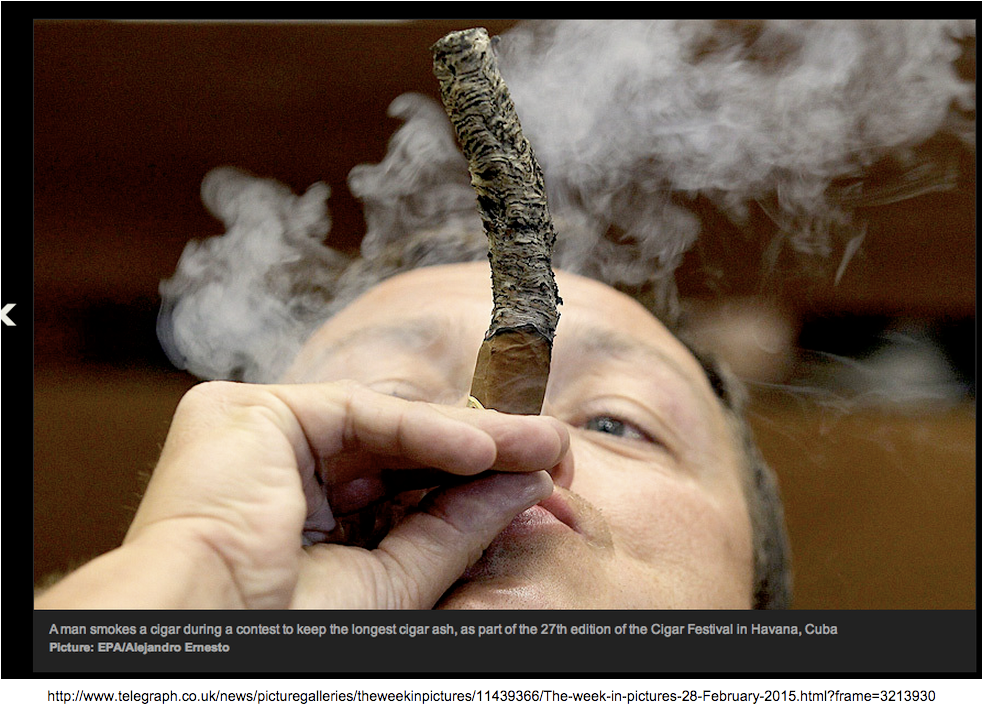


Above, a cigar ash competition is going on. For more on this, please see note 1.                                                                                         

Humans beings have so many propensities (i.e. mental occupations)—up to 1000 vrttis. And these can be broadly divided into four categories.


Suffering in beginning and in end


#1 Kliśt́á vrtti (beginning suffering, end suffering): Those who choose to move on the path of kliśt́á vrtti engage in endeavours which are uncomfortable and painful from the very beginning up to the very end, and the end result is also bad.

Ananda Marga ideology says, “The propensities that become the cause of pain in the beginning and also in the end are called Kliśt́á. Suppose, for instance, someone is travelling without a ticket. There is a heavy rush in the train. Naturally he will have to undergo suffering and inconvenience. If the checking staff come, another misery befalls. So here the pain is in the beginning and also in the end. This action of his is Kliśt́á-vrtti.” (1)

Some squish themselves and battle the crowds to visit a holy land and then get trampled to death in a stampede. Likewise, suppose a thief was undergoing hardship walking in a hailstorm and then got arrested by the police. In both of these instances the beginning and end is bad—problematic. So these are related with kliśt́á vrtti.


Happy in beginning but suffering in end


#2 Akliśt́á Kliśt́á vrtti (beginning pleasure, end suffering): Those who choose to move on the path of akliśt́á kliśt́á vrtti, engage in actions which start out as pleasant and joyful, but yield very bad results. There are many activities and works that fall in this category.

For example, if one is eating rasagolla (sweets) in their house but then later on they suffer from constipation, gas, and bloating. That act started out as enjoyable but concluded as something painful. Also smoking and drinking etc come in this category. So these are related with akliśt́á kliśt́á vrtti.

Same is the case with those who enjoy dancing and partying all night, and then have to suffer the ill effects of fatigue and nausea the next day. So these are related with akliśt́á kliśt́á vrtti.


Suffering in beginning but happy in end

#3 Kliśt́á Akliśt́á vrtti (beginning suffering, end pleasure): Those who choose to move on the path of kliśt́á akliśt́á vrtti, engage in actions which start out as uncomfortable or painful, but yield very positive and beneficial results.

For instance, eating bitter foods like neem leaves may not be a pleasant experience but the overall effect is very good as the blood, gums, liver, and kidneys are greatly benefited. Similarly, studying hard for an examination is not easy and may likely involve discomfort and even suffering. But in the end, getting success in the exam is a very positive outcome. So these are related with kliśt́á akliśt́á vrtti.


Happy in beginning & bliss in end


#4 Akliśt́á vrtti (beginning pleasure, end pleasure): Those who choose to move on the path of akliśt́á vrtti engage in actions which are blissful right from the start, and yield blissful results. Which endeavour is like that? Sadhana or intuitional practice. Sadhana with bhakti is very soothing and filled with anandam. It starts blissfully, continues blissfully, and concludes blissfully; and the final outcome is also blissful. So these are related with akliśt́á vrtti.

Most often, human beings involve in such types of works and hobbies which fall in the first three groups. And due to this they suffer a lot of pain in their life.  But those who are fortunate utilize their human potentiality to pursue dharmic engagements that fall in this fourth category. They learn sadhana, practice it, and see everything as Brahma. By that way, they always do good things and make their lives happy through spiritual practice. If worldly works are done while ensconced in brahmacarya, then that makes even worldly works blissful. But the main thing is to keep a sadhana oriented life—that is the best utilization.


Conclusion

For Parama Purusa everything is blissful beginning to end. Humans have all four of these types of vrttis or mental occupations. But Parama Purusa only has one. For Him everything is blissful from beginning to end. If one does sadhana, that comes in the category of aklista vrtti because the beginning, middle and end—everything is blissful. By doing sadhana life becomes full of anandam.

In Him,
Dharmadeva


Note 1: About the above photo


The person in the above photo falls in the first category—kliśt́á.  That man chose to involve in a cigar smoking competition. A contestant participates in the longest ash competition during the annual cigar festival in Havana, so he is forced to inhale a lot of smoke. Due to the pressure of this competition, contestants push the limits. This man is uncomfortable smoking that cigar, but he is doing it in hopes of getting victory. The goal is to generate the longest ash in the shortest time, without letting the ash break and fall down. But the end result of such a competition is lung cancer. So that activity is problematic from beginning to end. This is the worst category. So many human engagements fall in this category, unfortunately.

Those who misuse their bodies in the actions of categories 1-3, they directly degenerate to animal life after their demise. No one should misuse their body by work which is illustrated in these first three categories.

Reference
1. Subhasita Samgraha - 19, Salvation and Devotion


== Section: Important Teaching ==

Simple health solution

Sadguru Baba says, "To maintain the internal functions of the body without hindrance and to maintain the internal liquid balance, everyone should drink a sufficient quantity of water every day. A healthy person can consume three or four seers of water a day, a sick person four or five seers, and a person suffering from skin disease, five or six seers. These amounts of water help cure disease to a great extent." (1)

Note: One seer is very close to one liter.

Reference
1. Yogic Treatments, Appendix, A. Water Drinking


== Section 3: Links ==

Thursday, July 16, 2026

Baba’s guideline during Emergency & beyond + 3 more

Baba

Baba’s guideline during Emergency & beyond

Namaskar,

In countless discourses, Baba guides us that bhakti lies within. That sweet, close devotional proximity with Him is achieved internally. This is Baba's eternal teaching on bhakti. We also know that everything Baba has given is 100% clear, consistent, and conclusive. In that way, His every thought, word, and deed are perfectly accordant with His AM ideology. 
https://anandamargauniversal.blogspot.com/


Sixteen Points & Emergency

In those weeks and months before going to jail, Baba beautifully introduced His divine system of Sixteen Points. Now, in retrospect, we can clearly see that this was His special timing. Being the omniscient Parama Purusa and knowing that the unjust jail period was upcoming, Baba introduced Sixteen Points with the intention that even during His physical absence –  i.e. jail period – all margiis would be able to endure and have ample resilience to face the difficulty of the Emergency. By strictly adhering to Sixteen Points, margiis would have the strength, vigour, and bhakti to overcome all obstacles.

So, in that pre-jail period around 1970, Baba was living in Patna, and, on a regular basis, He began checking up on everyone's Sixteen Points, ensuring that all were following properly. Baba knew that without those special guidelines it would be impossible for sadhakas to survive the Emergency. Whereas, by following Sixteen Points, every margii would have the requisite bhakti to withstand any and all difficulties. This was Baba's unique and special planning.
https://anandamargauniversal.blogspot.com/


Ananda Vanii guidelines

And, during the Emergency period itself, Baba graciously issued these below dharmic mandates about Sixteen Points in His eternal and timeless teachings of Ananda Vanii Samgraha.

Ananda Vanii says, "Be firm on Sixteen Points. Unite all the righteous forces. All the tall talks of the evil forces will be silenced." (1)

Ananda Vanii says, "In order to march ahead on the road of human welfare, we will have to strengthen ourselves in all the arenas of life. The complete seeds of welfare in all the spheres -- physical, mental, moral, social and spiritual -- are embedded in the SIxteen Points. Hence be firm on the Sixteen Points." (2)

So this is one special aspect of that jail period, and that universal teaching holds true for today and eternity: By strictly adhering to Sixteen Points, one's level of bhakti will blossom.
https://anandamargauniversal.blogspot.com/


Baba’s special reply to sadhakas

During the jail period, many margiis visited Baba, and Baba graciously gave countless guidelines to all those who came — often directing people in their personal lives and answering their various questions about how to proceed. All through His incarceration this was going on. But, over the course of this entire period, there was one query that was asked again and again. And that question was, “How to best manage during this difficult time?” After all, each and every Ananda Margii was facing many challenges, and every disciple was also keen to keep the flag of AM upright in this hostile environment. Baba’s reply was, “Tell everyone that they should be very strict and sincere in following Sixteen Points.”

After the Emergency period ended, many of our dedicated Ananda Margiis (Wts and general margiis) were pardoned and released from jail. However, Sadguru Baba's case was still pending so He had not yet been released. Naturally, everyone was eagerly asking about how they could best carry on while He was still in jail. Here again, Baba’s guideline was to strictly adhere to Sixteen Points. And this lesson was not just applicable for that juncture, but stands as an eternal guideline for those on the spiritual path. 
https://anandamargauniversal.blogspot.com/

Even CBI agents will be transformed


Each and every Ananda Margii knows in their heart that bhakti transcends the physical sphere as it is a psycho-spiritual quality. And Sixteen Points is essential for developing bhakti. After all, so many communist spies and CBI agents were planted here and there, physically watching Baba intently during DMCs and His fieldwalks etc. But such communists and CBI agents did not have an iota of bhakti in them. Rather, they were totally against AM and did not understand anything about Baba's divine advent. So, even though they were watching physically, they could not get the real nectar. Even Jyoti Basu-- the crooked communist leader of West Bengal-- who lived in the same city for years, did not have any inkling of bhakti. However, had those same nefarious people become strict in Sixteen Points they would have been wholly transformed and become great bhaktas. 

Central dadas had to do sadhana

Here is the other half of the equation. Various central workers were around Baba 24hrs a day, but they still had to do sadhana and follow Sixteen Points. Baba never said to them that since they were in His physical proximity they did not have to do sadhana or follow Sixteen Points. This was never Baba's instruction. Instead, even if a Dada had been working all morning with Baba then, before lunch, that Dada still had to do half-bath, sadhana etc. It was not that he could skip sadhana and eat just because he had been physically close that morning. Rather, the rule was always, 'No sadhana, no meal'. So sadhana (i.e. following Sixteen Points) always had to be done regardless of the degree of one's physical proximity to Baba.
https://anandamargauniversal.blogspot.com/

We can say then that bhakti is such a unique force that is not limited to the physical sphere. Rather we know-- and in numerous discourses Baba guides us-- that the secret to the higher stages of bhakti is dhya'na; and, that dhya'na is not possible without strict adherence to Sixteen Points. So Baba’s guideline is to be very strict in Sixteen Points, as by this avenue one will become an elevated sadhaka and gain those deep spiritual realisations and samadhis etc. 

Here, Baba beautifully describes how internal bhakti and sadhana are the key ingredients for attaining Him. Thus, strictness in Sixteen Points is needed. 

Ananda Marga ideology says, "It is wrong to think that Parama Purus'a is realizable by man through empirical knowledge...To attain Brahma you shall have to do sa'dhana' or spiritual meditation. You should make Him the only goal of your life. For this you require integrity, devotion and singular and earnest love for Him. He is not attainable without reverence and unflagging and unflinching devotion. When the devotional depth will come, love, too, will be out-brimming with high sentiments - will be full and over-flowing... In that state alone will come your final realization of the Supreme Consciousness." (3)


Conclusion

Sixteen Points is essential. It is vital towards our well-being in all fields of life. And by being strict in Sixteen Points one gains that crown-jewel of life: bhakti. So no matter what phase of life one is in, and no matter the circumstances one is facing, every sadhaka should be very strict in Sixteen Points. And one will feel Baba’s divine presence always. That is His great blessing upon us. 
https://anandamargauniversal.blogspot.com/

At His lotus feet,
Gurubhakti

To understand AM books requires the mind of a sadhaka and that’s why non-margiis do not understand our AM books. AM books are the theoretical side, and the practical side is spiritual practice. Those who do not do sadhana will not understand Baba's teachings. For example, the Indian CBI had all our books, including the acarya diary, but they did not understand anything. Rather, they became paranoid by reading the word sadvipra leadership.

References
1. Ánanda Váńii #44, 1 January 1976
2. Ánanda Váńii #45, Ánanda Púrńimá 1976
3. Subháśita Saḿgraha Part 3, Desire and Detachment


*        *        *

The below sections are entirely different topics, unrelated to the above material.
They stand on their own as points of interest.

*        *        *

== Section 2: Prabhat Samgiita ==

The sublime brilliance

"Bhálobese chile tumi ámáy, vinimaye kichu cáo ni..." (Prabhat Samgiita #3811)

Purport:

Parama Purusa, You are so kind. Since ages You have loved me, but in return You have never wanted anything. You do not wish to receive anything from me; only You want to go on pouring Your divine compassion on me. Whatever I have offered unto You, You have politely refused to take - You only shower Your affection.

Baba, my Supreme Entity, Your kindness knows no limit. It is just like the moon which suffuses its sweetness by pouring its soft moonlight on everything. The moon does not consider the good or bad quality of those entities, just the moon goes on shining its refulgence. In the same way, You pour Your karun’a’ upon all incessantly, everywhere. You never consider or look into who is high, or who is mean and low. You lovingly see everyone as Yours - worthy of Your infinite kindness.

My divine One Baba, in the pouring rain of the pitch dark night, the smiling fragrance of the ketaki flower permeates the entire atmosphere all the 24 hrs, regardless whether there is darkness or light. Similarly, You also do not care about the proper or improper time, or who is qualified for Your mercy or not. Your affection never ceases. Even in the wake of meteor strikes in Your beautiful sky, still Your prema shines forth on all. You are most gracious to everyone - all the time. Your blessing is like the sublime brilliance which removes all the darkness in the blink of an eye.

Baba, You are the most compassionate One. I surrender everything at Your altar; please accept me and keep me under Your shelter...


== Section 3: Important Teaching ==

All are blessed

Ananda Marga ideology guides, "Those who have fallen today may become evolved people, great personalities in the future – mahápuruśas. This is why no one should ever be disappointed in life. Parama Puruśa is calling everyone and He will continue to call everyone: all shall find a safe shelter on His loving lap. He does not hate or neglect anyone. Hence the only answer to the question, “kasya tvam” – “Whom do you belong to?” – is: “I belong to Parama Puruśa, to Him and Him alone, because I have come from Him and I am in Him, and finally I will return to Him.” And the only answer to the question, “Kuta áyátah” – “From where have you come?” – is: “I have come from Parama Puruśa and I will go back to Him. He is my permanent abode.”" (1)

Reference
1. Subhasita Samgraha - 12, To Whom Do You Belong? Where Do You Come From?


== Section 4: Links ==


Monday, July 6, 2026

Why AM spirituality is unique + 2 more

Baba
Why AM spirituality is unique

Namaskar,

The concept of Ananda Marga is revolutionary. We follow the path of pure spirituality, not that of dogma, or pseudo-spirituality. But because of one’s past samskaras along with the entitative waves of the crude society, even good people may fall into the clutch of dogma. So we should be wary about the ill effects of the dogmatic religions, both to save ourselves and to help others.
https://anandamargauniversal.blogspot.com/


Beliefs of dogmatic religions

The dogmatic religions believe that God lives in some far distant place. Dogmatic Christians believe that God lives in heaven. Dogmatic Hindus believe God resides in vaekuntha. And Muslims believe God is living in the seventh sky, and that He passes judgment sitting on the holy stone - "arash". These are their common dogmatic beliefs. That’s why religion is nothing but dogma or pseudo-spirituality. 

Ananda Marga: path of pure spirituality


#1: The teachings of Ananda Marga reject the notion that the Supreme Entity resides in some far distant place like heaven or vaekuntha etc. 

Ananda Marga ideology says, "O Narada' I do not reside in vaekuntha…Where do I reside? Where my devotees sing, where they perform Kiirtana, there I reside" (1)

#2: Baba has revealed the truth that God is with us. That's why in one Prabhat Samgiita #4072, He composed the song in Urdu:

"Málika ho mere dilke áras pe baso jii..."

The meaning is very simple - O’ Parama Purusa, please sit in the lotus of my heart, that is arash -- "dilke arash", which is the holy place of my heart. Here, heart means Guru or sahasrara cakra. 
https://anandamargauniversal.blogspot.com/

Conclusion


The teaching of bhagavad dharma is that Parama Purusa is with each and every entity through His ota and prota yoga. In Ananda Marga, our approach is that Parama Purusa is our nearest and dearest One who resides in our heart.

Ananda Marga ideology guides us that, "Parama Purus'a always remains with you, within the very core of your heart.  So search within, O spiritual aspirant, not without, but within, within your very existence." (2)
 
Moreover, when anyone starts to do sadhana—it may be any lesson, 1st lesson to 6th lesson— then they feel the presence of Parama Purusa Baba. 

Ananda Marga ideology further says, "You are to be practical in your life of occult science. Your only object of ideation is Parama Purus'a, and not any dogma, not any scriptures." (3)

In Him, 
Shanti Svarupa

Religion is pseudo-spirituality

Pseudo-spirituality means dogmatic beliefs. In that case, the mind is not moving in the flow of bhagavad dharma and is instead plunged in the dogma that God is in the distant sky. This dogma has been preached for centuries by various dogmatic religions. And the effect has been very harmful. Following the path of religious dogma means adopting pseudo-spirituality, wherein the outcome is very negative. 
https://anandamargauniversal.blogspot.com/

Ananda Marga philosophy states, "Due to extremely narrow and selfish thoughts, human thought processes degenerate and people lose rhythm in the psychic world. Thus they deviate from the mainstream of the Cosmic rhythm of the universe. So in the realm of the physico-psychic world, pseudo-spirituality bears no significance. We do not want pseudo-spirituality, we want perfect spirituality." (4)


Dogma is like serpentine noose

Baba's teaching is very clear. Believing this dogma -- that God is living in the sky, or in distant nebulae, or in the stars --  is just religious pseudo-spirituality, not something dharmic. And that dogma is very detrimental as it will stifle and destroy the mind’s ability to progress. Dogma works like a snake. It is just like a serpentine noose which captures and throttles one’s whole existence.
https://anandamargauniversal.blogspot.com/

Ananda Marga philosophy says, "Whenever there is dogma, human thinking cannot be free; and for want of, for paucity of, free thinking, there cannot be any proper psycho-spiritual progress either. So here what we want is perfect spirituality and not pseudo-spirituality. Pseudo-spirituality cannot promote the cause of human welfare; the seed of welfare does not lie there. The seed of welfare cannot exist where the seed of dogma exists." (5)

Ananda Marga philosophy states, "So pseudo-spirituality, full of dogma, does not lead to collective welfare either in the physical, physico-psychic, psychic or spiritual worlds." (6)

References
1. Subháśita Saḿgraha Part 19, The Supreme Aesthetic Science and the Cult of Devotion
2. Ánanda Vacanámrtam Part 12, Parama Puruśa, Not Scriptures
3. Ánanda Vacanámrtam Part 12, Parama Puruśa, Not Scriptures
4  Neohumanism in a Nutshell Part 1, Pseudo-Spirituality and Neohumanism 
5. Neohumanism in a Nutshell Part 1, Pseudo-Spirituality and Neohumanism 
6. Neohumanism in a Nutshell Part 1, Pseudo-Spirituality and Neohumanism 


*        *        *

The below sections are entirely different topics, unrelated to the above material.
They stand on their own as points of interest.

*        *        *

== Section 2: Prabhat Samgiita ==

My spiritual life

PS Into: In spiritual life there is no one else besides Parama Purusa-- Baba. So bhaktas are always talking with Him, in one manner or another. In this song, the bhakta is communicating with Parama Purusa indirectly, thereby demonstrating that there are multiple ways to communicate with Baba.

It is just like how someone's ista mantra may be based on auto suggestion or outer suggestion. In either case, that mantra japa is related only with the sadhaka and Parama Purusa. No third person is included. This shows how the loving expression may vary, but in all cases the bhakta is communicating with Parama Purusa.

Here is another example which demonstrates this same idea. In various reporting sessions, many sadhakas used to say directly to Baba, “I want the grace of Baba”-- as opposed to saying, “I want Your grace”. Or some would say to Baba that, “I want His grace”'. Or here is another thing that would happen. Sometimes when talking about Himself, Baba used to say, "Baba knows everything”, instead of saying, “I know everything”. This all goes to show that there are various ways of expression.

The central idea is that whatever is expressed in this Prabhat Samgiita is communicated indirectly between the bhakta and Parama Purusa. The bhakta is referring to Parama Purusa as “He” and “Him”, not “You”. And not only in this song, but there are many songs of this nature in our Prabhat Samgiita collection. And in each case when coming across such songs, we should think that the bhakta is communicating with Parama Purusa-- there is not any third party involved. Whereas in the dogmatic Hindu religion, this type of song is depicted as one bhakta talking to one other bhakta about Parama Purusa. But in AM our spiritual approach is singular and pointed: Besides Parama Purusa there is no one.


"A'ma'r e manobiin'a' chandahiina'..." (Prabhat Samgiita #0198)

Purport:

The viina of my mind has no rhythm; it only plays if He plays it. Only by following His tune can my viina be played. I do not have an iota of bhakti in my heart. I cannot do sadhana. There is no rhythm. Only if He comes and graces me and fills my heart with bhakti, only then is it possible for me to do sadhana. Because, without His divine grace, my mind is dry and does not have any bhakti. My spiritual life will only come in the proper flow by following His dos and don'ts, His guidelines, His teachings, His ideals etc. In that case, only by His mercy will sadhana be possible.

He is surrounding me in all directions; He is everywhere. Every expression is His smile; whatever has been created in this universe is His beauty. With the blossom of the flower He smiles, with the chirping of the birds He smiles, and with the natural wonder of the mountains He smiles. All the flora and fauna is nothing but His divine magnificence. He is everywhere-- all around me. But when I sit and try to close my eyes to do sadhana and request that He should sit close to me in dhyana, then He does not come close, rather He drifts away to some far, unknown, distant land. Where He goes, who knows. But in that situation the happiness and blissful feeling of my heart wanes.

From a distance He looks towards me because He is all around me. But He does not allow Himself to be held; He does not come close in my heart or in my mind. With the tune of His divine liila, He goes on dancing somewhere-- who knows where,

O' Lord, I do not have any quality, or sweetness, or bhakti in my heart. If You grace me and if by Your own attribution You come and sit in my heart and smile softly, then only is my sadhana possible...


== Section 3: Important Teaching ==

Early stages of medicine

   Ananda Marga philosophy says, "Water: Odorless, tepid water, especially if it is sun-warmed, is an excellent medicine for the physical body. It has great healing qualities. Since ancient times, knowingly or unknowingly, human beings and different animals have also accepted water as one of their medicines. It is also said in the Vedas: ápashca vishvabheśajii [and water is a universal medicine]."
   "However the quest for medicines on the part of human beings and animals has not been limited to fasting, sunlight, water, air and earth. Initially the medicines that human beings discovered were different trees and plants and the external use of their bark and roots. The human beings of those times used to chew them and smear or rub the diseased part with them. These ointments were the first medicines discovered by human beings. When these ointments did not work externally, it became necessary to ingest them. Humans used to take them as medicine by chewing or swallowing them. This was the second step in the use of medicines in human history."
   "There were many such medicines that were only available in particular seasons, not all year round. People used to gather them in the specific season and dry them so as to preserve them. In certain places they would preserve them in the form of tablets with the help of water; in other places they would just dry them normally. This preservation of medicine in the form of tablets or pills belonged to a later stage in the use of medicines in human life." (1)

Reference
1. Shabda Cayanika, Kulya to Kuvela (Discourse 34)


== Section: Important Teaching ==

Historical precedent: materialists lost


Ananda Marga ideology states, “On deeper analysis we find that the Charvaka and other schools of materialistic philosophy propagated certain doctrines which were more a revolt against the prevailing religions than an expression of a rational and benevolent outlook. They protested loudly against the clergy or religious traders who composed the so-called scriptures in the name of dharma (in fact it was not dharma, but religion); who took advantage of the fear psychosis, in the name of god, to ruthlessly exploit society. The Charvaka and other materialistic philosophies were motivated to strike against religious exploiters. They were fully aware of the way the vested interests exploited society, and they knew that nobody had the right to deprive others of their properties, since every thing of this earth is the common patrimony of all, yet they did not endeavour to lead humans along the path of rationality or formulate a healthy social and spiritual ideology.” (1)

Ananda Marga ideology states, “The reason for this was that they lacked convincing arguments to stand against the sharp intellect of the vested interests [religious exploiters]. Thus, they merely attempted to negate the fundamental tenets of the vested interests [religious exploiters], often with rather abusive language. Due to the weakness of their argumentation it was easy for the vested interests [religious exploiters] to emerge and gain strength in the subsequent period.” (2)

References
1. Ananda Marga Ideology & Way of Life - 7, In Adoration of the Supreme
2. Ananda Marga Ideology & Way of Life - 7, In Adoration of the Supreme


== Section 4: Links ==

SUBJECTS TOPICS