Search This Blog

Wednesday, September 24, 2025

Ways of dharma + 3 more

Baba
Ways of dharma

Namaskar, 

Dharmasya súkśmá gatih [“The ways of dharma are very subtle”]. (1)

Ananda Marga philosophy says, "Dharma rakśati rakśitah – “One who protects dharma is protected by dharma.” Dharma saves the dhármika [the upholder of dharma] in the material sphere, in the subtle sphere and in the causal sphere. When dharma saves people in the material sphere, they experience it before their very eyes, they hear it with their ears, they feel it with the tenderness of touch." (2)

Dharma moves very secretly and while the followers of dharma may not recognize it initially, in the endgame there is always victory. 
http://anandamargauniversal.blogspot.com/


Heroes faced the sufferings

Many active margiis became paralyzed during the Emergency and withdrew themselves from Ananda Marga. And some heroes faced the sufferings and were arrested, put in jail, and lost their jobs. Then there was family clash, economic suffering, and public humiliation. But they did not cow down. They always asked Baba for the strength to carry on. 

Then, after almost two years, the situation changed - the Emergency was over - and they got victory. Their jobs were reinstated. They got their back payment without doing the work. And, after getting a large amount of their accumulated salary, many of them constructed their own homes which was unthinkable earlier. Verily, all facets of their life were back in proper order. 

Ananda Marga philosophy says, “With the increasing development of the power of reflection, dharmic people realize that dharma is always with them in a very subtle way. They further realize that their dharma and their beloved Parama Puruśa are one and inseparable. " (3)

Plus, during the jail period, they were blessed to get the opportunity to live in a deeply spiritual environment all the 24hrs with kiirtan, sadhana, satsaunga, bhajan etc. 
http://anandamargauniversal.blogspot.com/

After the Emergency, the public started appreciating them and those heroic margiis gained far more prestige than they lost. And they were recorded in the history of India as heroes and received a lifelong pension from the Indian government. 


Conclusion


The overall idea is that standing up for a cause seems scary initially, which is why common people immediately back down. But, in the end, satya always gets victory. Top of all, Baba has brought us on this earth for some purpose, and He knows better than us. 

In one of His discourses, He says one should ask Parama Purusa, "O' Lord, I have a very small brain and You have an infinite brain, how much can I think about my future welfare with my small brain. Not so much. You should think about my problems also." When this type of surrender comes then victory is sure. 

in Him, 
Viniit

Ananda Marga ideology guides us, “He possesses innumerable brains. What can you achieve with your one brain? The time is running out; you should say to Him, “You have so many brains. O Lord; so please think of me. What can I do with my single brain?” It is as if one is reminding Him by shedding tears.” (4)

References
1. Namah Shiváya Shántáya, Shiva's Teachings – 1 (continued) (Discourse 11)
2. Namah Shiváya Shántáya, Shiva's Teachings – 1 (continued) (Discourse 11)
3. Namah Shiváya Shántáya, Shiva's Teachings – 1 (continued) (Discourse 11)
4. Ananda Vacanamrtam - 6, The Thousand-Headed Puruśa


*        *        *

The below sections are entirely different topics, unrelated to the above material.
They stand on their own as points of interest.

*        *        *

== Section 2: Important Teaching ==

AM pracara by non-margiis


Namaskar, 

Look how Sadguru Baba is getting work done and slowly establishing His ideology through non-margiis. Please see the below image. Villagers have taken the vow not to serve food at a shráddha (death) ceremony. 

One village in Bihar has taken the decision and joint oath against shráddha meal - i.e. serving food at a death ceremony. And that is in complete concert with Guru’s teachings. 

Ananda Marga ideology states, “Human beings at the most can make efforts, and if Parama Puruśa is pleased with their efforts, He will help them with positive microvita; Parama Puruśa will get the work done with the help of positive microvita.” (1)

And verily Baba has declared that He can establish His teachings using goats and monkeys. Naturally, then He can use non-margiis if He wishes. 

Ananda Marga Caryacarya states, “Shráddhánna: Shráddhánna (food offered at a memorial service) is neither priityanna nor ápadanna, hence it is not to be taken.” (2)

image.png

In Him, 
Mahima

References
1. Subhasita Samgraha - 18, The Path unto the Abode of Beatitude
2. Caryacarya, Part 2, Society, Point #37


== Section: Important Teaching ==

Memorization technique

Namaskar, 

Baba's below teaching discloses the reason why our scripture has been composed in the genre of poetry: Because poetry is easy to memorise. For this reason, Baba has composed our scripture - i.e. Ananda Sutram and Prabhat Samgiita - in poetic verse.
http://anandamargauniversal.blogspot.com/
 
Ananda Marga philosophy states, "In the absence of rhythm it is difficult to memorize. That is why since ancient times, for 15,000 years, the common practice has been to bring every valuable branch of knowledge within the scope of rhythm. Human beings do not easily forget rhythm. One may forget the contents of knowledge, but not the rhythm. That is why all Vedic Rks were composed in 7 meters. All literary compositions were brought within the gamut of the seven Vedic metres...as they are valuable for the memory." (1)


Set to rhythm

 
If you want to learn or memorize anything, the easiest way is to set it to rhythm. One paragraph of prose is very difficult to memorise, but one stanza of a poem, shloka, or song is comparatively easy to memorise. Rhythm helps in memorising anything. That is why in their infancy, children are introduced to language via rhythm in nursery rhymes and songs etc. By this way they can quickly learn and advance.
http://anandamargauniversal.blogspot.com/
 
In the distant past, before the invention of any script and before paper came into vogue, people used to keep everything in their mind. There were no books or other media as we see nowadays: Audio, video, writings, etc. There was nothing.

What yogis did in the past

 
So when there was no way to store ideas or teachings on paper or cassette, the only option was to store it all in their memory. The best technique for doing that was to create rhythmic poetry. So all those past yogis, rishis, sages, thinkers, and munis put their realizations into shloka, poem, or any kind of rhythmic expression like the vedas, purana etc. Even when script was first invented, most people did not know how to read or write, so those thinkers continued to put their teachings into poetic verse. This happened all across the globe.
 
This is not only for those of the past. Today also if you want to memorise anything then put it in rhythmic form. Cunning advertisers create jingles or rhymes to influence consumers, and film-makers do the same.
 
So to keep something readily in the mind then take help from a rhythmic flow, otherwise it will be very difficult to store that in your memory. For this reason Baba has given the key of Ananda Marga teachings - i.e. Ananda Sutram - in poetic form, and Prabhat Samgiita as well. And in virtually every discourse He has included a shloka. By that way - by memorizing one rhythmic shloka - one can get the seed idea of the entire discourse. That is how to memorize that entire discourse in key form.
http://anandamargauniversal.blogspot.com/
 
In His series of discourses on the Faculty of Knowledge, Baba has given so many points about memory and rhythm.

In Him, 
Viniit
 
Reference
1. Ananda Marga Philosophy in a Nutshell - 5, The Faculty of Knowledge – 4


== Section 3: Links ==

Postings to Read

Story: the birth of kiirtana

About initiating new people

Bullying: children need our attention

Prakrti's control

How to make great Prout family

Rampant ills of selfishness


Tuesday, September 23, 2025

What to do with corpse + 3 more

Baba
What to do with corpse

Namaskar,

Consoling the bereaved, conducting death ceremonies, and handling the dead body of the mahaprayanii (the one who died) are important issues. At some point in life, we all have to deal with such matters and guide others as well. So it is our duty to follow Baba's explicit guidelines and be ready ahead of time to help others during such sensitive occasions.
https://anandamargauniversal.blogspot.com/

Dogma: carry mahaprayanii across the planet


Indeed Baba has dedicated an entire discourse to this important matter and put great value on how to handle a person's death. That way we can minimize the grief of those in mourning by diverting the mind away from their loss. During this difficult time, we can help them redirect their mind towards Parama Purusa.

Here are some of the ways this should be applied in our practical life experiences.

In the unfortunate circumstance that one of our respected persons passes in a far away place, we should know what to do. If certain in-charges decide to (a) hold onto the body of one of our esteemed acaryas or margiis in one place, or (b) ship that body all the way across the country, planet, or in the future from one planet to another planet, (c) put the body on ice until the next retreat or DMS etc, then that drastically slows down the entire grieving process. That deepens the pain and agony of the grieving family as they are sunk in woe for a prolonged period.

Instead of gaining closure in a respectful and timely manner at the place of one's passing, the whole process of cremation is delayed. Those in mourning will indefinitely be plunged into feelings of loss and sorrow. They will be tormented by their grief for a much longer time.
https://anandamargauniversal.blogspot.com/


Why no more than 12-days

Additional drawbacks of transporting the body long distances include the huge effort, time, and money spent to ship it across an entire continent or landmass to a new location. So this notion of transporting a dead body over a long distance to be cremated should not ever be entertained. Nor should a body be kept on ice until the next DMS etc. Both of these approaches go wholly against our Ananda Marga system.

In recent years, such types of suggestions were given in specific cases in our Ananda Marga Pracaraka Samgha (AMPS). So this is a dogmatic trend we need to be aware of. Baba does not appreciate this as He wants that the mind of those in mourning be diverted toward the Supreme so their suffering is minimized. Yet if their loved one is not cremated for weeks or even months, naturally those grieving family members will not get any relief. That is why the cremation and shráddha ceremony should be done in a timely way—within a 12-day period, as outlined in Caryacarya.

If any delay occurs in cremating the deceased (i.e. the mahaprayanii), those in mourning are forced to undergo psychic suffering for a longer period. Baba does not approve of this. Baba places maximum importance on the care and comfort of the surviving family members by diverting their mind. That is why the cremation should be done within a 12-day period, as outlined in Caryacarya.
https://anandamargauniversal.blogspot.com/

Sending to homeland


In the west, many times they keep the body for some time as that is the religious tradition and there are funeral homes for storing the body. Some naive margiis started doing this. But they are just blindly copying Christian and Judaic dogma. That is unfortunate. Baba wants that the deceased person should be cremated in a timely manner, not in a prolonged, drawn-out affair.

Some of the prevailing Hindu dogmas include transporting the deceased to a so called holy place or tiirtha like Varanasi, and paying priests big bags of money to perform the shráddha, lest the deceased (i.e. the mahaprayanii) turn into a ghost and torment the grieving family, as well as the entire village and greater community.

Let's review a few possible scenarios to make this entire matter more clear.

If a margii or an acarya dies in India and their laokik home or posting was in New York sector, then there is no need to send that body back to NY. Nowadays, due to the advancement of science, some dogmatic communities do this. But, that is dogma.

Every person in Ananda Marga considers this entire universe to be their homeland. To delay the burial, cremation, and shráddha ceremony by transporting the body halfway around the world has no rhyme or reason. Rather it is a harmful dogma.

Baba does not want family and loved ones of the mahaprayanii to be mourning for a longer period of time. Rather the day of the death itself their mind should be diverted toward a spiritual ideation. That is our way. This whole entire matter is not just related with family margiis but with wholetime workers too.
https://anandamargauniversal.blogspot.com/

Why not mummify


In the unfortunate occurrence of PP Dada dying in a plane crash in Berlin sector or Nairobi, then there is no need to bring that body back to DMS or to central office wherein the body will be kept preserved / mummified for future generations like that of Lenin. Rather those local people in Berlin or Nairobi will respectfully manage all related affairs in the appropriate manner. The main point being: There should not be any delay in the respectful and honourable ceremony for handling the death—whether one be a family margii or wholetimer.

If we do not pay heed to Baba's order, then it sets the stage that in the future, the bodies of our esteemed acaryas and margiis will always be subjected to long travel in order to reach Ananda Nagar or some other master unit; plus some will think that the body should be held until the next retreat or DMS—be that 5 weeks or 5 months—so that maximum people can view the body. This is the uncomfortable, dogmatic ritual that we must not allow to become a reality. Such proposals have been put forth, but this is not our way.

You can imagine what will happen when there are Ananda Marga acaryas in every village on this earth, i.e. millions of acaryas. In that case, each and every day—for one reason or another—there might be the loss of a few dozen or few hundred workers. Then if all need to be transported to Ananda Nagar for a grand burial process and / or ceremony, everyone will be involved in managing the bodies. Plus, we will have to have our own air fleet, and verily everyone in AMPS will be involved in travel and ceremony preparations. This is highly irrational.

And not only that, but what about in the future when people live on different planets, then they will have to hire a spaceship to bring the body across the solar system to reach Ananda Nagar.

The rational approach is for local people to handle all said affairs in a timely and honourable manner.
https://anandamargauniversal.blogspot.com/

What you can offer to the mahaprayanii


We have to remember that Baba's main teaching is one should divert the mind of those in mourning. They should not be reminded again and again of their loss. Rather we are to help goad their mind in a different direction—i.e. towards Parama Purusa—so they may gain a sense of peace.

Another key important point is that the shraddha ceremony aims to bring closure and comfort to the surviving loved ones. It has a big effect on the psychological state of those in mourning; that is the main benefit. The shráddha ceremony has no bearing on the future of that deceased soul.

Ananda Marga Caryacarya states, "The departed soul does not get any advantage from the shráddha ceremony [memorial ceremony]. It is only meant for the psychic satisfaction of the person performing it." (1)

If the deceased person was a sincere sadhaka and had one-pointed devotion for Baba, Parama Purusa, then they will get mukti or moksa. In which case the deceased person is not there to listen to your shráddha.

If a person was poor in sadhana and not practicing regularly then he will get rebirth. In that case also, he will not be witness to the shraddha ceremony. The deceased may already be taking new life.

In either case—whether moksa or rebirth—the shráddha ceremony is done for the well-being of the surviving members of the society, not the deceased. You cannot give anything to the deceased.
https://anandamargauniversal.blogspot.com/


Who suffers after death

Those who think that the deceased person will receive the food and clothes offered to others at the time of shráddha are dogmatic.

The cremation ceremony is a time to bring closure for the family and relatives. Hence it should be done in a timely manner lest they undergo more suffering.

Baba has strictly placed a 12-day limit on the period of mourning and the completion of the shráddha ceremony. But, the sooner it is done the better. And, of course, there must not be an annual celebration or remembrance of that death day. Rather as jiivas, we are to move on psychically.

Here is one inherent danger of preserving the deceased body or erecting a tomb to honor the deceased. Then one will have given too much importance to the deceased, the mahaprayanii, and have no psychic space left to think about Baba as one's object of ideation.

Tadekaḿ smarámah tadekaḿ japáma
Tadekaḿ jagatsáksiirúpaḿ namámah.

Our Guru's teaching guides us what to ideate upon:

Ananda Marga ideology states, “If I remember anyone, I will remember only that One Entity and not many. If I repeat anyone’s name, I will repeat only the name of the Lord. If I ever salute anyone, I will salute only the Supreme One and no one else.” (2)

Thus if anyone is involved in transporting or keeping the dead body for weeks or months or making a tomb etc, then that goes against the spirit of Baba's aforesaid shloka. If you do not understand, then read Baba's teaching again.

The common belief is that the deceased suffers after death—but that is wrong. The bodiless mind does not feel anything and does not suffer. Only the surviving members suffer—for a few days. That is why the funeral should not be delayed. Delaying the funeral means more suffering by the grieving family. That is why in Ananda Marga the maximum limit is twelve days.
https://anandamargauniversal.blogspot.com/

Guru's blessing


Baba has graciously given all the requisite instructions and guidelines for how to deal with death. By following His guidelines, the grieving family members will be properly cared for and attended to, and the deceased will be cremated in a timely manner.

Here following is how Baba beautifully concludes the shráddha ceremony.

    Sarve’tra sukhinah bhavantu sarve santu nirámayáh;
    Sarve bhadráńi pashyantu na kashcid duhkhamápnuyát.
    Oṋḿ shántih oṋḿ shántih oṋḿ shantih.


[Let everybody be happy; let everybody be free from all physical or psychic ailments; let everybody see the bright side of everything; let nobody be forced to undergo any trouble under pressure of circumstances… Oṋḿ shántih, oṋḿ shántih, oṋḿ shantih.] (3)

Namaskar,
Avyakta Deva

Baba's main ethic is that in a psychological way, people's minds should be goaded away from sorrow. Those in mourning should not be forced to suffer unnecessarily. In His discourse, Baba gives us so many practical guidelines for how to help a grieving family. Acknowledgement of their sorrow and diverting the mind upwards are two of the key elements of Baba's guideline.


~ In-depth study ~

Dogma related with death

Hindu, Christian, Jewish harbour a similar type of ignorance.

The carrying of the dead body to a so-called holy tiirtha etc is very common in the Hindu dogma and now some are emulating it and bringing it into AMPS. It is not accepted, but due to their ignorance and group allegiance certain avadhutas did it anyway.

Hindus do shráddha because of their fear of ghosts, but in Ananda Marga we know that such ghosts do not exist. That is just dogma. This following paragraph illustrates why Hindus do shráddha.

Here is another dogma from the Hindu religion on this point of shráddha: If the shráddha ceremony is not done then the deceased will become a ghost and harass the family, friends, villagers—everyone. The will bring disease, struggle, strife, loss, accidents and all kinds of troubles. With this fear, the common people are terrified of what will happen if they do not arrange the shráddha ceremony for the deceased. This is the dogma they suffer from. We know that there is no such thing as ghosts—just it is dogma. So they pay / donate Hindu priests huge amounts of money to preside over the shráddha ceremony. Thus in Hinduism, their shráddha ceremony is done for the "benefit" of the deceased and for the surviving members—that way they will not be tortured and harassed by any ghost or face serious problems. Christians and Jews have similar ignorance.

Dogmatic Hindus believe that if money and rituals are offered to the priest then the deceased who was roaming as a ghost in their native village will get a grand mansion in heaven with a lot of servants. The deceased will reside there and enjoy. In this way Hindus get cheated by priests. A similar custom is present in Christianity, Islam, and Judaism. But Ananda Marga has come on this earth to wipe away all these dogmas and rescue the exploited mass.
https://anandamargauniversal.blogspot.com/

Naive people talk with the deceased at their tomb


Christians and Jews carry the dead body from the four corners to their homeland because of the dogma that family members and friends can talk with the deceased at their tomb. If the deceased was a senior member of the family they will ask their advice and counsel, and if the deceased was a child they will offer toys at the site of the tomb / grave. This mindless ritual goes on endlessly. And there is an ignorant belief that in the future when doomsday comes then the body of the deceased will rise from the tomb and go to heaven on their judgement day. That is why the body parts / body of the deceased is highly needed.

Of course in Ananda Marga we do not subscribe to such dogmas or superstitions. We know that the shráddha ceremony is only done to support the grieving family; it brings a sense of closure so they can move ahead in life. The shráddha ceremony, like all our Ananda Marga ceremonies, is free of cost.

The dogmatic Hindus do yearly shráddha ceremonies also. That system has been imitated by the Kolkata faction and that Tiljala team, and called "mahaprayan". They just copied this from other religious dogmas. Unfortunately from that yearly "mahaprayan" shráddha ceremony which was invented by B group, some dogmatic people have applied this for an annual ceremony for their deceased, the mahaprayanii loakik relations.
https://anandamargauniversal.blogspot.com/

In reality dead body is like old, tattered clothes


Ananda Marga ideology states, “When the clothes become old and tattered, they are replaced with newer ones. This is the law. Nobody wants to wear old, tattered, and dirty clothes. Similarly, when the body becomes old and worthless, it is changed for a newer one.” (4)

“Do you know what death is? Death means a change of form. A boy of five years became a young man—now, the body of that boy underwent death. That young man became old—the body of that young man underwent death. That old man died and he again came here in the form of a little boy—the body of that old man underwent death. Death means a change of form.”

    Vásáḿsi jiirńani yathá viháya naváni grhńáti naro’paráńi;
    Tathá shariiráni viháya jiirńányáni saḿyáti naváni dehii.


“Just as you change the old cloth for a new cloth, similarly you change the old body and you reappear in this world in a new body. This is what death is.” (5)

References
1. Caryacarya Part 1, Shráddha Ceremony
2. Ananda Marga Ideology and Way of Life -11, Relativity and the Supreme Entity
3. Caryacarya Part 1, Shráddha Ceremony
4. Ananda Vacanamrtam - 23, Accomplish Your Work with This Body Only
5. Subhasita Samgraha - 24, The Causal Matrix


*        *        *

The below sections are entirely different topics, unrelated to the above material.
They stand on their own as points of interest.

*        *        *

== Section 2: Prabhat Samgiita ==

My mental peacock dances

“Sabár priya, sabár priya, sabár priya…” (Prabhat Samgiita #2097)

Purport:

O’ Parama Purusa, You are very dear to all; please accept my sa'stanga pranam. You are the dearmost of everybody. In searching for You, my days have passed; they have completely vanished. Please come close, O’ the Shelter of All.

Baba, You do not reside in those so-called holy places; You do not live in forests where so-called yogis go to get You. You are not in the ritualistic chants or dogmatic mantras, prayers, eulogies, or songs to invoke for your arrival. Instead, You reside secretly in the mind. So I address You in my mind with this call of mine.

O’ my Most Glorified Entity, please remove all my shyness and fear etc - all kinds of bondages. Today, my mental peacock dances as it looks at You, fully ensconced in Your blissful presence. It is Your grace…


== Section: Important Teaching ==

Best tool of pracara: bhakti


When one has bhakti they can solve all types of problems. And without bhakti, nothing is possible. Due to a lack of bhakti, some did far more harm than good when they tried to help the society. They created huge problems for the people. So bhakti is the key for success in any field or arena of life.

Ananda Marga philosophy says, “Devotion [to Parama Purusa] has tremendous power which neither knowledge nor action has. Rather people of knowledge, the jina’nis, have a subtle sense of vanity...So, if you can arouse devotion, then by coming in contact with you, thousands and thousands of people will attain real paramartha’ and spiritual salvation. That is, in order to attain liberation from the triple bondages– physical, psychic, and spiritual– you will have to attain paramartha’.” (1)

Reference
1. A Few Problems Solved - 3, The Importance of Society


== Section: Important Teaching ==

Bad idea: dividing on basis of language

Prout philosophy states, “In the western corner of India there is a move for Punjabi Suba. This is the outcome of the cry for linguistic states by some respectable all-India leaders. These leaders noted that certain other leaders are sympathetic to Muslims, so they proclaimed Punjabi Suba. Their intention is to create an independent Punjab. In the past they launched a campaign for Sikhistan. However, large numbers of Sikhs only live in the northern and western Punjab. Moreover, there is practically no difference between Hindus and Sikhs as they speak the same language and are guided by the same Hindu Code. Before independence there were 57% Muslims, 30% Hindus and 13% Sikhs in the Punjab. Now there are 70% Hindus and 30% Sikhs. The demand for Punjab Suba, though inwardly communal in character, outwardly appears to be a demand for a linguistic state. Those leaders who once supported the idea of a linguistic state are now afraid of the demands of the Sikhs. This is a funny occurrence indeed! Fissiparous forces always create disunity and exploitation in collective life. To counteract these fissiparous forces, PROUT encourages those common factors amidst divergent views which lead to unity and synthesis.” (1)

Reference
1. Prout in a Nutshell - 15, Talks on Prout


== Section 3: Links ==

Postings to Read

Story: the birth of kiirtana

About initiating new people

Bullying: children need our attention

Prakrti's control

How to make great Prout family

Rampant ills of selfishness


Monday, September 22, 2025

Mahaprayan vehicles in Orissa + 3 more

Baba
Mahaprayan vehicles in Orissa

Namaskar,

After 1990, B group propagated their so-called mahaprayan programme as something very unique and godly—a special occasion reserved solely for Mahasambhuti. And they tried to hide the reality behind this mahaprayan term. By the following, it will be clear to one and all that the mahaprayan term is a very common term for the deceased and death; verily, it is related with cadavers, skeletons, corpses, and the funeral vehicles which carry these cadavers from the hospital to the burial or cremation place for common folk. By this way, B group’s attempt and tactics to cover this up are completely exposed.
http://anandamarganewsbulletin.blogspot.com


Mahaprayan vehicles to carry dead bodies
 
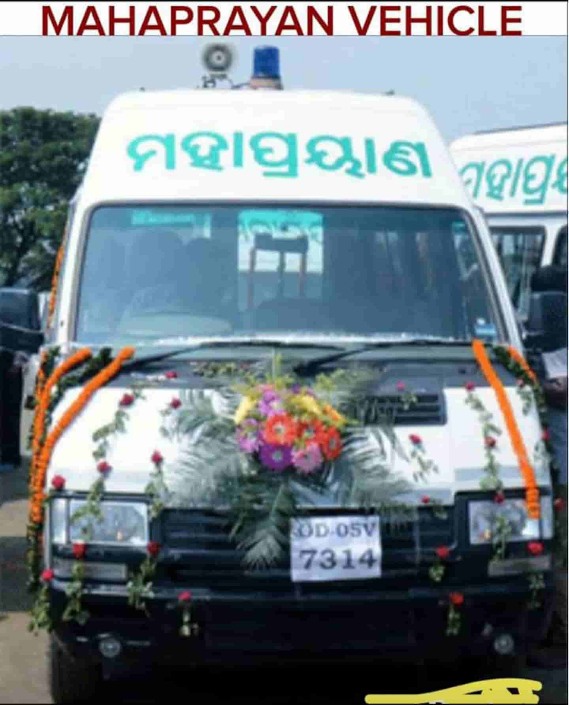
Recently the Odisha state government started one programme related with the last rites of the deceased. The name of this government initiative is the mahaprayan programme. In their mahaprayan project, every hospital has mahaprayan vehicles to carry groups of dead bodies from the hospital to the cremation grounds. For more details, please continue reading and you will understand that the word mahaprayan itself is a very common term related with funeral homes and the carrying of dead bodies in trucks and buses. Especially in Odisha, the funeral vehicle which carries the dead body is known as mahaprayan. 
 
Here below is the vehicle they are using to carry dead bodies and cadavers from point A to point B for the government mahaprayan programme. The name of the vehicle itself is mahaprayan (written in Oriya) and there are hundreds of such vehicles that have been purchased by the Orissa / Odisha government for transporting those corpses from the place of death to the next desired location.
http://anandamarganewsbulletin.blogspot.com


So although after 1990, B group propagated their so-called mahaprayan programme as something very unique and godly, it is quite apparent that the term mahaprayan is rather pedestrian and related with death, corpses, cadavers, and burial grounds etc. It is not some exotic spiritual term related with Mahasambuti. Mahaprayan is firmly rooted in the death and lifeless body of any ordinary person, as the government’s newly named mahaprayan vehicle suggests. 
 

Conclusion

In Odisha and Bengal, the mahaprayan term is very pervasive, related with the cadavers, skeletons, corpses, and the funeral related vehicles which carry these cadavers from the hospital to the burial or cremation place for common folk. 
http://anandamarganewsbulletin.blogspot.com

In Him,
Devavrat Maharathy


Mahaprayan scheme: To carry the cadaver
 
[Courtesy of India ...]
 
“Bhubaneswar.  Chief Minister Naveen Patnaik  launched the Mahaprayan scheme, announced six months ago, for taking a dead body from the hospital to the deceased’s house. Mahaprayan scheme was launched keeping in view the success of Harischandra Yojana.

Under Harischandra Yojana, poor people get financial assistance for cremation, while Mahaprayan scheme would facilitate transportation of bodies from hospital to the village of the deceased, Patnaik said while launching the scheme at Mahanga in Cuttack district.”
 
“There has been a state-wide outcry over non-implementation of the scheme, which was announced in February this year. The government came under severe attack after a tribal man had to walk around 10 km carrying his wife’s dead body on his shoulder from a government hospital in the backward district of Kalahandi, as he was unable to get a vehicle to take the dead body to his village.”
 
“The scheme to facilitate transportation of dead bodies from government hospitals to the place of the deceased person’s residence will be monitored by General Administration (GA) and Health and Family Welfare departments, an official said.”
 
...
 
“As per the scheme, 40 dead body carriers (vehicles) were to be procured for 30 district headquarters hospitals, two each for three state run medical college hospitals, one each for Capital Hospital in Bhubaneswar, IGH, Rourkela, Sishu Bhavan in Cuttack and Cancer Hospital in Cuttack.“ [Here ends the news from India ....]


*        *        *

The below section is an entirely different topic, unrelated to the above material.
It stands on its own merit as a point of interest and ideological awareness.

*        *        *

== Section: Important Teaching ==

Special spiritual guideline

Here below is an English summary of Baba’s Bengali teaching in Subhasita Samgraha - 16, chapter 4

In order to become one with Him, what is required is that one must ask for His grace. He is within your mind in the smallest form, so He hears whatever you think. Certainly then your desires, hopes, and aspirations are heard by Him. He is your nearest relative and greater self, so certainly He will fulfill your logical demands.

References
1. Subhasita Samgraha - 16, chapter 4


== Section: Important Teaching ==

Ultra-modern sex change


Ananda Marga ideology states, "So the characteristic of the human mind to attract or to be attracted depends on mental tendency. If there is a glandular change in the physical structure there will be a corresponding change in the saḿyojanii or vibhájanii forces of the mind. Even if the mind thinks deeply about a person of the opposite sex, its own inherent saḿyojanii or vibhájanii shakti gets changed to some extent. If there is a major change in either of the forces there will be a corresponding change in the physical body. As a result, males can be converted into females and females into males." (1)

According to Ananda Marga ideology, the mind has enormous capacity. As one thinks so one becomes. With this theorem, a person can actually change their gender: Males becoming females and females becoming males. There is no operation involved, just by mere thought this transformation of gender can occur. Such is the incredible capacity of the mind. Naturally then, if one thinks about animalistic desires then their personae will be shaped in that way. They will take on those qualities. So one should be very careful about the thoughts they harbour, and recognise the enormous capacity of the mind and goad it toward the Supreme. 

Reference
1. Form and Formless, 11 November 1957, Nathnagar


== Section: Important Teaching ==

Impotency of merely doing good deeds

In the general society you will find so many people who do not like to do sadhana. They justify to themselves and to others that, “I am not harming anybody and I am busy in social service - helping the poor. So I do not need anything more. By this way God will be gracious. And I will realise Parama Purusa.”

The central idea is they in a confused state think that by doing good deeds and social service, that is enough. And there is no need to follow 16 points / sadhana etc, to realise Parama Purusa.

Ananda Marga ideology states, “Some people say, “Keep on doing good deeds – that is sufficient.” No, that is not enough. Suppose some people perform good deeds, but they have no definite goal before them: this will not produce any good result, their effort will be futile. Suppose you want to move forward: you should also know which way to move, otherwise your entire movement will be meaningless. All your time, your hard effort, and your sincerity will go in vain. Hence it is not enough to simply say, “Keep on doing good deeds.” Even those good deeds should have a clear goal. Why should I do good deeds? I should have a clear idea in which direction to move while doing those good deeds.” (1)

Ananda Marga ideology guides us, "It is incorrect to say that merely doing good deeds is enough: People must hold an object of ideation in their minds. And that supreme object of ideation is Parama Purusa. Only then if some good action is performed will it be successful. Now if one wants to do some good deed excluding Paramatma that will not be a good deed. This will be sheer selfishness on your part, and nothing good can come from it." (2)

Moreover, Guru’s teaching points out that if you do good deeds devoid of Cosmic ideation then you will be bound. And also your ego will mushroom and you will degenerate.

In human life there should be a goal. Doing anything without a goal is useless. And the goal should always be Parama Purusa the eternal Entity. So doing good deeds alone is not enough. One has to do sadhana and the goal should be Parama Purusa.
https://anandamargauniversal.blogspot.com/

Only those works done with the motive of serving and pleasing Parama Purusa can be called good works. Failing that, it is just an act of selfishness. Thus every sadhaka must work thinking of Him - and for that sadhana is needed.

References
1. Subhasita Samgraha - 11, What Is the Way?
2. Subhasita Samgraha - 11, What Is the Way?


== Section 2: Links ==

Dogma of Mahaprayan - 21 Oct
MPD: copy of Islamic shraddhainjali
Reactions at annual death ceremony
MPD mindset
Contravening Baba
MPD wailing
Annual death day dogma

MPD obsolete

Mahaprayan: a relic of Islam
MPD against spirituality
Bhakti: what to remember

Other News Bulletin Topics  

Report: inner truth about AM in Brazil

Misguided avadhuta harming girls
History of AMPS: rise & fall


    SUBJECTS TOPICS