Search This Blog

Showing posts with label marriage. Show all posts

Friday, September 18, 2026

History of marriage: the defeated party + 3 more

Baba

History of marriage: the defeated party

Namaskar,

I was blessed to have attended all the annual DMC's from 1970 onwards. DMC was such an important and blissful gathering for all Ananda Margiis. In particular, it was a special occasion for Indian margiis as it was a time for the whole extended family to come together. My wife and I would arrive with our family of 15. Then our relatives from thousands of kilometers away came from Assam (far east India), along with my wife's family from Gujurat (West India). We were all living together for one week at DMC. This was common in India as the entire laokika family would take initiation (diiksa) into Ananda Marga sadhana. So there was always a huge family gathering at DMC.
https://anandamargauniversal.blogspot.com/

Sadly, some family acaryas were not introducing their laokika relations to the Marga and our AM way of life. This was a mystery. Ultimately, some changed, but many did not.
          

About dogmatic Hindu marriages

The following is a colourful description of dogmatic Hindu marriages, as those marriages are filled with so many degrading rituals. That is why it is so astounding why some family acaryas actively accepted Hindu marriages, i.e. the dowry and all those dogmatic rituals. All margiis know that the dowry is blatantly against Baba's system. And here is more about some of the other rituals:

(a) The bride must wear a long sari and cover her face with a 2 foot long veil. So the female’s face is completely hidden during the ceremony and oath taking.
(b) The Hindu priest ties up the bride and bridegroom by making one knot using the tail from the excess cloth of their dress. They are tied together like two train cars, one in front of the other.
(c) In this manner they both circle 7 times to the fire god while the priest repeats the mantra from ritualistic religious books.
https://anandamargauniversal.blogspot.com/

Verily there are so many rituals in this dogmatic Hindu ceremony based on the dogmas of old wherein women were humiliated and the bride's family was beaten and even taken captive by the bridegroom's clan. Obviously Ananda Marga philosophy is against all such Hindu rituals.

Females brutalized: mirror image of dogmas of old


The central point is that current day Hindu marriage ceremonies were born out of dogmatic practices from days of old. Baba describes this in detail in His book, Namah Shivaya Shantaya. Several thousand years ago history witnessed the times when one hill clan fought with other hill clans for superiority. People born of the same hillock were treated and respected as brother and sister in those days of old. But there was strong aggression toward other clans from other hill tops. So fights regularly occurred.

The entire army of that gotra or clan would attack other clans. Even all the youths of that clan would go into battle. And after the attack the victors would arrest all the youths, females, and males. Generally, the males who were not killed were treated as slaves. The females were treated as servants or captured for marriage. So the males were arrested and taken into custody and females were taken captive to be submissive wives of the victorious party.
https://anandamargauniversal.blogspot.com/

The defeated party suffered terribly. The males were beaten or killed, while the females were battered and often bleeding from the head. Under the rule of brute force and cruelty, marriages were conducted. There was the system that a marriage could not take place between two people of the same gotra. Still today it is continuing. Today symbolically this same system is going on in Hindu dogma. Those days in battle they were attacking females with a stick. Often females were wounded and would be bleeding from the head. Now, in place of oozing blood in the battle, the red vermilion mark is made on the forehead. In the past, women were chained, and they were kept in handcuffs; nowadays bangles are used on the wrists during marriages as a show of bondage. Without bangles, marriages are virtually impossible in the Hindu system. Bangles are the sign of slavery. No doubt in the old days those bangles were made of iron while nowadays they are gold, bronze, or silver. But the significance is the same. In those days of old, females were humiliated and today it is still continuing.

The bridegroom's family are the 'victors'


The present day dowry dogma stems from the old days when the victorious clan looted the defeated party. Now the “victorious” male party collects a huge dowry from the “defeated” female family. During those days of old, the army would march in with the commander, prince or leader carried by slaves using poles on their shoulders to carry a small hut that contained the regal prince. Generally, 4 male slaves would carry the prince from the front side and 4 male slaves would hold from the back. In this show of force, the prince would ride while being carried on the shoulders of slaves from one hillock to the next.

Those victors would tie up the sisters from that defeated clan and make them slaves and bring them back to their own clan. Even today, symbolically, everything is present in the dogmatic Hindu marriage system. The groom goes with his marriage party sitting on a horse or carriage; they are the victors. So today’s Hindu marriage represents males as princes and females as captives or slaves. All these things are symbolically included in ritualistic marriages at present. That is why in Hindu dogmatic society the biggest problem is getting your daughter married.
https://anandamargauniversal.blogspot.com/

Today the bridegroom party is treated as the victorious group and the bride's party is forced to accept the superiority of the bridegroom. The bridegroom’s party arrives as the victors. And the bride's family is regularly faced with the burden of supplying housing - and all living accommodations - to the guests of the bridegroom family for their entire stay, i.e. up to 7 days during the marriage ceremony. In arrogance, pomp, and show, the bridegroom’s family claims the upper hand.  All these rituals symbolically demonstrate how one clan conquered the other clan and that the wife is subservient to the bridegroom's family.

Because of the superiority of males and exploitation of females, in India the birth of a female is unwanted. Especially these days when medical science is developed. As soon as it is confirmed that the baby in the womb is a girl, the family wants to get rid of that child. Only boys are accepted and welcomed. Everyone is not like that but it is a widespread problem. That is why the government has banned this medical facility. The root cause is the dogmatic Hindu religious marriage ceremony wherein a dowry is paid etc.

Conclusion


In dogmatic Hindu marriages, the status of females is very pitiful and highly insulting. Those with a human heart feel pain by seeing all these tortures to females. That is why Baba discarded and condemned these dogmas and has given equal status to males and females. That is the AM marriage system. It is surprising that some family acaryas attended, witnessed, and appreciated all the Hindu ritualistic events for their own son’s marriage, where a dogmatic priest presided over the whole ordeal.
https://anandamargauniversal.blogspot.com/

Altogether this Hindu marriage dogma is suffocating. True margiis never appreciate this - especially the disparaging insult to females in this dogmatic Hindu marriage system. Baba has assured us that the golden day is not far off when by strong, dharmic leadership the dharma of Ananda Marga will spread across this entire universe atlightning speed.

In Him,
Diipavali

~ In-depth study ~

Girl of vanquished party forcibly brought by groom

Ananda Marga philosophy states, "In those days life was full of conflict. There were frequent clashes between the different hills. The people living on one hill treated each other as brothers and sisters, so whenever they wanted to get married, they had to bring men and women from other hills. Those who emerged victorious in an inter-hill conflict would marry the women of the vanquished gotra. These women were brought to the victor's hill bound in chains. Even today in many parts of India the newly married couple knot their clothes together after marriage. This practice is symbolic of the time when the girl of the vanquished party was forcibly brought home by the bridegroom. In ancient days, they were brought home captive, their hands bound in chains. Even today in East India, particularly among the women of Bengal, there is a custom of wearing iron bangles. These bangles, reminiscent of those ancient chains, symbolize that the bride has been brought home captive. Besides that, many women had their heads cracked open in battle. Blood flowed from their gaping wounds. These days, of course, such atrocities do not occur. However, to represent the flowing blood of those wounded in battle a vermilion mark is placed on the forehead of a newly married woman." (1)

   Sadguru Baba says, "As I told you a little earlier, each clan used to live on a separate hill, and the leader of that clan was respected as rśi of the clan. The affiliations of the gotra people were indicated by the name of that particular rśi. After the patriarchal system was established, the members of one gotra would forcibly kidnap women from other gotras to their own gotra, their own hill. Thus immediately after the marriage, the woman's gotra would change, because she was then a member of a different gotra, a separate hill."
   "All this invariably led the different clans into bloody conflicts. Those who were defeated in battle were captured as slaves and the women were taken to the harems of the victors. The victorious clan would then occupy the hill, the gotra of the vanquished clan. Thus within one gotra, there were many sub-gotras, called pravaras."
   "The women were forcibly carried away, their hands bound in iron chains. Even to this day, women in Bengal and some other areas wear iron bangles on their wrists after marriage – the symbols of their ancient servitude. One should clearly understand this. The males who would attack the neighbouring hills would tie up the women and carry them to their own hill. Even today, during the marriage ceremony in certain parts of India, the bride's clothes are tied to the clothes of the bridegroom. This enslavement of the defeated gotra was a great humiliation, especially for the women. Sometimes, during the battle, the men would strike the heads of the women with an axe, causing blood to flow. Up until the present, at the time of marriage, women use a vermilion cosmetic mark on their foreheads – a symbol of blood." (2)

“I'm going to bring you a maid-servant”


Here Baba tells more about the exploitative history of the Hindu marriage system and how it lives on even today:

"Today I will relate to you an episode of Tantric history – an episode which has almost been lost. I think you all know that Sadáshiva was the first Tantric Mahákaola on this planet. His mission was Kurvantu vishvaḿ Tántrikam – “To get the whole universe initiated into the Tantric cult”. To become a Tantric means to fight directly against the opposing forces and obstacles on the path of progress and to preach the lofty gospels of universal humanism. That human beings are the greatest of all living beings is to be proven in action, not in mere words or theoretical moral principles.

"In that early phase of human civilization, there were more rifts and clashes among the different clans and tribes than there are today. It was therefore safer for human beings to live on hills. Later, with the development of civilization, they moved down to the plains and settled in woods and forests. But in those early days, they would sleep in hill-caves after blocking the entrances with big rocks. Fire had not yet been discovered, so they could not protect themselves by burning fires around their encampments in the caves and forests. Fire was discovered much later.

"The hills on which people used to live were called gotras in Vedic Sanskrit. So if a person called Ráma lived on a certain hill, the hill was called “Rámagotra”. Similarly, the hill where Shyáma lived was known as “Shyámagotra”, and all the people who lived on it belonged to that gotra. This was the system followed in that early period of social development. Prior to that [patriarchal system], each hill was ruled by a gotramátá, or clan mother. The clan members would all obey her and would introduce themselves by her name; and likewise the hill itself would be named after that matriarch. These days this system has evolved into a dogmatic clan or caste system.

"So each hill was named after its sage. If Maharśi Káshyapa [The Great Sage Káshyapa] was the leader of a hill clan, that clan was called Káshyapagotra. If Maharśi Bharadvája was the leader, it was called Bharadvájagotra. Thus, the early matriarchal system was followed by a patriarchal system of leadership.

"Those people who lived on the same hill under a common patriarch lived just like brothers and sisters. However, they considered the members of other hill communities to be their deadly enemies. And since all on one hill were brothers and sisters, they could not marry among themselves. So what would they do in order to marry? One clan would defeat a neighbouring clan in battle, and they would forcibly drag the vanquished women, with hands bound, back to their own hill for a life of domestic servitude. The males of the defeated clan were utilized as slaves.

"Even to this day, there is a custom whereby the mother asks her son on the eve of his marriage, “Where are you going?” He replies, “I'm going to bring you a maid-servant.” It comes from those days when the victorious clan would drag the defeated women back to its own hill. Not only that – to bind someone you need a rope or a chain ([now] called a gánt́chaŕá). The women would be brought back in those days with chains on their wrists, otherwise they might run away. The iron bangle that a married woman wears today is a symbol of that early servitude. In those days women also fought in battle, and were often hit on the head and severely injured. A small vermilion mark then came to represent the blood streaming from their cracked heads. But today a woman must wear that vermilion mark if she is to be recognized as married. This is quite different from the original idea. Actually these are all just different dogmas...

"...So even today women bear the mark of servitude by wearing iron bangles on their wrists, thus giving the impression that they have been vanquished; they still use the vermilion which originally symbolized bloodshed; they still tie the gánt́chaŕá after marriage, which symbolizes their being forcibly carried away; and the bridegroom still often says to his mother on the eve of his departure for the marriage, “I'm going to bring you a maid-servant.” How absurd! No one is anyone's servant. The system of slavery was abolished long ago. You should oppose these dogmatic beliefs. They are very objectionable. You should understand the history behind them, and then do the right thing. (3)

References
1. A Few Problems Solved - 3, The Evolution of Human Civilization
2. Namah Shiváya Shántáya, Shiva – Both Severe and Tender (Discourse 2)
3. Ananda Vacanamrtam - 7, Bhaerava and Bhaeravii


*        *        *

The below sections are entirely different topics, unrelated to the above material.
They stands on their own as points of interest.

*        *        *

== Section 2: Prabhat Samgiita ==

Come in my abode

“Álo jhalamala nabhah nirmal, ándhár giyeche sare…” (Prabhat Samgiita #4582)

Purport:

Baba, my mental sky is clean; all the darkness has vanished. In the past, for numerous reasons, my home was dirty. Now, by Your grace, it is pure. This is the opportune moment: please come to my home, my Dearmost, come in my abode.

Supreme Entity, I wanted to have You. I have forgotten the stain of all those past happenings that took place over ages and ages. After shaking off all lethargy and drowsiness, with samvit I am awake to receive and have You. I have retained and saved all my flood of tears and kept them for when I get You. Then with my full heart’s content of having You, I will cry out of love and affection at Your lotus feet - my Dearmost, who is living in such a far distant abode.

Baba, because I am following the path of sadhana and bhagavad dharma very strictly by Your grace, people pass judgement and say all kinds of negative remarks about me. But I do not pay heed to their words. In my life You are, and I am treading on that very path which You have shown me. I shall never forget the suffering humanity. By Your mercy, I understand that You have sent me on this earth to remove their suffering, and be deeply involved in doing the work which You told me to do. I am for You and want to satisfy You by following Your order and carrying out Your allotted duties….


== Section: Important Topic ==

Your 50 propensities


Here are the first 49 propensities of the human mind...

Ananda Marga philosophy states, “dharma (psycho-spiritual longing), artha (psychic longing), káma (physical longing), mokśa (spiritual longing), avajiṋá (belittlement of others), múrcchá (psychic stupor, lack of common sense), prashraya (indulgence), avishvása (lack of confidence), sarvanásha (thought of sure annihilation), kruratá (cruelty), lajjá (shyness, shame), pishunatá (sadistic tendency), iirśá (envy), suśupti (staticity, sleepiness), viśáda (melancholia), kaśáya (peevishness), trśńá (yearning for acquisition), moha (infatuation), ghrna (hatred, revulsion), bhaya (fear), asha (hope), cinta (worry), cesta (effort), mamata (mineness), dambha (vanity), viveka (conscience), vikalata (mental numbness due to fear), ahamkara (ego), lalata (avarice), kapatata (hypocrisy), vitarka (argumentativeness to the point of wild exaggeration), anutapa (repentance), śad́aja (sound of peacock), rśabha (sound of bull), gándhára (sound of goat), madhyama (sound of deer), paiṋcama (sound of cuckoo), dhaevata (sound of donkey), niśáda (sound of elephant), oṋm (acoustic root of creation), hum (sound of arousing kulakuńd́alinii), phat́ (putting theory into practice), vaośat́ (expression of mundane knowledge), vaśat́ (welfare in subtler sphere), svaha (performing noble actions), namah (surrender to the Supreme), vis'a (repulsive expression), amrta (sweetness in expression), apara (mundane knowledge)...” (1)

And the 50th propensity and the only vrtti a sadhaka should seek is: para (spiritual knowledge).

References
1. Yoga Psychology, Glands and Sub-Glands

== Section 3: Links ==


Wednesday, July 29, 2026

How to prevent a bad marriage + 4 more

Baba
How to prevent a bad marriage

Namaskar, 

Several years ago one young margii brother - let us call him Nakul for the purposes of this story - fell in love with a young non-margii sister. Nakul was a very good margii, active in the unit and dedicated for his sadhana as well as social service. But when he got married to that non-margii sister, his whole life went from heaven to hell.

Initially, he thought that everything would work out, and they will respect one another's different practices and take care of the children together. But instead, she was quite domineering and insisted that Nakul attend her dogmatic religious services. Nakul was a soft spoken fellow, and ended up acquiescing to her strongly-worded entreaties.
https://anandamargauniversal.blogspot.com/

Lost dharmic practices - surrounded by smell of meat


So now what to speak of respect, his Ananda Margii life has gone out the window. These days he rarely attends dharmacakra. But he does attend his wife's dogmatic religious programs, yet he is not a religious believer at heart. Not only that, his non-margii wife insists on bringing home meat and feeding it to the children. So the smell of burning flesh permeates the entire house, which leads to frequent quarrels.

Although it had been Nakul's desire to raise his children as margiis, due to his wife's inclinations, all three children were raised as non-margiis. So no one in his own household is sympathetic to Ananda Marga. Rather, the wife became anti and she also taught the children in that same way. Now, no dadas can stay and no margiis can come there. And Nakul himself feels ostracized and alienated in his own house. This is indeed a very terrible and tragic tale.

On the whole, one can say that Nakulji's entire situation became completely degenerated. He no longer does his spiritual practices; he struggles to maintain a vegetarian diet in a non-veg kitchen; and, he feels like a stranger in his own home. Nakul himself recently told one of the margiis, that he doesn't know how his life fell apart.

One day he was depressed and he told me that, "From time to time my wife beats me and yesterday she did it again."

Feeling sad for him I asked, "Why don't you go for counseling."

He replied that, "By this way everyone will know about it."

Hearing this I felt very badly for him. Indeed, it is tragic what happened to Nakul, and moreover it is a big loss to all. Because he was a good sadhaka, yet his life was ruined by this marriage to a non-margii. Earlier on he had even been considering WT life. And he used to be very active in social service, and was disciplined in sadhana. But now all that is gone, and he got completely degenerated. Nakul's is but one case, and there are many.
https://anandamargauniversal.blogspot.com/

Sometimes the wife is a margii and the husband is a non-margii, and sometimes it is the opposite. Whatever the case, the end result is the same: sheer and utter disaster when any margii marries a confirmed non-margii.

Recipe for disaster: marry a non-margii


So all such margii and non-margii marriages suffer the same fate. Regardless of who is dominant in the marriage, in all cases the margii's life becomes adversely affected. Spiritual practices fall by the wayside; the margii stops attending dharmacakra; and, the psycho-spiritual flow vanishes. Moreover, society loses the benefit of their services. And those who approve of and facilitate these marriages do not have any face to show.

Marriage is not just a physical relation. Human beings have three personalities - physical, psychic, and spiritual. So if physically they are together, but psychically not, that will be hell. There will be emotional pain and agony and psychic duress.

Consider this: One is a margii, and the other is a non-margii; one is a vegetarian, and the other is a meat-eater; one is a non-smoker, and the other is a smoker; one has interest in Baba's books, and the other in dogmatic preachings etc. And the babies get dragged to some other belief while the margii parent wants to inspire them towards Ananda Marga. All this is a recipe for trouble.

Plus the margii likes to bring acaryas to their house to guide the children, and the non-margii likes that the dogmatic religious leaders should come; then psychically that margii and non-margii are two different poles, south and north. In this situation, the atmosphere is just hell, chaos.
https://anandamargauniversal.blogspot.com/

Divorce not allowed: bad marriage is a lifelong problem


In Ananda Marga, divorce is not allowed. So in that condition, the unmatching wheels - one is the wheel of a bullock cart, the other is the wheel of a car - will create a mess for the entire life. We all know Baba's teachings are perfect and complete, no point is left untouched or undone. Those with an iota of vivek can easily see that Baba has given the clear-cut guideline that such margii and non-margii marriages should not be performed.

Note: Here we are not talking about those who are non-margiis, but also those born into the Marga but in reality are just non-margiis as they never had any interest in AM. Some non-margii girls rarely become OK when entering a margii family, but why risk it. Better is to marry a veritable margii. 

How marriage candidates can avoid a bad marriage


Here is a brief guideline:

(a) The groom and bride must meet and talk face to face - this can be done with others in the room. But no marriage should be decided by other family members without the bride and groom ever getting a chance to meet and talk.

(b) One should not rely on hearsay or false recommendations about the proposed spouse. To get someone married, people will say all kinds of things - concocted stories and tall tales. One should not get duped or taken in this way.
https://anandamargauniversal.blogspot.com/

(c) When selecting a spouse, rely on your own trusted sources. Depend on those who are truly watching for your welfare. Plus, be sure to consider your own opinion as well.

(d) Do not make hasty, quick decisions based on a sudden impulse. It should be a well-calculated decision, weighing all pros and cons.

(e) Every candidate for marriage should personally meet at least 10 people who are suffering through the horrors of a bad marriage. Males will meet with males; and females will meet with females. Each and every marriage candidate should feel the pain and hurt directly from those who are undergoing such difficulties. That will bring sobriety to their decision. In addition, a marriage candidate should read 5 professional accounts about failed marriages. This is very important. One should not naively think that marriage is a bunch of flowers. Rather, marriage is work - full of dedication, sacrifice, and compromise. It is not easy. Side by side, one should also read 5 professional accounts about successful, dharmic marriages to understand the struggle, economics, and discipline involved in building a proper marriage and family unit.  

(f) Finally, before getting married, one should feel satisfied that they took every conceivable step and precaution to ensure a proper marriage. That way if it does go bad they will not look back and repent their whole life that they should have done a better job in selecting a spouse. Beforehand, one should use all their knowledge and abilities to find a suitable marriage partner. Repenting afterwards is a lost cause.

Conclusion


Human beings are emotional by nature. Getting married is one of the biggest decisions a person makes in their life. If that marriage goes sour, it ruins one's entire emotional and psychic health. It is not like buying a bag of potatoes. If the potatoes are not good then you can simply toss them aside or return them for a new bag. A bad marriage is not so easy to get rid of - the emotional stress is very high. One cannot merely throw away their spouse and be done with it. That is why careful consideration should be taken when selecting a spouse.
https://anandamargauniversal.blogspot.com/

Namaskar,
in Him,
Ramashankar

Ananda Marga philosophy, “[The] feeling of dislike takes place through the word jhanjhan. The wife of a certain gentleman that I knew was quite ill-mannered. One winter evening I saw this gentleman sitting quietly at the foot of a tree. I asked him: “Why are you sitting under this tree on a winter evening? You’ll freeze.” He replied: “You know, my young friend, if I go in the house I’ll hear only khankhan jhanhan. It’s a lot more peaceful out here.” (1)


~ In-depth study ~

Bogus divorces in east & west

Divorce gradually grew momentum in the west and has reached such a point that now one can get a divorce in record speed without having any real reason at all. It is just like changing your order with the waiter in a restaurant. Your request will be granted. And as materialism spread around the globe, this phenomenon of divorce became very easy and accessible. But in Ananda Marga it is not like that. Due to the dharmic marriage system in AM, there is no need for divorce. That said, there are highly unusual and rare circumstances where a divorce might be warranted. 
https://anandamargauniversal.blogspot.com/

Ananda Marga Caryacarya states, "The mantras in the Ananda Marga marriage system are such that the question of divorce does not arise; but in very extraordinary circumstances, on charges of characterlessness, irresponsibility, or cruelty, divorce may be accepted. The complainant (man or woman) will appeal to five important responsible persons of the Marga (an ácárya/á preferably being one of them). On being satisfied regarding the validity of the complaint, they will allow the complainant six months' time for reconsideration. If the petition is still not withdrawn and the reasons for the complaint remain unaltered, divorce will be accepted. In this connection, the procedure for the division of the properties will be formulated according to the demands of the time." (Caryacarya 1, Marriage Ceremony)

So the nature and scope of divorce in our AM system is vastly different from the world over. In the general society, divorce merely means, “I need or want a change”, or “I got what I needed from this marriage and now I need to move on” etc. For all sorts of fickle and selfish reasons, people file claims for divorce. But these types of bogus outlooks hold no traction in AM. Essentially, the way divorce is commonly understood and viewed by the rest of the globe has no place in our Ananda Marga way of life.

More problems with those marriages


As we all know, Baba is very strict to break the dogma of caste marriages and dowry. There were big battles for decades about this as Baba has pioneered a new dharmic pathway. Yet now, some Dadas are outrightly supporting both caste dogma and dowry by presiding over and condoning such marriages. It is shameful and 100% against Guru's order.
https://anandamargauniversal.blogspot.com/

One other shameful act is that sometimes these fake avadhutas feasted at these marriage ceremonies. Baba directly states this is a horrible sin. There is no excuse. If they are truly dying of starvation, then C-grade margiis, pashvacarii margiis, can choose to eat at a shraddha ceremony or dowry marriage. However, avadhutas must never eat at such dogmatic marriages etc - even if they are dying of starvation. Thus under no circumstances should they be feasting at these dogma-riddled gatherings.

That is why they are just bogus avadhutas; about such fake monks Baba makes the following joke.

Múŕha múŕháye jat́á váŕháye masta phire jaesá bhaesá
Khalrii upar khák lágáye
Mana jaeśá to taesá.

"With shaven head or matted locks
And ashen body a Sádhu walks
With the swaggering gait of a well-fed buffalo.
And crude mind filled with thoughts mean and low." (2)

Importance of society building


When Mahasambhuti takes advent on the earth, then in all spheres of life, He has various types of programs. He comes with a very special, clear-cut, and definite plan. That divine plan is made according to the need of that particular era. The plan of Lord Krsna was to create a Mahabharat - one united India. And that is what He did in the social sphere.
https://anandamargauniversal.blogspot.com/

And for the advent of Lord Shrii Shrii Anandamurti ji, in various discourses He has told that He made the clear-cut plan to make one human society, by uniting all kinds of people together in one thread. Verily each and every teaching in Ananda Marga is geared toward the establishment of a singular human society. One very essential program is society building. And within society building, one key component is revolutionary marriage. So marriage plays one special function within the Lord's overall plan. About the formation of one human society, here following is Baba's golden guideline blessing.

Ananda Marga ideology guides us, "Inspire and encourage the common bonds of unity and thus strengthen humanity [and] then the human society will become one and indivisible." (3)

References
1. Varna Vijiana, Derivation, Emanation and Distortion (Discourse 19)
2. Subhasita Samgraha - 3, Vibration, Form and Colour
3. A Few Problems Solved - 2, Human Society Is One and Indivisible – 2


== Section: Important Teaching ==

Absolutely no cause for fear

If an Ananda Margii uses intoxicants that is against the ideology. In a similar way, if a sadhaka is afraid of anybody it means they are not following the ideology. If one is drinking liquor that is anti-ideological, and if someone is suffering from fear that is also unideological. The reason is that srsti (this creation) is in the mind of Parama Purusa. And He loves His bhaktas more than anyone else. And the person who is scaring you is also getting their energy from Parama Purusa. But because Parama Purusa loves you more and everything is in His control, then there is no reason to be afraid. Being afraid means not trusting on Parama Purusa.

For example, suppose you visited your parents after a long time. And this is the first time you are meeting your mother’s new, large ferocious dog. And mother is greeting you with her menacing dog on a leash, then by seeing the dog will you be afraid? If you are afraid it means you do not trust your mother. In the same way, being an Ananda Margii, if you are afraid of anyone it means you do not trust Parama Purusa. And not trusting Parama Purusa means one is not following the ideology. This is the gist of what Baba explains in the following teaching.

Ananda Marga ideology states, “As I have said previously, our ideology maintains that no one need be afraid of anything under any circumstances. If anyone does become afraid, it should be understood that he or she is doing something opposed to our ideology. So you should remember that no situation will ever arise in this world which will give you cause for fear. It has been said that Parama Puruśa is the fear of fear. That is, fear is as afraid of Parama Puruśa as humans are afraid of [objects of] fear. Bhiiśańaḿ bhiiśańánám – “He is the dread of all dreaded things.” A feared object is as afraid of Parama Puruśa as others are afraid of it. So, as you are the progeny of Parama Puruśa, who or what can possibly give you cause to fear?” (1)

Reference
1. Kolkata, 14 November 1978, As-Is version


== Section: Important Teaching ==

Literate vs educated

Ananda Marga ideology states, “मनुष्य ज्ञानार्जन करते हैं, किस तरह से ? कोई आँख से पढ़ते हैं; कोई कान से पढ़ते हैं; कोई इङ्गित से, मुद्रा से, पढ़ते हैं | जैसे प्राचीन भारत में literate का percentage; अ, आ, क, ख, जाननेवालों का percentage बहुत कम था | अर्थात्‌ साक्षर की सङ्ख्या कम थी; मगर विद्वान की, शिक्षित की सङ्ख्या अधिक थी | क्यों ? न, धर्म-कथा, उस सब में वे लोग क्या कहते हैं---उसी से लोग सीख लेते थे | अर्थात्‌ आँख से नहीं पढ़ते थे, कान से अधिक आदमी पढ़ते थे | और आज के लोग आँख से पढ़ते हैं, मगर कान से कम पढ़ते हैं | इसलिए साक्षर की सङ्ख्या अधिक है, शिक्षित की सङ्ख्या घट गई है |” (1) General Darshan, 25 July 1970 Purnia

Note: In His above teaching, Baba is guiding us that people learn in three ways: (a) with their eyes by reading, (b) with their ears by listening, and (c) via gestures in sign language. In ancient India the number of literate people were less as they did not know how to read and write but the number of scholars and educated people was very high as they learned and acquired knowledge by listening to dharmic stories etc. That is how they were educated. But in the present era people are very literate in that they are able to read and write, but they are less educated as they do not assimilate that knowledge. The central idea is that there are three ways to learn and we should utilize all three methods to create an educated society. Whatever dharmic guidelines we learn, we should follow and incorporate into our day to day life.

Reference
1. General Darshan, 25 July 1970 Purnia


== Section: Important Teaching ==

Medicinal plants & history of medicine

   Ananda Marga philosophy states, "Moonlight is not a medicine like sunlight is. Rather moonlight often overwhelms the mind with a different kind of emotion. However, the qualities of medicinal herbs and plants are affected according to the difference in moonlight, that is, in accordance with the lunar day and lunar fortnight. So there are rules for removing medicinal plants from the soil, preparation of medicines and their uses in accordance with the lunar day. The medicinal qualities undergo changes during the different periods of the day, so one should use medicines with that factor in mind; at least it is better if it is done so. Those medicinal herbs and plants or those medicines whose qualities are affected according to the difference in lunar day or planetary position are called kulyá. So you see, this also is a meaning of the word kulyá."
   "Not only have human beings used plant substances for medicines since ancient times, they have also prepared medicines extensively from animals. In the Ayurvedic, Vaidyaka and Unani systems of medicine, animal substances, such as the livers of different animals and partridge fat, were used extensively. Who is not familiar with the medicine prepared from the body of a goat and oil from the hornbill? Medicines used to be prepared from the livers, pancreases, etc., of different animals in the allopathic system of treatment. In recent times they have been used for insulin. Cod liver oil and shark oil are frequently used. They are used not only as oral medicines but also in injections. Medicines such as naja, cina, and apis in homeopathy are completely of animal origin. Killing an animal in order to save the life of a human being may not be a very good practice, but it can be done when there is no alternative. This is a universally accepted principle. But when medicines are prepared by killing animals, it should be done as far as possible from those animals which are the born enemies of human beings. Those who are not the born enemies of human beings but are their natural friends should not be killed." (1)

Reference
1. Shabda Cayanika, Disc: 34


== Section 2: Links ==

Wednesday, July 2, 2025

Unique marriage

Baba

Unique marriage

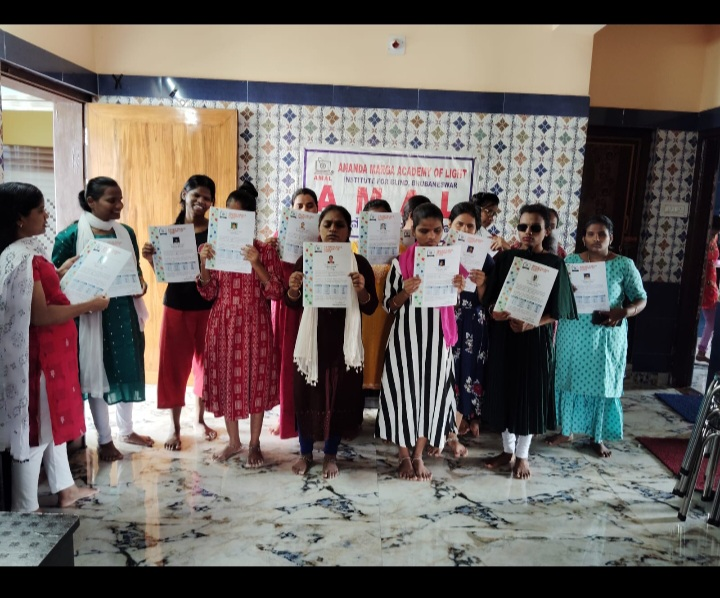
Please read below for more info Ananda Marga Academy of Light:

in Him, 
Sudeva


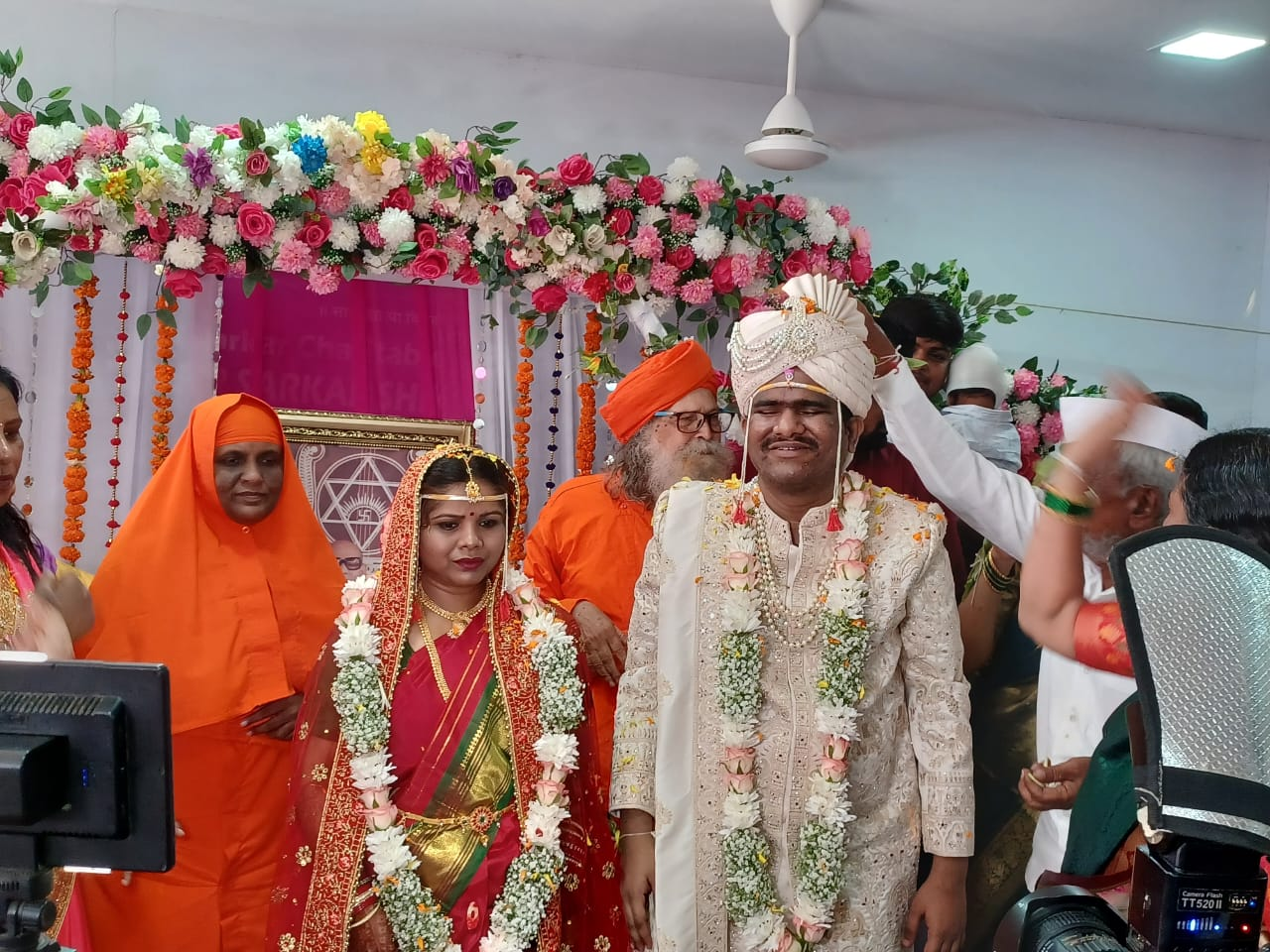
    The marriage of our children's home girl, Indrani, was solemnized at Virar Anandamarga School (Mumbai). Both the bride and bridegroom are visually impaired (blind). Ac Rupatiitananda Avt as priest solemnized the marriage and performed the ceremony.


    The bride's background:

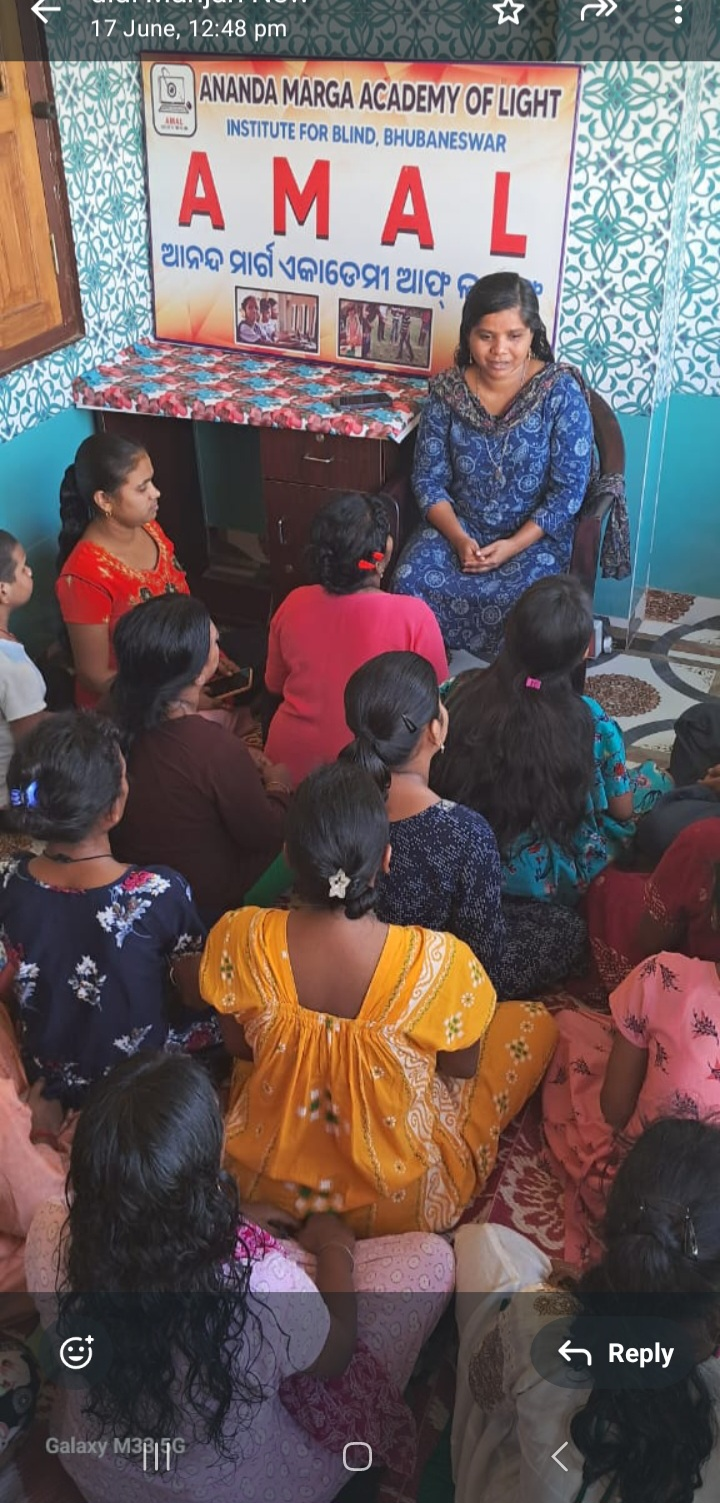
    Sister Indrani is visually impaired. She grew up in an Ananda Marga childrens' home in Chennai and in Mumbai. She passed M.A. and B.Ed. in V.I. from Mumbai. Afterward, she dedicated her life to Ananda Marga Academy of Light (AMAL), an institution given by Parama Purusa Baba. 

    She has opened AMAL at Bhuvaneshvar (Orissa) on her own. No AMPS group helped her. It is the lone / only AMAL institution in the world. By the grace of Baba, she got contributions from margiis across India (after seeing her selfless service), and she bought a land parcel in Bhuvaneshvar for the permanent establishment of Ananda Marga Academy of Light. 

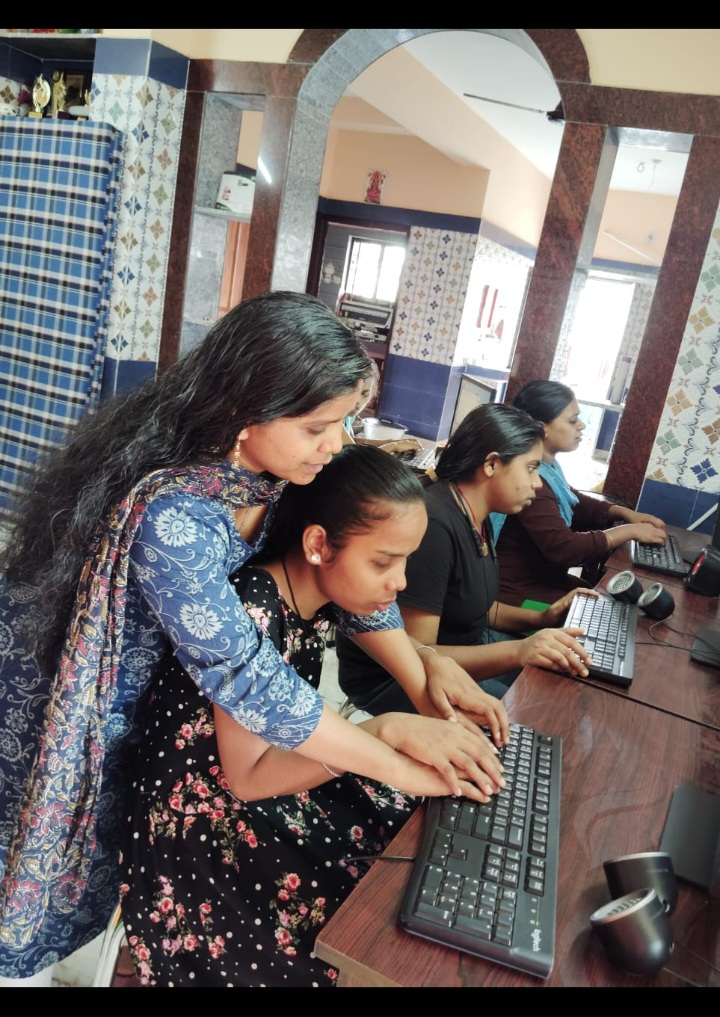
    She has been teaching computer courses etc. to blind girls free of cost for the last two years. 

    Her bridegroom is also visually impaired (blind). He is a practicing Ananda Margii. 

    May Baba bless the couple for a happy married life. 🙏

    Please find below some photos of Ananda Marga Academy of Light.


Photo #1: Here below we see the bride and groom on the day of their Ananda Marga marriage


Photo #2: Here below we see Ananda Marga Academy of Light (AMAL) students displaying their certificates.


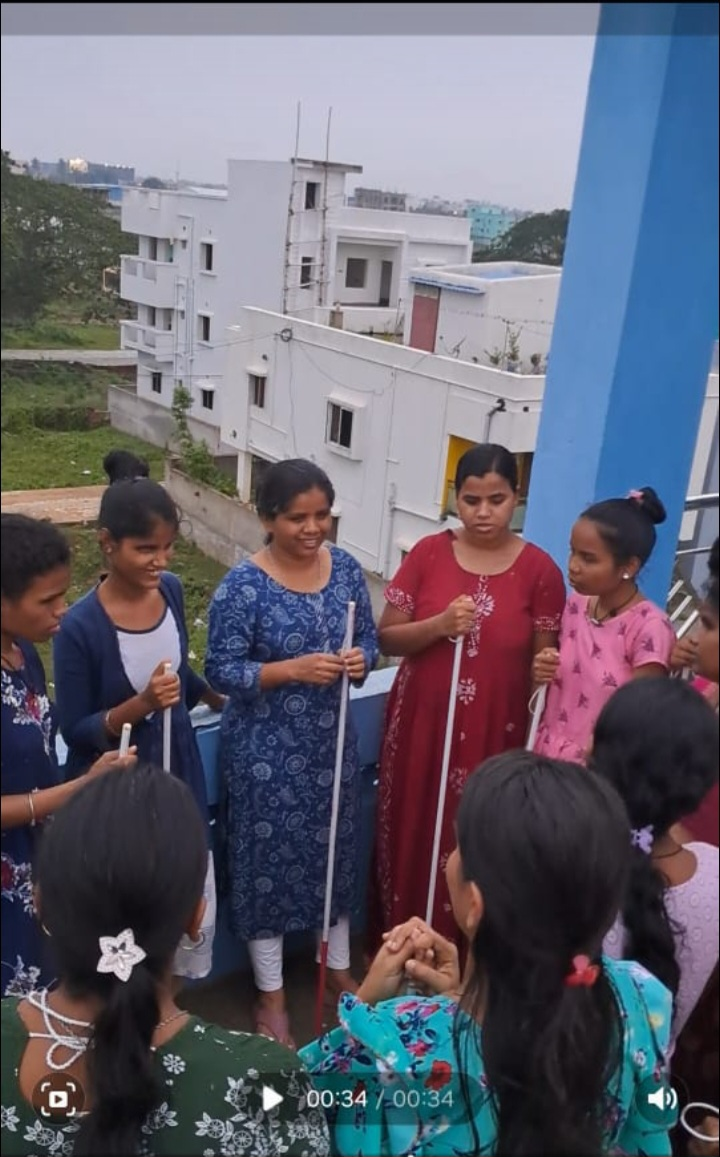
Photo #3: In the below photo, we see Ananda Marga Academy of Light (AMAL) students involved in discussion and a group project on one of the balconies. 


Photo #4
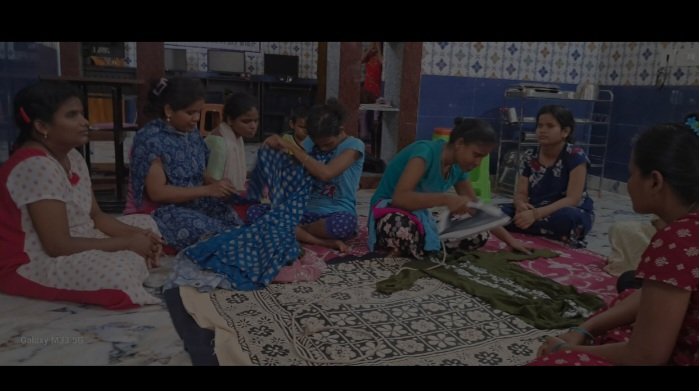
: Next, in the below photo, we have Ananda Marga Academy of Light (AMAL) students engaged in home economics / domestic skill training.  


Photo #5
: Here below is a small group lecture / training at the AMAL centre in Bhubaneshwar.


Photo #6: In the below photo, AMAL students are getting practical training and experience in technology and computer science. 


Note 1: Everyone is well aware that Baba's stated policy is that all of the boys and girls in our childrens' homes are to be goaded towards becoming Wts, not married people. It is most unfortunate that the Didis failed in this regard. Clearly, this sister would have made an excellent Wt. 

Note 2: Unfortunately, those who coaxed her into marriage failed to keep Baba's below guideline at the forefront. 

Baba says, "The need for marriage differs with individuals. That is why in the opinion of Ananda Marga every individual has complete freedom in matters of marriage. For example, marriage of those persons who suffer from some physical or mental disease, or who are not financially well off, or whose present circumstances are not favourable for marriage (i.e., where marriage can cause unhappiness), is not desirable. Those who are constantly engaged in the fulfilment of an ideal, or those who have to spend the greater part of their day in earning their livelihood or some mental occupations, should not marry, because they will not find it possible to fulfil their family commitments properly. The marriages of such people are harmful to the society in many cases." (Guide to Human Conduct, Brahmacarya)

According to Baba's above guideline, those who coaxed and cajoled Smt. Indrani to marry did terrible harm to her -- unknowingly. She is a veritable strong-minded, ideological bhakta who is now married to a pseudo-margii in a male-dominated society. Sadly, she has been robbed of her life - stripped of her independence and ideological dedication. 


== Section 2: Links ==

Postings to Read
Spirituality: asking for His help
True brahmacarya
Uniqueness of RM system

Money-lusting: disease of this era

How to overcome maya
Names of Parama Purusa


SUBJECTS TOPICS